Pruning grape vines in southern california: a complete field guide
TL;DR
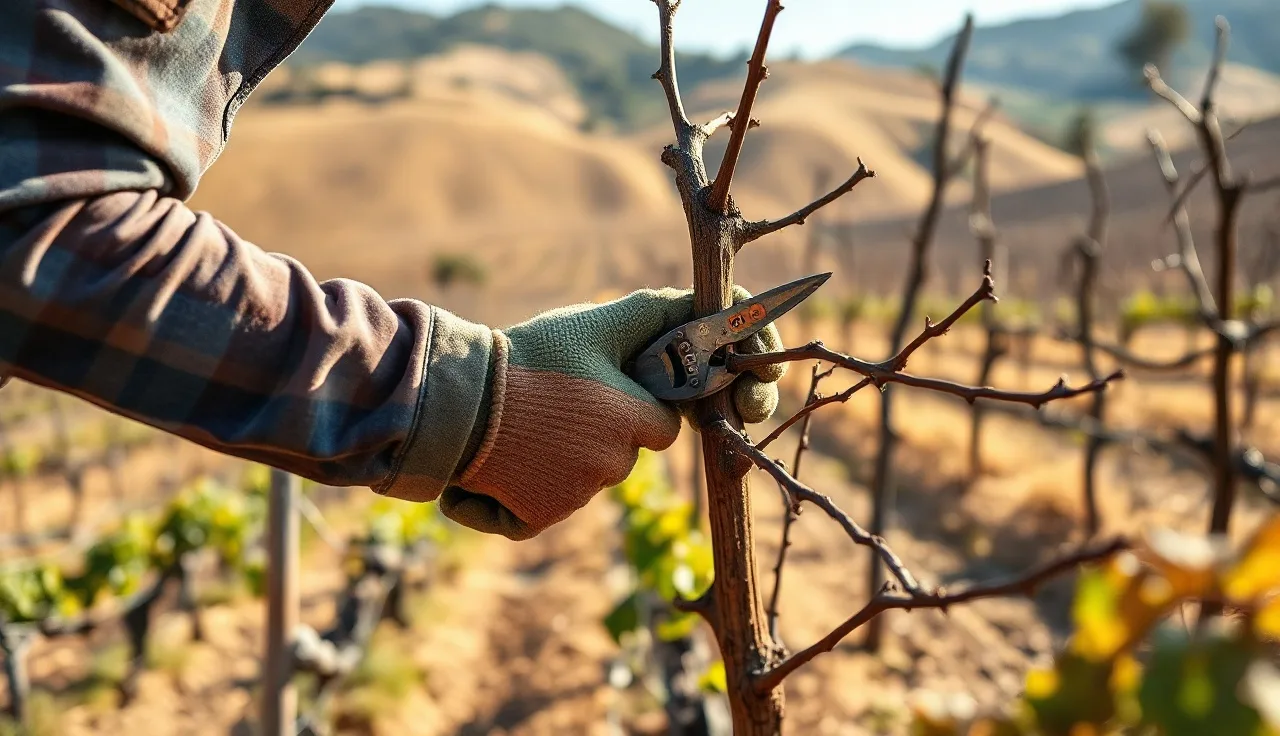
- In Southern California, prune dormant vines between late December and early March, after the first hard chill but before bud swell.
- Spur prune most wine varieties at 2 buds per spur; cane prune table grapes to 8 to 12 nodes per cane.
- Warm winters mean short true dormancy, so timing and variety matter more here than in cooler California regions.
Why does southern california pruning differ from the rest of the state?
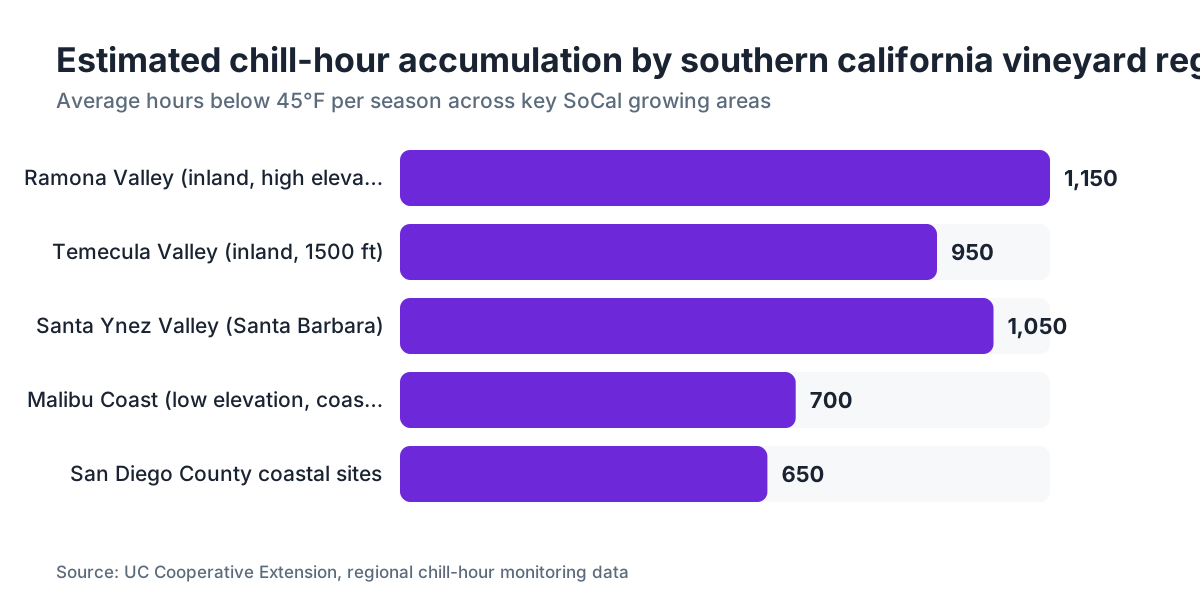
Southern California rarely gets the deep, sustained cold that northern wine regions count on. The San Joaquin Valley floor might see 1,200 chill hours in a wet La Niña year. Coastal SoCal vineyards in Temecula or the Malibu hills often log fewer than 800 hours below 45°F. That changes everything about timing.
Vines need dormancy to set next year's buds properly. When chill hours run short, dormancy ends fast, sometimes uncomfortably fast if February throws a warm week at you. Your pruning window can shrink to three or four weeks instead of the six to eight that Napa or the Sierra Foothills get. Miss it and you're cutting into vines that have already committed resources to green tissue.
The flip side is real. SoCal's long, dry summers give you forgiving harvest windows and low disease pressure through the growing season. You can spend more pruning energy managing vigor (often the bigger problem on coastal sites with deep soils) and less opening the canopy for disease control the way growers in humid climates have to.
That context shapes every recommendation below.
For a broader look at how SoCal vineyard operations compare to northern California, the growers around Ponte Winery and South Coast Winery in Temecula offer real-world benchmarks worth knowing.
When is the right time to prune grape vines in southern california?
Watch the vine, not the calendar. If you need a calendar range, late December through late February covers most SoCal sites in most years. The rule that actually works: prune after the vines have dropped every leaf and gone fully dormant, but before buds swell past the wool-tuft stage (roughly 0.5 inch of green showing).
Chill-hour accumulation is your real trigger. UC Cooperative Extension tracks chill-hour data by region, and coastal sites like Malibu, Escondido, and the Ramona Valley often reach their chill requirement by January, sometimes earlier in cold La Niña winters [1]. Inland desert-edge sites east of Temecula can lag by two to four weeks.
There's a legitimate debate among SoCal growers about early versus late pruning. Early pruning (December to early January) lets you spread labor over more days and dodge the rush, but it raises risk a little if a hard frost hits after you've opened the cuts. Late pruning (February into early March) shortens the growing season slightly and makes frost damage to tender new growth less likely, since you're cutting closer to natural bud break. UC Davis viticulture guidance favors later pruning on frost-risk sites to delay phenological development [2].
One trick many Temecula and San Diego county growers use: prune a few vines early as a test block, then watch bud break timing against unpruned vines. That gives you a vine-specific read on local timing without betting the whole block.
Cane pruning vs. spur pruning: which is right for your vineyard?
This is the single decision with the biggest downstream consequences, and the answer depends on variety more than anything else.
Spur pruning leaves short stubs (spurs) of two to three buds on a permanent cordon. It's faster, easier to mechanize or semi-mechanize, and works well for varieties that set fruitful buds close to the base of the shoot. Most Rhône varieties planted across SoCal, including Grenache, Syrah, Mourvèdre, and Roussanne, suit spur pruning. Cabernet Sauvignon and Zinfandel spur well too when the cordon is managed consistently over years.
Cane pruning removes almost all of last year's wood each season and replaces it with one or two new canes carrying 8 to 15 nodes each. It costs more labor and is harder to do consistently without skilled crews, but it's necessary for varieties like Chardonnay, Riesling, and Thompson Seedless (California's dominant table grape) where fruitfulness sits at nodes 3 through 8. Spur-prune Chardonnay in a warm climate and you get a nearly fruitless block. Fast.
Table grape pruning in California follows the same cane-versus-spur logic. Most commercial table grape blocks, Thompson Seedless, Flame Seedless, Crimson Seedless, and the newer patented varieties, are pruned to a bilateral or unilateral cordon with canes. UC Davis viticulture guidance specifies 8 to 12 nodes per cane for most California table grape varieties under standard trellising [3].
| Pruning style | Best varieties | Buds retained | Labor hours/acre (est.) |
|---|---|---|---|
| Spur pruning | Syrah, Grenache, Cab Sauv, Zinfandel | 2 per spur, 20-40 spurs/vine | 10-18 |
| Cane pruning | Chardonnay, Riesling, Pinot Noir, table grapes | 8-12 nodes per cane, 1-2 canes/vine | 18-30 |
| Minimal pruning | High-yield wine grapes (experimental) | Varies | 3-5 |
Labor hour estimates reflect hand pruning with standard crews. Mechanically-assisted spur pruning can cut that range by 30 to 40% on suitable trellises.
How many buds should you leave per vine in southern california?
Bud load is where you set your yield, and getting it right in SoCal's heat takes more conservatism than most growers expect.
Match your retained bud count to the vine's capacity, which you read from last year's pruning weight. The Ravaz Index, the ratio of fruit weight to pruning weight, should land between 5 and 10 for a balanced wine grape vine. Below 5 means you're over-cropping for the vine's size. Above 10 means the vine is too vigorous and canopy management turns into a headache [4].
For a typical SoCal wine grape vine in moderate soil, a practical starting point is 24 to 40 buds per vine on a bilateral cordon spur system. That's roughly 12 to 20 spurs per cordon arm, each with 2 buds. On young vines (years 1 through 3), go harder: leave far fewer buds and build trunk and cordon structure first. UC Cooperative Extension guidelines for new SoCal plantings call for no fruit at all in year one and restrict year two to 50% of anticipated mature crop load [5].
Most SoCal growers targeting 2 to 3 tons per acre for premium wine aim for 24 to 32 buds per vine. High-volume table grape operations may leave 60 to 80 nodes per vine on vigorous rootstocks with drip irrigation. Nobody should hand you a single universal number. Last winter's pruning weight is the most honest input you have.
What tools do you need and how do you keep them clean?
A good pair of hand pruners (bypass style, not anvil) and a pruning saw for wood over 1.5 inches in diameter covers 95% of what you'll do. Felco No. 2 and ARS 120DX are the two pruners that keep showing up in commercial operations because they're rebuildable and hold an edge through a long day. Loppers for cordons in the 0.75 to 1.5 inch range save your hands over a big block.
Sanitation matters more than most small vineyard operators think. Eutypa lata, the fungus behind Eutypa dieback, moves through pruning cuts when spores are airborne during rain. Botryosphaeria and Esca sit in the same category. Wiping blades between vines with a 10% bleach solution or 70% isopropyl alcohol is a reasonable precaution in blocks where trunk disease is present or suspected [6]. It adds time, but a single infected vine you accidentally carry down the row can cost you that vine for good.
For large cuts, applying a wound sealant (Topsin-M paste is common, though its efficacy data is mixed) or pruning at a slight downward angle so water doesn't pool on the cut face are both standard. UC Davis plant pathology research points to pruning during dry weather as the single most effective prevention step, since Eutypa spore release ties to rain events [6].
How does pruning fit into your annual spray and compliance calendar?
Pruning opens wounds, and wounds are entry points. Your post-pruning spray, usually a dormant copper or lime-sulfur application, should follow within 24 to 48 hours of cutting if rain is forecast. That's your first spray record of the season and your first entry under California's pesticide application reporting requirements administered by the California Department of Pesticide Regulation [7].
California requires licensed pest control advisors (PCAs) to file pesticide use reports (PURs) for all restricted-use pesticides, and copper sulfate at higher concentrations is a restricted material in many counties. Check with your county agricultural commissioner for the threshold in your area. San Diego, Riverside, and Los Angeles counties each administer these requirements a little differently.
Pruning records themselves, who pruned which block and when, aren't required by state law. But they're the backbone of your crop log and become essential if you're selling to a winery with traceability requirements or running under an organic certification where audit trails matter. That's where a field operations tool like VitiScribe earns its keep: capturing block-level pruning dates, bud counts, and crew hours in a searchable log without a stack of clipboards.
Worker safety during pruning falls under the EPA's Worker Protection Standard (WPS), which applies to all agricultural operations using pesticides. If you're applying a dormant spray the same day a crew prunes, observe the restricted-entry interval (REI) and keep safety data sheets accessible to the crew [8]. The WPS requires handlers and early-entry workers to receive specific training, and that requirement doesn't pause for pruning season.
What are the most common pruning mistakes in southern california vineyards?
Pruning too early in a warm December is the most common error on coastal SoCal sites. The vine looks dormant, the leaves are down, and you want to get ahead of labor scheduling. But if the vine hasn't banked enough chill hours, the buds haven't fully hardened, and you get uneven bud break with more blind buds, buds that swell but never push a shoot.
Leaving too many buds is the second big one. It's hard to cut off potential yield, especially in a dry year when you're worried about crop size. Over-cropped vines in SoCal's heat produce smaller, lower-sugar fruit and build carbohydrate debt in the trunk and roots. Two or three years of over-cropping on a vigorous Grenache block is enough to watch vine health slide.
Ignoring trunk disease is a slow-motion mistake that hides for years. A wedge-shaped brown stain in cross-section when you cut back an arm, or the classic V-shaped canker pattern in the wood, means Eutypa or Botryosphaeria is already there. The right move is to cut back past the discolored wood, even if that means removing most of an arm. Leaving diseased wood in place to protect yield is how a manageable problem becomes a replanting decision five years later [9].
Last one: inconsistent spur spacing. Spurs that crowd each other throw shoots that fight for light and air in the middle of the canopy. Aim for 4 to 6 inches between spurs on the cordon for most varieties. That spacing isn't arbitrary. It matches the leaf area needed to ripen fruit from two buds without shading the fruiting zone.
How do you prune table grape vines specifically in california?
Pruning table grape vines in California is a distinct practice from wine grape pruning, and the differences matter.
Most commercial California table grapes grow on a T-bar or overhead arbor trellis, not the VSP systems common in wine grape blocks. The goal is maximum sun exposure across a wide canopy, which drives berry color and uniform sizing. On a T-bar trellis with bilateral cordons, you select one to two renewal canes per cordon arm, cut them to 8 to 12 nodes, and remove everything else.
Thompson Seedless, California's historically dominant table grape, is typically cane-pruned to between 60 and 80 nodes per vine on vigorous Harmony or Freedom rootstocks. The newer proprietary varieties, Autumn Crisp, Sweet Celebration, Candy Hearts from International Fruit Genetics and similar programs, often carry pruning specifications written into their licensing agreements. If you grow licensed varieties, those specs are a legal obligation, not a suggestion.
Gibberellic acid applications for berry sizing on seedless varieties follow pruning by roughly 3 to 5 weeks and are timed to bloom. That timeline is set in motion by when you prune, which is another reason timing precision matters more in table grape blocks than many wine grape growers appreciate.
The South Coast Winery region in Temecula grows both wine and table varieties across adjacent blocks, and the contrast in pruning approach between those two systems is visible from the road.
How do you train young vines in their first three years?
Year one is simple: pick the strongest shoot, tie it to a stake, and pinch or cut off everything else. You want one vertical trunk reaching the first wire. Forget about fruit. Removing flower clusters in year one lets the vine pour everything into root and trunk development, which pays off for the next 30 years.
In year two, select two or three shoots near the top wire to become your cordon arms or to supply the canes for year three. Everything below those selected shoots comes off. You might allow a minimal crop, half a cluster per shoot at most, just to calibrate the vine's response.
By year three, you're establishing the final training system. For bilateral cordon spur systems, this is the year you lay in the permanent cordon arms along the wire, select 3 to 5 spurs per arm, and let those spurs establish position. You still hold crop to 50% of what a mature vine would carry.
UC Cooperative Extension recommends waiting until year four or five before pulling a full crop in warm inland SoCal sites, where vigor can trick you into thinking vines are more established than they are [5]. A vine that looks big in year three often has a root system that's still consolidating, and forcing a full crop early is a common path to premature vine decline.
What do southern california's best vineyard regions prune differently?
Temecula Valley sits around 1,500 feet with afternoon winds that genuinely cool the site, but it's still warm. Growers there favor late pruning (mid-February for most blocks) to delay bud break past the last frost risk window, which usually passes by early March. Syrah, Viognier, and Grenache Blanc are the dominant varieties and all respond well to spur pruning on bilateral cordons.
The Santa Barbara County AVAs, Sta. Rita Hills and Happy Canyon, sit at the cooler northern edge of what most would call Southern California, and their pruning logic tilts toward the cooler-climate model. More cane pruning for Pinot Noir, more attention to opening the canopy for air circulation, even though botrytis is far less of a problem here than in Oregon.
Malibu Coast and the Santa Monica Mountains vineyards deal with wildly variable elevations and microclimates within short distances. Some blocks face the ocean, others face inland. The difference in chilling can run 200-plus hours across 2 miles. Growers here often prune block by block on different schedules rather than doing the whole property at once.
The Ramona Valley AVA, a designated American Viticultural Area approved by the TTB in 2006, sits east of San Diego with a continental climate closer to high-desert than coastal. Winter dormancy is reliable there, chill hours are adequate for most varieties, and the pruning window looks like the rest of California: mid-January through late February without the urgency of coastal sites.
For anyone curious about how regional character translates to finished wine, the producers around Paso Robles wineries and the SoCal coast offer a useful contrast.
What are the worker safety and record-keeping requirements during pruning season?
California's worker safety rules during pruning don't get the attention that spray-season rules do, but they're real.
Under the Cal/OSHA Heat Illness Prevention standard (Title 8, Section 3395), employers must provide shade, water, and rest access for outdoor workers when temperatures reach 80°F. In SoCal's inland valleys, that can happen in February. It applies to pruning crews' shifts, not only summer operations [10].
If any dormant spray (copper, sulfur, or a synthetic fungicide) goes on near or around the pruning crew, the EPA Worker Protection Standard requires specific safety training, access to labeling and safety data sheets, and compliance with the pesticide's REI before workers re-enter. The WPS was last updated in 2015, and the current rules require agricultural employers to provide pesticide safety training to workers within 30 days of their first day of work [8].
For record-keeping, California requires pesticide use reports within 7 days of application for restricted materials and within one month for non-restricted materials, filed with the county agricultural commissioner [7]. Pruning records, block maps showing which arms were cut back and what bud load was left, aren't mandated by California law but are standard practice for any operation working toward organic certification or selling under a grower contract that specifies crop load parameters.
Keeping those records digitally from day one beats reconstructing them from handwritten notes at the end of the season. VitiScribe was built for this kind of field-to-file documentation, capturing pruning dates, crew hours, and bud count notes at the block level.
Frequently asked questions
When should I prune grape vines in southern california?
Prune after full leaf drop and complete dormancy, generally late December through late February for most SoCal sites. Watch for bud swell as your hard stop: once buds push past the wool-tuft stage, you risk damaging the season's shoots. Inland sites like Ramona and east Temecula typically reach reliable dormancy sooner than coastal Malibu or San Diego County sites with fewer chill hours.
How many chill hours do southern california vineyards get?
It varies widely. Coastal sites in Malibu or Carlsbad may accumulate only 600 to 800 chill hours (below 45°F) in a warm year. Inland sites like the Ramona Valley or mountain sites above 2,000 feet can reach 1,000 to 1,200 hours in a normal winter. UC Cooperative Extension maintains regional chill-hour data you can use to benchmark your site against published variety requirements.
Is cane pruning or spur pruning better for temecula valley wine grapes?
Spur pruning suits the dominant Temecula varieties well: Syrah, Grenache, Mourvèdre, Petite Sirah, and Viognier all set fruitful buds close to the base and are spur-prunable. Chardonnay is the main exception; it needs cane pruning to reach the more fruitful mid-cane nodes. Most Temecula growers run bilateral cordon spur systems because the labor efficiency gains are significant across large blocks.
How do I prune table grape vines in california differently from wine grapes?
California table grapes, Thompson Seedless, Flame Seedless, Crimson Seedless, typically use cane pruning to 8 to 12 nodes per cane on T-bar or overhead trellises. Wine grapes are often spur-pruned on vertical shoot positioning (VSP) systems. Table grapes also need more precise node counts because gibberellic acid timing for berry sizing ties directly to bloom, which follows pruning timing.
Can I prune grape vines in january in southern california?
Yes, January pruning works well for most inland SoCal sites where dormancy is reliable by then. For coastal sites with fewer chill hours, early January may be too soon if the vine hasn't fully hardened its buds. Check for clean wood separation and fully brown, dormant bud scales before you start. If buds show any hint of swelling or green, wait another week or two.
How do I prevent trunk disease when pruning in southern california?
Prune during dry weather whenever possible, since Eutypa lata and Botryosphaeria species release spores during rain. Sanitize cutting tools between vines if trunk disease is present in the block, using 70% isopropyl alcohol or a 10% bleach solution. Make cuts at a slight downward angle so water drains off. If you find wedge-shaped brown staining in cross-section, cut back past the discolored wood even if it means removing a full cordon arm.
How many buds should I leave per vine when spur pruning in southern california?
For most SoCal wine grape varieties targeting 2 to 3 tons per acre, leave 24 to 40 buds per vine total, meaning 12 to 20 spurs each with 2 buds. Start by calculating your Ravaz Index from last season: divide fruit weight by pruning weight and aim for a result between 5 and 10. Over 10 means the vine is too vigorous; under 5 suggests you're carrying more fruit than the vine can ripen.
Do I need to file any records or permits for pruning in california?
Pruning itself requires no permit in California. But if you apply dormant copper, sulfur, or any restricted-use pesticide during pruning season, you must file a Pesticide Use Report with your county agricultural commissioner: within 7 days for restricted materials, within one month for non-restricted materials. Cal/OSHA heat illness prevention rules also apply to pruning crews when temperatures reach 80°F, which can happen even in February in inland SoCal valleys.
What's the worker protection standard requirement for pruning crews near pesticide applications?
Under the EPA's Worker Protection Standard (updated 2015), agricultural employers must provide pesticide safety training to workers within 30 days of first day on the job. If pruning crews work near or after a dormant spray, the pesticide's restricted-entry interval must be satisfied before they enter treated areas. Employers must make the pesticide label and safety data sheet accessible, and workers must have access to decontamination supplies.
How do I prune young grape vines in their first year in southern california?
In year one, select the single strongest shoot and tie it vertically to a stake. Remove all other shoots and any flower clusters. The entire goal is root and trunk development, not yield. By year two, select two or three shoots near the top wire for cordon establishment. UC Cooperative Extension advises waiting until year four or five before pulling a full crop from SoCal vines, even when they look vigorous enough earlier.
How does the ramona valley ava differ from temecula for pruning timing?
Ramona Valley sits east of San Diego at elevations typically between 1,400 and 2,800 feet with a continental climate. It accumulates chill hours more reliably than coastal sites, and its dormancy window is more predictable, usually mid-January through late February. Temecula's afternoon winds help, but its lower elevation and proximity to the coast mean occasional warm spells in January can complicate pruning timing in warm years.
Should I use a wound sealant after large pruning cuts in southern california?
The evidence for wound sealants preventing trunk disease is mixed. UC Davis plant pathology research points to pruning during dry weather as more effective than any sealant. That said, Topsin-M paste and other registered products are widely used for cuts over 1 inch in diameter, particularly where Eutypa or Botryosphaeria pressure is known. If you do use one, apply it immediately after cutting before the wood dries.
What rootstocks are common in southern california and how do they affect pruning?
Freedom and Harmony are common in table grape blocks. 110R and 140 Ru are used in wine grape plantings on hillside or stressed soils. More vigorous rootstocks like 1103P encourage more shoot growth, which means you may need to leave slightly fewer buds per vine to keep balance. Rootstock vigor class is a legitimate input when calibrating bud load for a new block or after replanting.
Sources
- UC Cooperative Extension (UC ANR), chill-hour accumulation data for California: Coastal SoCal sites often accumulate fewer than 800 chill hours; UC Cooperative Extension tracks regional chill-hour data by county
- UC Davis Department of Viticulture and Enology, pruning and training guidance: UC Davis recommends late pruning for frost-risk sites to delay phenological development
- UC Davis Department of Viticulture and Enology, table grape production guidance: 8 to 12 nodes per cane is the standard recommendation for most California table grape varieties under standard trellising
- UC Cooperative Extension (UC ANR), vine balance and Ravaz Index: The Ravaz Index, ratio of fruit weight to pruning weight, should be between 5 and 10 for balanced wine grape vines
- UC Cooperative Extension (UC ANR), vineyard establishment and early management: UC Cooperative Extension recommends no fruit in year one and restricted crop in year two for new SoCal plantings; full crop loading advised from year four or five
- UC Integrated Pest Management (UC IPM), Eutypa dieback of grapevine: Eutypa lata spore release is tied to rain events; pruning during dry weather is the most effective single prevention step for trunk disease
- California Department of Pesticide Regulation, pesticide use reporting: California requires pesticide use reports within 7 days of application for restricted materials and within one month for non-restricted materials, filed with the county agricultural commissioner
- EPA, Agricultural Worker Protection Standard: The WPS (updated 2015) requires agricultural employers to provide pesticide safety training to workers within 30 days of first day of work and to observe restricted-entry intervals
- UC Integrated Pest Management (UC IPM), Botryosphaeria canker of grapevine: V-shaped canker patterns in cross-section indicate Botryosphaeria infection; cutting back past all discolored wood is the recommended management response
- Washington State University Extension, pruning and training grapevines: Spur pruning at 2 buds per spur is standard for cordon-trained varieties with fruitful basal buds; cane pruning is necessary for varieties with low basal bud fruitfulness
- Cornell University College of Agriculture and Life Sciences, viticulture pruning guidelines: Pruning weight from the prior season is the most accurate input for setting bud load in the current season, more reliable than fixed per-vine numbers
Last updated 2026-07-09