Pruning table grape vines: the complete seasonal guide
TL;DR
- Table grape vines get pruned twice a year.
- The big dormant cut in late winter (roughly January through early March, depending on region) sets the fruiting structure.
- Lighter summer pruning controls shoot density and sizes up the fruit.
- Most commercial blocks run cane or cordon-spur systems.
- Your bud count at dormant pruning is the single biggest yield lever you touch all year.
Why table grape pruning is different from wine grape pruning
Table grapes and wine grapes are both Vitis vinifera (or hybrids), but the way you prune them is calibrated to opposite goals. Wine grapes reward stress and concentration. Table grapes reward size, uniformity, and looks. A bunch with small or uneven berries fails the packing house before a shopper ever sees it. That one commercial fact drives every cut you make.
Bunch architecture is the second difference. Table grape clusters need space between them so air moves and berries size up without crowding. Prune too light and the canopy gets so dense that botrytis rips through it in a wet year. Prune too hard and you push the vine into wild vegetative growth that shades the fruit and stalls ripening.
Many table grape varieties are tip-bearers or have narrow fruitful zones. Perlette carries fruitful buds starting at positions 3 to 5 on the cane. Thompson Seedless is fruitful from buds 4 through 12. Prune a variety short when its fruitfulness starts at bud 8 and you've pruned away your crop. Know your variety's fruitful zone before you pick up the shears. That's not negotiable. [1]
Wild grape vines run on a different logic. You're mostly cutting out unproductive wood and opening the structure, not managing a commercial fruiting zone. Got a feral Vitis riparia or a neglected backyard vine? Year one, the goal is one clean trunk and four or five good shoots. You build the system from there.
When should you prune table grape vines?
Prune when the vine is fully dormant and the worst freeze risk for your region has passed. In California's San Joaquin Valley, most growers are on the shears from late January through mid-February. In the Pacific Northwest, the Northeast, and other cool-climate table grape regions, early March is more common because it keeps freshly cut wood away from late frost. [2]
The real biological trigger is bud swell. Once buds start pushing even a little, wounds close faster, but now you're racing late frosts. Experienced growers watch the 10-day forecast and prune as late as they can stand, because a vine that's pushed two inches of green shoot takes frost damage far worse than an unpruned one. WSU's viticulture program recommends this delayed pruning approach where late frost is a real hazard. [3]
Summer gives you a second window. Shoot thinning lands around bloom (late May to early June in most California table grape districts). Hedging or topping follows fruit set. Leaf removal in the cluster zone comes after that. Lighter operations, but they move the needle on berry size and disease pressure.
Here's what people underestimate: pruning date shifts bloom timing, which shifts harvest timing. Prune early in a cool year, catch a cold snap, and growth stalls unevenly. You end up with ragged, spread-out bloom. That wrecks bunch appearance on Thompson Seedless and other varieties where even fruit set is the whole game.
What are the main training systems for table grapes?
Three systems run most commercial table grape production, and which one you have decides almost everything about your pruning.
Cordon-spur (bilateral cordon) is the most common setup in California and much of the Mediterranean. You establish permanent cordons running both ways from the trunk along the wire, then keep short spurs (usually 2-bud) spaced 6 to 8 inches apart. Annual work is mostly spur renewal: cut back last year's fruiting cane, leave the lower bud-bearing wood for next year. It's fast, partly mechanizable, and works for varieties with fruitful basal buds. Thompson Seedless with gibberellin often grows this way. [1]
Cane pruning is for varieties without fruitful buds near the cane base. You strip all of last year's canes except one or two long ones (8 to 14 buds) per cordon arm, and those become this season's fruiting wood. Keep a short renewal spur near each selected cane's base so you have shoots to pick from next dormant season. It's slower and more labor-heavy, but for Red Globe or Crimson Seedless, it's the only way to hit your bud count.
Overhead trellis (pergola or T-trellis) systems, used in Chile, parts of Italy, and some premium seedless blocks in California, spread the canopy overhead. Pruning a pergola is harder because you manage the whole overhead plane, more than a bilateral cordon. Spur positions have to stay even so the canopy fills without blind zones.
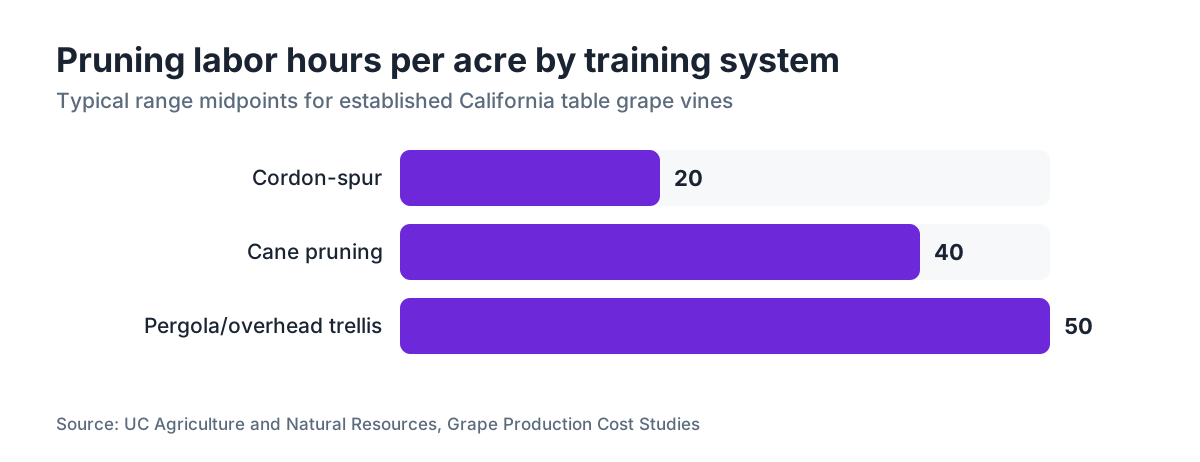
Here's how the workload compares by system:
| System | Buds left per vine (typical) | Pruning time (labor hrs/acre) | Best for varieties with... |
|---|---|---|---|
| Cordon-spur | 20-40 | 15-25 | Fruitful basal buds (bud 1-3) |
| Cane pruning | 40-80 | 30-50 | Fruitful mid-cane buds (4-10+) |
| Pergola/overhead | 60-120 | 40-60 | High vigor, large-cluster types |
Labor ranges swing with vine age, canopy density, and crew experience. Exact figures vary by block. [4]
How many buds should you leave per vine?
This is where most growers either get it right by feel after ten years or spend those ten years guessing. Bud count is your yield forecast. It's also your berry size forecast, your cluster weight target, and your sugar timeline, all rolled into one call you make in February.
For seedless varieties in California's San Joaquin Valley on a cordon-spur system, 20 to 50 buds per vine is typical for Thompson or Crimson, depending on vigor, spacing, and target cluster count. UC Cooperative Extension says to calibrate bud count against last year's actual cluster counts and fruit weights. Left 40 buds, got 60% push, harvested clusters averaging 1.2 pounds? That's where this year's math starts. [1]
Cane-pruned varieties, you think in canes rather than buds. A common rule for Red Globe is two to four canes per vine at 8 to 12 buds each, so 16 to 48 buds total. Starting point, not gospel.
Vine balance ties it all together. A balanced vine puts on roughly one pound of fruit per pound of dormant prunings removed. That ratio, the Ravaz Index, gives you an empirical read on whether you're overcropping or leaving capacity on the table. Below 3 means the vine is too vigorous with not enough fruit load. Above 10 means overcropping. Most well-run table grape vines sit between 5 and 10. [5]
A shortcut worth the time: weigh the pruning brush from 10 vines, get your average prunings per vine, and set next year's bud count from that. Twenty minutes per block. It's the most data-grounded tool you have when you're standing there with shears in hand.
What's the step-by-step process for dormant pruning?
Walk the vine before you cut anything. Seriously. Stand back, see where last year's fruiting canes came from, check which spurs or cordons carry dead wood, and pick out your renewal wood first. Five minutes of looking saves you from a cut you can't take back.
Cordon-spur pruning goes like this:
- Cut all canes that grew from last year's spurs back to within 1/4 inch of the cordon. Leave one or two-bud spurs.
- If a spur got too long or drifted off the cordon, cut it hard or drop it and lean on the neighbors.
- Clear dead or damaged wood off the cordon. Find trunk disease (dark discoloration, wood rot) and cut below it, using a renewal shoot if one's there.
- Thin spurs to about 6 to 8 inches apart. Crowded spurs mean crowded shoots mean disease.
Cane pruning:
- Pick one or two pencil-thick canes per cordon arm (roughly 3/8 to 5/8 inch at the base), grown from a good spot, no damage.
- Tie or lower those canes to the fruiting wire.
- Cut a renewal spur (one or two buds) near the base of each selected cane so you have options next year.
- Cut everything else off.
Tool hygiene matters more than most people admit. Eutypa dieback and Botryosphaeria fungi ride on your pruning tools. In blocks with a wood disease history, dip or spray loppers and shears with 10% bleach or 70% isopropyl alcohol between vines. Some crews run two sets of tools and swap every few rows. [6]
Cut at a slight angle, not flat, so water sheds off the surface. On cuts over 1/2 inch in a high Eutypa region, seal them with a wound paint. UC Davis researchers have tested products like Topsin-M and various sealants with mixed results, but physically sealing big cuts still looks like it lowers infection in high-risk blocks. [6]
How do you handle summer pruning and shoot thinning?
Dormant pruning sets the frame. Summer work adjusts the fruit load and canopy while the season runs.
Shoot thinning comes first, usually 2 to 4 weeks after bud break, once you can tell single-shoot from double-shoot and count from non-count. Pull suckers off the trunk and below the cordon entirely. On spur-pruned vines, if a spur pushed two shoots and you want one cluster, take the weaker or more crowded shoot at its base.
Hedging or topping happens when shoots climb past the top wire, usually by late May or early June. Cut back to the top wire or just above. Often done mechanically. The point is to stop the canopy from flopping over and shading itself.
Leaf removal in the cluster zone opens up air flow and drops disease pressure. On the east or north side of the row, pull two or three basal leaves per shoot in the cluster zone after fruit set. Leave the hot afternoon side alone, because table grapes sunburn and a sunburned cluster is a packing house reject. In California's Central Valley this is a genuine call: plenty of growers pull leaves on the morning (east) side only and keep the afternoon shade.
Girdling and gibberellin (common on Thompson Seedless and other seedless types to bump berry size) get timed against bloom and shoot development, which loops back to decisions you made months earlier at pruning. Girdling timing, width, and location are variety-specific and deserve their own protocol. That's a separate guide, but understand this: your dormant bud count and your GA3 program talk to each other.
What tools do you need, and how do you keep them legal under WPS?
Most table grape operations run bypass hand pruners, loppers for heavier cordons, and maybe a pneumatic or electric shear system for bigger crews. Felco, Bahco, and ARS all make models used across California and Washington table grape blocks. Pneumatic shears (Infaco, Pellenc) cut hand fatigue on long crews and steady up cut quality, but the capital cost is real.
Worker protection isn't optional at pruning time. The EPA's Worker Protection Standard requires that anyone entering a treated area during the restricted entry interval (REI) after a pesticide application has the right PPE and training. A pruning crew going into a block treated with fungicide or insecticide inside the REI needs WPS training and the required safety information first. [7]
For early-season dormant pruning, the concern is copper fungicide sprayed before last year's harvest or during dormancy. Check your spray records (running them in VitiScribe lets you pull REI status by block in seconds) before you send anyone in. The WPS covers any agricultural pesticide, and the fines have teeth. EPA guidance states civil penalties for WPS violations can reach $19,866 per violation as of 2023. [7]
Separate from WPS, the PPE for pruning itself is cut-resistant gloves and eye protection. Hand injuries from shears are among the most common vineyard injuries. Cal/OSHA and federal OSHA standards for agricultural workers cover the PPE requirements. [8]
How do you prune neglected or overgrown table grape vines?
A neglected table grape vine, or a truly wild vine someone wants in production, needs a multi-year renovation, not one aggressive cut. Slashing everything in year one feels good and usually gives you a chaotic tangle of vigorous shoots with no structure and no decent wood to build on.
Year one: remove dead wood, crossing canes, and anything diseased. Pick two to four of the strongest, best-placed canes and cut the rest. Tie those loosely to the wire. Let them grow freely and forget about yield. You're banking wood.
Year two: now there's structure to work with. Choose your permanent cordon arms from the strongest canes, set your spur positions, and prune normally. Carry the vine at about 60% of its target bud count while it rebalances.
For genuinely feral vines (pruning wild grape in a restoration or backyard setting), step one is identifying the species. True wild Vitis riparia, labrusca, or rupestris can fruit, but the cluster size and berry character usually aren't table-worthy. Want edible fruit? Budget two to three years to select a clean trunk and train to whatever support you have. Just want the vine to quit eating your fence? Annual dormant cutting to a spur framework on each main branch keeps it in line.
One honest warning: old neglected vines often hide serious trunk disease. Cut into a multi-year cordon and find dark brown streaking in the cross-section, and that's likely Esca or Botryosphaeria. Cutting below the diseased zone and starting a trunk renewal is the right move, but it tacks one to two years onto the timeline.
What do university extension programs say about table grape pruning?
Three programs do the most useful table grape pruning work for North American growers: UC Cooperative Extension, Cornell Cooperative Extension, and Washington State University Extension.
UC Cooperative Extension's San Joaquin Valley table grape guidelines cover spur and cane pruning in depth, with bud count recommendations by variety. Their work on the Ravaz Index and vine balance is the most cited applied research California table grape managers have. [1] UC Davis's viticulture group has run long research on trunk disease management during pruning, especially late-season pruning to cut Eutypa risk. The logic: Eutypa ascospore release peaks during early-winter rainfall, so wounds made in February after the rains have lower infection risk than wounds made in November or December. [6]
Cornell's work fits Concord-type and hybrid table grapes in the Northeast, though their cane pruning protocols for vinifera varieties travel well. Their publication "Viticulture Notes" gets updated periodically and includes timing and technique guidance tuned for cool-climate growing. [2]
WSU Extension covers table grapes in Washington's growing seedless production across the Horse Heaven Hills and Columbia Valley AVAs. Their delayed pruning recommendation sits on local frost-date data, and their training system comparisons include overhead trellis options that matter for larger commercial blocks. [3]
Want deeper variety-specific fruitful zone data? The UC Davis viticulture site and the ENTAV-INRAE ampelography resources are the most complete you'll find publicly.
How does record-keeping fit into a pruning program?
Pruning records are the base of your year-over-year calibration. Don't know what you pruned last year, how many buds you left, and what you harvested? Then you start from zero every February.
Track the minimum: pruning date by block, system (spur vs cane), buds left per vine or per acre, estimated pruning weight per vine (even a sample), and any trunk disease flags found during pruning. Tie that to harvest data (tons per acre, cluster count, average cluster weight) and you've got a real feedback loop.
WPS compliance adds a layer. You need spray records to know REI status before crews enter any block, and documentation that workers got WPS training. EPA guidance states pesticide application records must be kept for two years. [7]
VitiScribe connects field operations like pruning records to your spray log and compliance documents in one place. Worth a look if you run more than a few blocks and the paper trail is getting away from you. A free trial is at vitiscribe.com.
Running paper? A simple spreadsheet with block ID, date, buds/vine, cane weight sample, and a disease-notes field takes about 10 minutes per block after a day's pruning. It pays back in better decisions by mid-summer.
Common pruning mistakes and how to avoid them
Leaving too many buds is probably the most common error on young or vigorous vines. It feels safe because you're barely cutting, but the vine responds by setting too many clusters and sizing them all up poorly. You end up with more clusters than the packing house wants and smaller berries than the market wants. Nobody's happy.
Leaving too few buds is rarer but real, usually on older vines or in drought years when growers get nervous about the crop. An undercropped table grape shoves out enormous shoots and excess vegetative growth, which becomes its own canopy nightmare from June through August.
Ignoring trunk disease during pruning is a slow disaster. Plenty of operations lose productive vines to Esca and Eutypa dieback, not because the diseases are untreatable but because the infected wood never got cut out when the signs first showed. At every dormant pruning, have crew leads flag any vine with dark internal wood, delayed bud push, or dead spur positions. Takes seconds. Gives you a disease map of the block.
Using dull tools is a real problem that's easy to fix. A ragged cut calluses slower than a clean one, and rough surfaces give fungal spores more to grab. Sharpen shears at the start of each day. Ten minutes, and it matters.
Rushing the renewal spur on cane-pruned varieties is a mistake that compounds season after season. Skip a good renewal spur near the base of your fruiting cane and you'll be hunting for renewal wood from a bad position next year. Two minutes per vine now saves real trouble twelve months out.
Frequently asked questions
When is the best time of year to prune table grape vines?
The best time is late dormancy, after the worst freeze risk passes but before bud swell starts. In California's Central Valley, that's usually late January through mid-February. In cooler regions like the Pacific Northwest or Northeast, early to mid-March is safer. WSU Extension recommends delayed pruning as a frost strategy where late frosts are common. Prune too early and the vine gets more frost-sensitive once buds push.
How many buds should I leave when pruning a table grape vine?
For spur-pruned vines (like Thompson Seedless on a cordon), 20 to 50 buds per vine is typical, depending on vigor, age, and target yield. For cane-pruned varieties, 2 to 4 canes with 8 to 12 buds each is a common starting range. Calibrate against your own numbers: weigh pruning brush, track cluster counts, and use the Ravaz Index (fruit weight to pruning weight) to find your vine's balance point.
What's the difference between spur pruning and cane pruning for table grapes?
Spur pruning leaves short 2-bud spurs along a permanent cordon and works best for varieties with fruitful basal buds (positions 1 through 3). Cane pruning selects long canes of 8 to 14 buds and is required where fruitfulness starts at bud position 4 or higher. Cane pruning takes roughly twice the labor per acre but is the only way to hit yield targets on mid-cane fruitful varieties like Red Globe or Crimson Seedless.
How do I prune a neglected or overgrown table grape vine?
Plan on a 2-year renovation minimum. Year one, remove dead and diseased wood, pick 2 to 4 strong canes, and let the vine grow freely to rebuild reserves. Don't chase yield. Year two, set your permanent cordon structure from the best canes and prune normally at about 60% of target bud count. Trying to fix everything in one season usually gives you an unmanageable canopy with no clean fruiting structure.
Does pruning timing affect disease pressure in table grapes?
Yes, a lot. UC Davis research on Eutypa dieback shows ascospore release peaks during winter rainfall, typically November through January in California. Wounds made later in the dormant season, after the major rains, carry lower infection risk. In high Eutypa blocks, delaying pruning until February or later and painting protectants on large cuts reduces infection. Sanitizing tools between vines in diseased blocks also limits spread.
What PPE and WPS compliance is required for pruning crews?
Crews entering blocks within a pesticide's restricted entry interval (REI) must have EPA Worker Protection Standard training and required PPE. The WPS covers any agricultural pesticide. Check spray records against current REI status before moving crews in. EPA guidance states civil penalties for WPS violations can reach $19,866 per violation as of 2023. Beyond WPS, provide cut-resistant gloves and eye protection for pruning regardless of chemical exposure.
How do I prune wild grape vines or feral vines on my property?
Start by identifying the species. Wild Vitis riparia or labrusca rarely produce table-quality fruit without real work. Year one, cut to a single trunk and 4 to 5 clean shoots, removing everything else. Build a spur framework on whatever support you have over the next 2 seasons. If edible fruit isn't the goal and you just want to control growth, annual dormant cutting to a spur framework on each main branch keeps most feral vines manageable long term.
What is the Ravaz Index and how do I use it for table grapes?
The Ravaz Index is the ratio of fruit weight (pounds) to dormant pruning weight (pounds) per vine. A balanced table grape vine usually scores between 5 and 10. Below 3 means the vine is too vegetative and not carrying enough crop. Above 10 means overcropping, which shrinks berry size and hurts plant health over time. To use it, weigh harvest per vine from a sample, weigh pruning brush per vine the next dormant season, and divide. Adjust bud count from there.
Can I prune table grapes in summer or is dormant pruning the only time?
Summer pruning is a normal part of table grape management. Shoot thinning happens 2 to 4 weeks after bud break to pull suckers and excess shoots. Hedging or topping cuts shoots back to the top wire, usually by late May or early June. Leaf removal in the cluster zone improves air flow and disease control. These don't replace dormant pruning; they refine the fruit load and canopy set during the major dormant cut.
How should I sanitize pruning tools to prevent trunk disease spread?
Dip or spray loppers and hand pruners with 10% bleach or 70% isopropyl alcohol between vines in blocks with known Eutypa or Botryosphaeria history. Some operations keep two sets of tools and swap every few rows, allowing soaking time. It adds a few seconds per vine but meaningfully cuts spore transfer on cutting surfaces. UC Davis recommends tool sanitation as part of a trunk disease program in California vineyards.
What fruitful bud position does Thompson Seedless have?
Thompson Seedless carries fruitful buds from roughly positions 4 through 12 on the cane, with peak fruitfulness in the mid-cane range. That's why cane pruning or longer spurs on cordons often suit this variety over shorter-spur setups. UC Cooperative Extension variety guides give bud fruitfulness data by variety for California table grape production and are worth checking before you change your system.
How do I know if my table grape vine has trunk disease during pruning?
Cut through a spur or cane cross-section and look at the wood inside. Healthy wood is cream or light tan. Dark brown or black streaking, wedge-shaped discoloration, or soft wet wood point to Eutypa dieback, Esca, or Botryosphaeria. Flag those vines during pruning, cut below the discolored zone, and decide whether trunk renewal is needed. Stall on trunk disease and you usually lose the vine within a few more seasons.
How many labor hours does it take to prune table grapes per acre?
Labor swings by training system. Cordon-spur pruning on established vines usually runs 15 to 25 labor hours per acre. Cane pruning takes roughly 30 to 50 hours per acre because of cane selection and tying. Overhead trellis (pergola) can need 40 to 60 hours per acre. Vine age, canopy density, disease burden, and crew experience all shift the actual rate. These ranges reflect reported variability in California and Pacific Northwest operations.
Should I use a wound sealant after pruning cuts on table grapes?
On large cuts (over 1/2 inch) in high Eutypa regions, a registered wound protectant or pruning sealant is reasonable insurance. UC Davis has tested products including Topsin-M paste in wound trials, with mixed but generally positive results for reducing infection on large wounds. On small spur cuts, the benefit is less clear. Delaying pruning until after the major winter rains has stronger research support than any single sealant product.
Sources
- UC Cooperative Extension, Tulare County, Table Grape Variety Information: Table grape varieties differ in fruitful bud zone positions; Thompson Seedless is fruitful from buds 4-12; UC CE provides bud count and vine balance guidance for San Joaquin Valley production
- Cornell Cooperative Extension, Viticulture Notes and Grape Management Resources: Cornell Extension publishes cane pruning protocols and cool-climate timing recommendations for table and hybrid grapes in the Northeast
- Washington State University Extension, Viticulture and Enology Program: WSU Extension recommends delayed dormant pruning as a frost protection strategy for Washington table and wine grape operations
- UC Agriculture and Natural Resources, Grape Production Cost and Return Studies: Labor hour ranges for pruning by training system in California table grape production; cane pruning requires roughly twice the labor of spur pruning per acre
- Kliewer, W.M. & Dokoozlian, N.K., Leaf Area/Crop Weight Ratios of Grapevines: Influence on Fruit Composition and Wine Quality, American Journal of Enology and Viticulture 56(2): 170-181, 2005: Ravaz Index (fruit weight to pruning weight ratio) used to assess vine balance; balanced vines typically score 5-10
- UC Davis Department of Plant Pathology, Eutypa Dieback Management in Grapevines: Eutypa ascospore release peaks during winter rainfall events; delayed pruning and wound protectants reduce infection risk; tool sanitation recommended in diseased blocks
- U.S. EPA, Agricultural Worker Protection Standard (40 CFR Part 170): WPS requires training and PPE for agricultural workers entering REI areas; pesticide records must be maintained for 2 years; civil penalties up to $19,866 per violation as of 2023
- U.S. Occupational Safety and Health Administration, Agricultural Operations Safety: OSHA standards for agricultural workers cover PPE requirements including hand and eye protection for pruning operations
- USDA National Agricultural Statistics Service, California Grape Acreage Report: California table grape acreage and production data; San Joaquin Valley is primary commercial table grape production region
Last updated 2026-07-09