Soil amendments for vineyards: what actually works
TL;DR
- Vineyard soil amendments include compost, lime, gypsum, cover crop residues, biochar, and synthetic fertilizers.
- The right choice depends on your baseline pH, organic matter percentage, cation exchange capacity, and specific nutrient deficiencies from a soil test.
- Most established vineyards need far less than growers apply.
- Start with a full soil and petiole analysis, then amend with a purpose.
Why do vineyard soils need amendments at all?
Grapevines are famously tolerant of poor soils. That's not myth. Vitis vinifera evolved on rocky, low-fertility sites around the Mediterranean, and genuinely stressed vines often produce more concentrated fruit. So before spending money on amendments, ask the honest question: is your soil actually limiting yield or fruit quality, or is it just not the lawn you grew up mowing?
Real deficiencies are common, though. Soils with pH below 5.5 lock up phosphorus and calcium while aluminum becomes toxic to roots [1]. Organic matter below 1 percent in sandy loam cuts water holding capacity and microbial activity to the point where nutrient cycling breaks down. Heavy clay in wet climates compacts fast under tractor traffic, choking root oxygen and slowing drainage. These are genuine problems with measurable yield consequences.
Here's the other thing. Vineyard soils change slowly. An organic matter increase of 0.5 percent takes years of steady cover cropping and compost. Lime takes 6 to 18 months to fully equilibrate soil pH at depth [2]. Amendments are strategic, multi-year decisions. They are not an annual spray-and-pray.
What soil tests do you need before adding anything?
A standard ag soil test is a starting point, not the whole picture for vineyards. You want at minimum: pH, buffer pH (to calculate lime requirement), organic matter percentage, cation exchange capacity (CEC), and extractable levels of phosphorus, potassium, calcium, magnesium, iron, manganese, zinc, boron, and copper [3].
Sample depth matters. The industry standard is 0-12 inches for general nutrition, but pull a separate sample from 12-24 inches to check subsoil pH and calcium, which directly affect root depth. WSU Extension recommends sampling each distinct soil unit in a block separately rather than compositing across a whole vineyard, because soil variability within a 10-acre block can be wide enough to change your lime rate by a full ton per acre [3].
Petiole analysis gives you the second half. A soil test tells you what nutrients are present. A petiole test, pulled at bloom or veraison, tells you what the vine is actually taking up. The two don't always agree. High copper in the soil from decades of fungicide use, for example, can read adequate on paper while quietly suppressing zinc uptake. UC Davis Cooperative Extension publishes critical petiole values by growth stage that are worth bookmarking [4].
Send samples to the same lab year over year. Extraction methods differ between labs, and comparing Mehlich-3 numbers from one lab to Morgan extraction numbers from another will mislead you.
How does lime affect vineyard soil pH and when should you apply it?
Lime is the most common soil amendment in wine grape production, and it's one of the few where the research is clear enough to give real guidance. The target pH range for most Vitis vinifera varieties is 5.8 to 6.5, though some rootstocks tolerate lower [1]. Below 5.5, aluminum solubility rises enough to cause measurable root damage. Above 6.8, iron and manganese deficiency show up and phosphorus availability drops.
Calcitic lime (calcium carbonate) is the workhorse. Dolomitic lime (calcium-magnesium carbonate) makes sense when your magnesium is also low, but use it cautiously. Excess magnesium relative to calcium narrows the Ca:Mg ratio and can tighten clay soils. Target somewhere between 6:1 and 10:1 Ca:Mg on a meq/100g basis, though the science on the ideal ratio is messier than some consultants admit.
Application rate depends on your buffer pH and CEC. High-CEC soils (above 20 meq/100g) need more lime to move pH the same amount than low-CEC sandy soils do. Your lab's lime requirement test factors this in. A common result for eastern US vineyards is 1 to 3 tons per acre of agricultural limestone [2].
Timing is simple. Apply lime at least 6 months before planting a new block. For established vineyards, apply in fall after harvest so winter rain works it in. Surface-applied lime moves through the profile slowly, roughly 1 inch per year, so deep pre-plant incorporation by ripping or discing is the only fast way to correct subsoil acidity. Once vines are in the ground, you're limited to surface application and patience.
Gypsum (calcium sulfate) is a different animal. It doesn't raise pH. Its value in vineyards is supplying calcium and sulfur to soils that test low, and improving the physical structure of sodic clay by displacing sodium. If your pH is fine but your calcium is low relative to magnesium and potassium, gypsum is the right call at roughly 500 to 1,000 lbs per acre.
What does compost actually do for a vineyard, and how much do you need?
Compost is the amendment that's hardest to oversell and easiest to misuse. Done right, it builds organic matter, feeds soil biology, improves water infiltration, and supplies slow-release nitrogen. Done wrong, it dumps excess potassium into soils that are already high, which fights magnesium uptake and pushes vine canopy at the expense of fruit quality.
Test the compost itself first. Composition varies enormously by feedstock. Municipal green waste compost might run 0.5-0.8% nitrogen with K at 1.5% on a dry weight basis. Grape pomace compost runs higher in potassium. Dairy manure compost is often highest in nitrogen and phosphorus. If your background soil is already high in K (above 400 ppm by Mehlich-3), a potassium-heavy compost is a problem [5].
Application rates in established vineyards typically run 2 to 5 tons per acre per year as a surface application in the vine row or cover crop midrow. UC Davis research on organic vineyard systems found that 3 to 5 years of steady compost at those rates is usually needed to move organic matter percentage meaningfully, especially in warm, well-drained soils where decomposition runs fast [4].
For new plantings, pre-plant incorporation is your best window. Ripping the row and mixing 4 to 8 tons of compost per acre at depth gives a one-time head start on organic matter and soil structure that surface application can't match later.
One honest caveat: compost is not a substitute for correcting pH. Organic matter buffers pH somewhat, but it won't move a 5.0 soil to 6.0. Fix pH with lime first. Then use compost to maintain biology and structure.
Do cover crops count as a soil amendment?
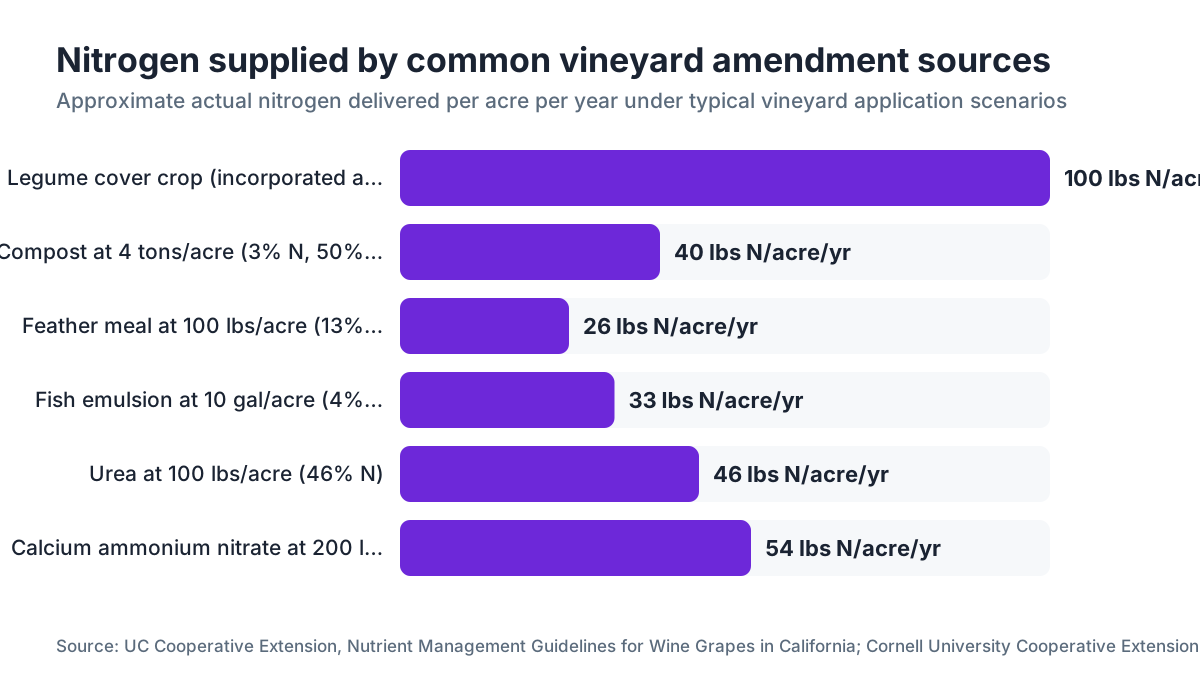
Yes, though the mechanism is slower than bagged products. Cover crops in the midrow are the lowest-cost, longest-lasting tool for building organic matter and fixing nitrogen in a vineyard. Legume-based mixes (clover, vetch, bell beans) supply 50 to 150 lbs of nitrogen per acre per year when properly inoculated and incorporated at full bloom [6]. That's real N credit that reduces or eliminates the need for synthetic nitrogen in many established blocks.
Cool-season grass mixes (cereal rye, oats, annual ryegrass) don't fix nitrogen, but they build organic matter faster than legumes because their carbon-to-nitrogen ratio is higher, so the residue decomposes more slowly. Research from UC Cooperative Extension found that a 5-year cover crop program in Napa Valley vineyards raised organic matter in the top 12 inches from a baseline of 1.2% to 1.9%, a meaningful jump [4].
The practical risk in many western regions is water competition. Cover crops in the midrow compete with vines for water, which is intentional in high-vigor irrigated blocks but can hurt yield in dry-farmed or low-rainfall sites. WSU Extension research in eastern Washington found that cover crops in low-precipitation Riesling blocks cut vine water status enough to cause early berry shrivel in drought years [3]. Match the cover crop strategy to your irrigation situation.
For the vine row itself, a weed-free or shallow-rooted annual strip usually beats a competitive perennial, especially on young vines.
What are the best nitrogen sources for established grapevines?
Grapevines have low nitrogen requirements compared to row crops. The accepted range for a mature, producing vineyard is 40 to 80 lbs of actual N per acre per year, and many sites on the low end of that range produce better fruit than those pushing the top [4]. Excess nitrogen drives vegetative growth, increases disease pressure, delays maturity, and dilutes flavor compounds. More is not better.
Sources worth considering:
Organic options
- Compost: slow-release, variable N content, supplies a portion of annual needs
- Cover crop incorporation: 50-150 lbs N/acre/year from legumes [6]
- Fish emulsion, feather meal, blood meal: faster release, useful for in-season correction of deficiency
Synthetic options
- Calcium ammonium nitrate (CAN): fast, water-soluble, can be fertigated, well-suited to drip irrigation blocks
- Urea: cheap, high analysis, volatilization risk if surface-applied without incorporation or rainfall
- Ammonium sulfate: useful when you want both nitrogen and sulfur, slightly acidifying
Timing matters as much as source. Peak nitrogen demand runs from budbreak through bloom. Applications after veraison push late-season growth and reduce cold hardiness. Cornell's viticulture program recommends splitting nitrogen with 50 to 70% applied at budbreak and the rest at fruit set, rather than a single pre-season dump [5].
Fertigation through a drip system is the most efficient delivery for established blocks. It lets you split applications into weekly or biweekly pulses that match vine uptake without surface runoff losses.
When is gypsum a better choice than lime for vineyard soils?
Gypsum is calcium sulfate, and it does two distinct jobs. First, it supplies calcium and sulfur to soils that are deficient without touching pH. Second, it improves the structure of high-sodium (sodic) soils by swapping sodium on clay exchange sites for calcium, which lets the clay flocculate rather than disperse and seal the surface.
In practice, gypsum earns its keep in California's Central Coast and San Joaquin Valley vineyards where irrigation water carries sodium and magnesium that build up over time [4]. If your sodium adsorption ratio (SAR) is above 3 to 4 and you're seeing poor infiltration despite good texture, gypsum at 1 to 2 tons per acre can make a real physical difference.
If your soil pH is already at 6.0 or above and your calcium is adequate (calcium saturation above 65% of CEC), gypsum adds little. Don't apply it just because someone told you it loosens soil. It only loosens sodic soil. On normal, non-sodic soils with balanced exchangeable cations, the effect on tilth is minimal.
What about biochar, zeolite, and other specialty amendments?
Biochar gets a lot of attention right now, and the science is genuinely interesting, but the field results in vineyards are mixed enough that I'd call it an experimental investment, not a standard practice. Biochar is charcoal produced from organic material at low-oxygen temperatures. It's highly porous and can raise CEC and water holding capacity in sandy soils over the long term. A 2019 meta-analysis in the journal Agronomy found that biochar increased crop yields in acidic, low-fertility soils by an average of 11 percent, but the effect was small or negative in already-fertile soils [7]. Vineyard-specific replicated trials are sparse. Rates that show any effect run 1 to 5 tons per acre, and biochar currently costs $400 to $1,200 per ton depending on source. The math only pencils out on a sandy, infertile, acidic site where you're also fixing pH at the same time.
Zeolite (clinoptilolite) is a natural mineral with high CEC that can improve nutrient retention in coarse soils and slow nitrogen leaching. It's used in some high-value specialty crop situations. Rates run 1 to 4 tons per acre. It's not cheap and the vineyard-specific ROI data is thin. I wouldn't make it a first-year investment.
Humic and fulvic acid products are sold aggressively to vineyard operators. The honest answer: evidence for a real agronomic response in already-adequate soils is weak. A 2021 review in Scientia Horticulturae found variable results, with meaningful responses mainly in degraded or compacted soils with very low baseline organic matter [8]. If your organic matter is above 2 percent, save your money.
Silicic acid products, biological inoculants (mycorrhizal fungi, rhizobacteria), and kelp extracts all get sold as amendments too. Mycorrhizal inoculants have solid supporting science for transplant establishment in fumigated or disturbed soils where native fungi were killed, but established vineyards with intact soil food webs generally don't respond [9]. Kelp has some evidence for improved stress tolerance, but the yield effects in vineyards are inconsistent.
How do you manage potassium and magnesium without causing an imbalance?
Potassium deficiency in grapevines shows as marginal leaf scorch and can depress berry sugar accumulation. But excess potassium is arguably the more common problem in California and Pacific Northwest wine grape production, where background soil K is already high and decades of compost or manure have pushed it higher [4].
High K interferes with magnesium uptake (the K:Mg antagonism), causing the magnesium deficiency symptom of interveinal chlorosis on older leaves mid-season. The fix is almost never to add more magnesium. It's to stop adding potassium and let the ratio normalize. If magnesium is genuinely deficient by petiole test, foliar magnesium sulfate (Epsom salt) at 10-20 lbs per acre per application is a fast correction that bypasses soil antagonism.
Cornell's viticulture extension guideline puts target soil K at 100 to 200 ppm by Mehlich-3 for most soils, with Ca:K ratios in the 13:1 to 20:1 range [5]. If you're above 300 ppm K in the soil, stop adding any amendment that carries significant potassium until the level drops, which can take several years without additions.
Wood ash gets promoted as a vineyard amendment. It's a real K and Ca source, slightly alkaline. On acidic soils with low K it can help. On already-high-K soils or soils above pH 6.5, it's counterproductive. Test before you apply.
What worker safety rules apply when applying soil amendments?
Most standard soil amendments (lime, gypsum, compost) fall outside EPA Worker Protection Standard (WPS) pesticide regulation. But some soil-applied products are federally registered pesticides. Fumigants like metam sodium and chloropicrin, used in new vineyard establishment to clear nematodes and soilborne pathogens, are WPS-regulated and require specific training, personal protective equipment, and application records [10].
The EPA WPS (40 CFR Part 170) requires that workers and handlers applying or re-entering treated areas after WPS-regulated soil treatments get annual pesticide safety training, access to pesticide safety information posted at a central location, and access to emergency medical care information [10]. Restricted-entry intervals (REIs) for soil fumigants can run 5 days or longer depending on the product and application method.
For organic amendments like compost made from biosolids (Class A or Class B), EPA has separate regulations under 40 CFR Part 503 governing pathogen reduction, vector attraction, and application rate limits when used on food crop land [11]. Most vineyard-grade composts come from green waste or agricultural residues and aren't subject to Part 503, but check your compost source's paperwork.
For California operations, CDFA's Fertilizing Materials Inspection Program requires that fertilizers sold in the state carry a guaranteed analysis label and meet registration requirements. Off-label or unregistered amendments applied in CA can draw fines [12].
Keeping accurate records of what you apply, when, and at what rate is good agronomic practice and, for WPS-regulated products, a legal requirement. Platforms like VitiScribe make it easier to log amendment applications alongside spray records in one place, which simplifies both internal reviews and compliance audits without separate paper files.
How do organic certification rules affect which amendments you can use?
If you're managing a certified organic vineyard or transitioning toward certification, the National Organic Program (NOP) under USDA restricts which soil amendments are allowed [13]. The core principle is that synthetic fertilizers are prohibited, but the details matter.
Allowed: compost (meeting NOP compost standards for time and temperature), cover crop-derived green manures, untreated plant and animal materials, gypsum (natural mineral form), calcitic and dolomitic limestone, sulfur, copper sulfate (with restrictions), rock phosphate, wood ash, fish meal, kelp meal, Chilean nitrate (with a 20% cap on total nitrogen from this source annually).
Prohibited: synthetic nitrogen (urea, ammonium nitrate, CAN unless NOP-approved), synthetic pesticides applied as soil treatments, most synthetic micronutrient sources unless specifically listed.
The compost standard (NOP 205.203) requires that raw manure be composted to specific temperature profiles: 55-77°C for a minimum of 15 days in a windrow system with at least 5 turnings, or equivalent static pile or vessel time-temperature requirements [13]. If you're buying compost for an organic operation, ask for the supplier's time-temperature logs.
Transition takes three years from the last prohibited substance application before you can sell fruit as certified organic. Amendments containing prohibited materials during transition reset the clock for that block.
How do you build an amendment plan and track applications over time?
A vineyard amendment plan shouldn't be a one-page summary you revisit every few years. The soils in a 20-acre block can vary enough that the north end needs lime while the south end doesn't. Zone-by-zone tracking over multiple years is the only way to see whether your applications are moving numbers in the right direction.
Start with a baseline soil test by management zone. Test annually for the first three years of a program, then shift to every two to three years once you've established a trend. Keep petiole data alongside soil data so you can connect soil changes to vine nutrition response.
Build a simple ledger for each block: date, amendment product, rate (lbs or tons per acre), acres treated, and the lab report that prompted the application. This is the same recordkeeping structure required for WPS-regulated treatments, so consolidating it makes sense. A spreadsheet works fine for small operations. Larger operations with multiple blocks, multiple certification bodies, and multiple applicators tend to benefit from dedicated software.
Review the plan each fall after harvest when you have the season's petiole results in hand. Compare year-over-year soil test trends against amendment inputs and any yield or quality changes. After a few seasons, patterns emerge. You'll find which blocks respond to compost, which ones have chronic potassium excess no matter what you do, and which ones are stable enough to need almost nothing.
For tracking amendment records alongside spray applications, cover crop seedings, and tissue test data in a single place built for vineyard compliance, VitiScribe is worth a look, particularly if you're managing multiple blocks for an estate or custom crush program.
You can also see how soil management fits the broader operational picture of running a vineyard by looking at how different production contexts handle record-keeping.
What amendments are most commonly overapplied, and what should you skip?
Let's be direct about where growers waste money.
Phosphorus is overapplied in most vineyards with a history of compost or manure use. Phosphorus builds up because it binds tightly to soil particles and doesn't leach. Most western US vineyard soils that have taken compost for a decade are already at or above sufficiency. Adding more phosphorus gives no yield benefit and can block zinc and iron uptake. Skip phosphorus unless your soil test shows deficiency.
Kelp meal and fish hydrolysate as soil amendments (rather than foliar sprays) are popular but mostly just supply slow-release nitrogen at a high cost per pound of N. If nitrogen is what you need, there are cheaper ways to get it.
Soil pH adjusters sold as liquid calcium products are almost universally overpriced next to agricultural lime. A ton of ag lime at $30 to $60 delivers far more calcium carbonate equivalence per dollar than any liquid product on the market.
Microbial inoculant products applied to established vineyard soils, while not harmful, rarely produce measurable results in soils that haven't been fumigated or severely disturbed. The native soil fungal community in a vineyard more than five years in the ground is already colonized. You're not adding anything that isn't already there [9].
The amendment that's almost never a waste: a good soil test before any application. At $40 to $150 per full analysis, it's the cheapest ROI in vineyard nutrition management.
Frequently asked questions
How often should I test vineyard soil before applying amendments?
For a new block or a new amendment program, test annually for the first three years to establish a trend. Once you've confirmed that pH, organic matter, and major nutrients are moving in the right direction, testing every two to three years is usually enough. Always test before adding any amendment you haven't used before. Using the same lab each time matters because extraction methods vary.
What is the ideal soil pH range for wine grapes?
Most Vitis vinifera varieties perform best in a pH range of 5.8 to 6.5. Below 5.5, aluminum toxicity becomes a real concern and phosphorus availability drops. Above 6.8, iron and manganese deficiency appear. The optimum within that range shifts by rootstock: 5A and 3309 tolerate lower pH better than Riparia Gloire, for example.
Can I apply lime to established vines, or only before planting?
You can apply lime to established vineyards as a surface application, but it moves through the soil profile slowly, roughly 1 inch per year. That means subsoil acidity is very hard to correct once vines are in the ground. Pre-plant deep incorporation is the only efficient way to fix subsoil pH. For established blocks, surface lime applied in fall after harvest will gradually improve the top 8 to 12 inches over several seasons.
What's the difference between compost and green manure cover crops as amendments?
Both add organic matter and feed soil biology, but the mechanisms differ. Compost is a finished product with stabilized carbon that integrates into the soil slowly and supplies modest nutrients over months to years. Green manure cover crops supply fresh, high-nitrogen organic matter when incorporated at bloom, which breaks down faster and delivers nitrogen more quickly. Legume cover crops also fix atmospheric nitrogen, something compost does not.
How much nitrogen do grapevines actually need per year?
Established, producing vineyards typically need 40 to 80 lbs of actual nitrogen per acre per year. Many well-managed sites are fine toward the low end. Excess nitrogen drives vegetative growth, shades fruit, delays maturity, and can reduce wine quality. Legume cover crops alone can supply 50 to 150 lbs N per acre per year when managed well, potentially meeting the full vine requirement without any synthetic fertilizer.
Is gypsum useful for all vineyard soils, or only certain types?
Gypsum earns its keep in two specific situations: soils that are calcium-deficient or sulfur-deficient without a pH problem (where lime would overshoot), and sodic soils with elevated sodium adsorption ratio (SAR above 3-4) where you need to improve water infiltration and structure. On non-sodic soils with adequate calcium, gypsum delivers little. Test first.
What soil amendments are allowed under USDA organic certification?
The National Organic Program (NOP, 7 CFR Part 205) allows compost meeting specific time-temperature standards, limestone, gypsum, sulfur, rock phosphate, green manures, fish meal, kelp meal, and wood ash among others. Synthetic nitrogen fertilizers, most synthetic micronutrient sources, and synthetic soil fumigants are prohibited. Chilean nitrate is allowed but capped at 20% of total crop nitrogen per year.
Does biochar actually improve vineyard soil?
The research is promising but not definitive for vineyards specifically. A 2019 meta-analysis found biochar improved yields by an average of 11% in acidic, low-fertility soils, but showed little or negative effect in already-fertile soils. Rates that show any effect are 1 to 5 tons per acre, and biochar costs $400 to $1,200 per ton. It's worth considering on sandy, infertile, acidic sites. It's hard to justify on well-developed vineyard soils.
Can high soil potassium cause magnesium deficiency in grapevines?
Yes. Potassium and magnesium compete for the same uptake pathways in vine roots. When soil K is very high relative to Mg, the vine absorbs excess K and magnesium uptake is suppressed, causing interveinal chlorosis on older leaves. The fix is usually to stop adding potassium-heavy amendments and wait for levels to normalize, rather than adding more magnesium. Foliar magnesium sulfate is a fast short-term correction while soil levels adjust.
What records do I need to keep for soil amendment applications?
For general agronomic purposes, keep the date of application, the product name and guaranteed analysis, the application rate in pounds or tons per acre, the block or zone treated, and the soil or tissue test results that prompted the decision. For WPS-regulated soil fumigants, EPA 40 CFR Part 170 requires additional records including worker training documentation, restricted-entry intervals, and emergency medical contact information posted at the site.
When should I use synthetic fertilizer instead of organic amendments in a vineyard?
Synthetic fertilizers make sense when you need fast, precise correction of a specific nutrient deficiency identified by a petiole test, especially in-season when compost or cover crop decomposition is too slow. Fertigation through drip irrigation is the most efficient delivery method. They're also practical for large blocks where sourcing and applying enough compost volume is logistically hard. The trade-off is no benefit to soil biology or long-term organic matter.
How do I correct iron chlorosis in a vineyard caused by high pH?
Iron chlorosis from high-pH soils (above 7.0 to 7.5) shows as interveinal yellowing on young leaves. Soil acidification with elemental sulfur is the long-term fix, applied at rates calculated from a soil pH test, typically 0.5 to 2 tons per acre for a meaningful pH shift over 1 to 3 seasons. Short-term, foliar iron chelate sprays or ferric EDTA fertigated through drip can correct visible deficiency quickly while the soil work takes effect.
Are wood ash or grape pomace compost good vineyard amendments?
Wood ash is useful on acidic soils with low potassium: it supplies K and Ca and raises pH. On soils already above 6.5 in pH or above 250 ppm K, it pushes both values higher and causes more problems than it solves. Grape pomace compost is high in potassium and reasonable in nitrogen; test your background soil K before using it. Either can be agronomically sound or counterproductive depending on your starting soil chemistry.
Sources
- UC Agriculture and Natural Resources, Soil pH and Lime Requirements for Grapevines: Soil pH below 5.5 increases aluminum solubility to levels toxic to grapevine roots; target pH for most Vitis vinifera is 5.8 to 6.5
- Washington State University Extension, Vineyard Soil Management: Agricultural limestone takes 6 to 18 months to fully equilibrate soil pH; pre-plant deep incorporation is the most effective method for correcting subsoil acidity
- Washington State University Extension, Soil Sampling for Vineyards: WSU recommends sampling each distinct soil unit separately because variability within a single block can change lime recommendations by a full ton per acre; also recommends sampling 0-12 and 12-24 inch depths
- UC Cooperative Extension, Nutrient Management Guidelines for Wine Grapes in California: Established vineyards typically need 40 to 80 lbs actual N per acre per year; excess K is more common than deficiency in California production; 3 to 5 years of consistent compost is required to meaningfully raise organic matter percentage
- Cornell University Cooperative Extension, Vineyard Nutrition and Fertilization: Cornell recommends target soil K of 100 to 200 ppm by Mehlich-3 and Ca:K ratios of 13:1 to 20:1; suggests splitting N applications 50-70% at budbreak, remainder at fruit set
- UC Cooperative Extension, Cover Cropping in Vineyards: Properly inoculated and incorporated legume cover crops supply 50 to 150 lbs of nitrogen per acre per year; a 5-year program in Napa Valley vineyards increased top-12-inch organic matter from 1.2% to 1.9%
- Agronomy (MDPI journal), Meta-analysis of biochar effects on crop yield, 2019: Biochar increased crop yields by an average of 11% in acidic, low-fertility soils; the effect was small or negative in already-fertile soils
- Scientia Horticulturae (Elsevier journal), Review of humic and fulvic acid effects on horticultural crops, 2021: Humic and fulvic acid products show variable agronomic response; meaningful effects mainly observed in degraded or compacted soils with very low baseline organic matter
- UC Davis Department of Viticulture and Enology, Soil Biology and Mycorrhizae in Vineyards: Mycorrhizal inoculants show response in fumigated or severely disturbed soils; established vineyard soils with intact food webs generally do not show yield response to inoculant application
- US EPA, Worker Protection Standard (40 CFR Part 170): WPS requires annual pesticide safety training, central posting of pesticide safety information, and access to emergency medical care for workers and handlers using WPS-regulated products including soil fumigants; restricted-entry intervals for soil fumigants can exceed 5 days
- US EPA, Biosolids Regulations (40 CFR Part 503): EPA 40 CFR Part 503 governs pathogen reduction, vector attraction, and application rate limits for biosolid-derived compost used on food crop land
- California Department of Food and Agriculture, Fertilizing Materials Inspection Program: California requires fertilizers sold in the state to carry a guaranteed analysis label and meet CDFA registration requirements; unregistered amendments can result in fines
- USDA Agricultural Marketing Service, National Organic Program (7 CFR Part 205): NOP 205.203 requires compost to reach 55-77°C for a minimum of 15 days with at least 5 turnings in a windrow system; Chilean nitrate is allowed but capped at 20% of total crop nitrogen per year; synthetic nitrogen fertilizers are prohibited
Last updated 2026-07-09