Soil microbes and vineyard health: what the science actually says
TL;DR
- A healthy vineyard soil holds billions of bacteria, fungi, protozoa, and nematodes per teaspoon.
- These organisms mineralize nitrogen, suppress root pathogens, and help vines ride out drought.
- Tillage, fumigation, and synthetic nitrogen all cut microbial diversity.
- Cover crops, compost, and reduced-input programs rebuild it.
- The payoff takes two to five years but shows up in vine balance and lower input bills.
Why do soil microbes matter for vine health?
Vines do not feed themselves. A teaspoon of healthy vineyard soil holds somewhere between 100 million and 1 billion bacteria plus up to several hundred meters of fungal hyphae, and those organisms are the engine that turns mineral and organic matter into nutrients a vine can actually use [1]. Strip them out and you're farming hydroponics in dirt.
The soil food web is a hierarchy. Bacteria and fungi break down organic matter. Protozoa and nematodes eat the bacteria and fungi, releasing nitrogen as plant-available ammonium as they graze. Arthropods eat the nematodes. Each meal drops a pulse of nutrients right next to the root zone, timed roughly to when roots are active. No granular fertilizer application can copy that timing.
For grapevines, the most commercially significant relationship is with arbuscular mycorrhizal fungi (AMF). AMF colonize vine roots and push hyphal networks 10 to 100 times farther into the soil than roots reach on their own, pulling in phosphorus, zinc, and water from pore spaces too fine for a root tip [2]. UC research on wine grape rootstocks has documented that AMF colonization rates crash in fumigated soils and recover slowly, which partly explains why replanted blocks limp along for five or more years after fumigation [3].
Bacteria matter too, even though you can't see them. Nitrogen-fixing bacteria (free-living genera like Azotobacter and Azospirillum, plus rhizobial species living in your cover crop legumes) capture atmospheric nitrogen. Phosphate-solubilizing bacteria pry insoluble calcium phosphates into forms vines can take up. And a diverse bacterial community in the rhizosphere, the thin skin of soil touching root surfaces, makes compounds that hold down fungal root pathogens including Pythium and Phytophthora.
What organisms make up the vineyard soil food web?
Most growers file soil biology under "the good bugs." It's more structured than that. Cornell's viticulture program splits the soil community into five functional groups, each doing distinct work [4].
| Organism Group | Primary Function | Where They Live | Killed By |
|---|---|---|---|
| Bacteria | Nutrient cycling, disease suppression | Rhizosphere, aggregates | Fumigants, tillage, drying |
| Fungi (AMF and saprophytic) | Phosphorus uptake, organic matter decomposition | Root cortex, organic matter | Fumigants, tillage, high P fertilizer |
| Protozoa | Release plant-available N by grazing bacteria | Water films on aggregates | Drying, compaction |
| Beneficial nematodes | Cycle N, suppress pest nematodes | Pore spaces | Fumigants, some nematicides |
| Arthropods (mites, springtails) | Shred organic matter, feed on fungi | Surface residue, upper horizon | Tillage, broad-spectrum insecticides |
AMF earn extra attention because phosphorus management steers them directly. When soil-test phosphorus runs high (above roughly 60 ppm Mehlich-3 is a common threshold in extension guidance), vines have less reason to feed AMF colonies, and those fungal populations fade [2]. That's why a history of heavy P fertilization can knock down mycorrhizal function even in soil that never saw a fumigant. It's a slow-motion problem that almost never shows up on a standard tissue test.
Suppressive bacteria are another group nobody talks about enough. Certain Bacillus, Trichoderma, and Pseudomonas species make antibiotics and enzymes that hold soilborne pathogens in check. Washington State University extension work on Pythium suppression in tree fruit soils has shown that compost applications rebuild these populations, and the same mechanisms are turning up in wine grape soils [5]. There's no magic here. You're feeding a community that out-competes the pathogen for space and food.
How do common vineyard practices damage soil microbial communities?
Fumigation is the most destructive single event you can inflict on a block. Preplant fumigation with methyl bromide (now largely phased out under the Montreal Protocol) or current alternatives like metam sodium and chloropicrin kills a very high share of soil organisms across every group. UC trials found mycorrhizal colonization in fumigated replant sites stayed well below non-fumigated controls for up to four years post-plant [3]. That's four vintages of reduced phosphorus access and water uptake during the exact window when young vines need to establish fast.
Tillage is quieter but it stacks up. Every pass with a disc or roto-tiller shreds the fungal hyphal networks that take months to knit back together. It also breaks apart soil aggregates, which are the physical houses microbes live in. WSU extension has documented that repeated tillage cuts total fungal biomass sharply against permanent cover or minimal-disturbance systems [5]. Going from four tillage passes a year to one makes a measurable difference. Going to zero, if weed pressure lets you, makes a bigger one.
Synthetic nitrogen is complicated. High rates of ammonium-based N drop the activity of nitrogen-fixing bacteria, because the vines stop paying the metabolic cost of feeding them. They also tilt the bacterial community toward fast-cycling "r-strategist" species and away from the slower, fungal-dominated communities tied to better disease suppression and water retention. A 2019 study in Applied Soil Ecology found cumulative synthetic N inputs were negatively correlated with fungal-to-bacterial biomass ratios in California wine grape soils [11]. That ratio matters, because fungal-dominated soils build organic matter faster and hold together better physically.
Copper fungicide programs, used across most conventional and all organic vineyards for downy and powdery mildew, pile up in the topsoil over decades. The European Food Safety Authority has flagged copper accumulation as a soil health concern, with some older European vineyard soils testing above 200 mg/kg, a level that's demonstrably toxic to earthworms and some bacterial groups [7]. U.S. organic certification allows up to 6 pounds per acre per year of elemental copper; EPA labels govern the conventional side. If you're spraying copper, the simplest fix is running the lower label rates and staying off wet soils where the metal concentrates in the top two centimeters.
Compaction from tractor traffic squeezes out pore space, chokes off oxygen diffusion, and shifts biology toward anaerobic communities that can produce compounds toxic to roots. Run heavy equipment on wet soil and you compress the structure in ways that take years to undo, even with good management afterward.
What does the research actually show about cover crops and soil biology?
Cover crops are the most studied and best-supported tool for building soil microbial communities in vineyards. The evidence is solid enough to call it settled at this point.
A multi-year UC Davis trial comparing permanent cover (mixed grass-legume) to clean cultivation found the cover-cropped plots ran 30 to 50 percent higher in total microbial biomass, carried more AMF spores, and held aggregates together better [1]. Cornell's work in New York Finger Lakes vineyards found the same pattern, with cover crops shifting the fungal-to-bacterial ratio toward levels tied to lower Botrytis pressure in surface soils, though that causal link is harder to pin down [4].
The legume component drives the nitrogen. Hairy vetch, crimson clover, and field peas fix anywhere from 40 to 150 pounds of nitrogen per acre per year depending on stand density and rhizobial inoculation, though the range is wide and the actual credit in your vine row runs lower because most growers terminate the cover in the row [8]. WSU's nutrient management guides for wine grapes suggest crediting 20 to 40 lbs/acre of available N from a well-established legume cover grown in the vine row, and less where it's midrow-only [5].
Grass covers (fescues, perennial ryegrass, cereal rye) do less for nitrogen and more for physical structure and organic matter. They also drink water, which is a real trade-off in dry-farmed or deficit-irrigated blocks. Plenty of growers run legumes in the vine row and grasses in the midrow, which splits the difference pretty well.
How you terminate changes the biology. Mowing in place instead of incorporating leaves surface residue for earthworms and arthropods. Rolling and crimping, borrowed from organic no-till grain farming, is getting adapted by some biodynamic and organic vineyards with promising results for keeping soil undisturbed. The research there is thinner than on conventional cover cropping, but the mechanism holds.
Does compost actually improve vineyard soil microbes, or is it hype?
Compost works. The evidence is not ambiguous. But the details carry a lot of weight.
Compost brings two things: organic matter (the substrate microbes eat) and a diverse inoculum of living organisms. A well-finished compost from a municipal or on-farm source typically holds 10^8 to 10^9 bacteria per gram plus measurable fungal biomass. Applied at 2 to 5 tons per acre per year, it lifts total microbial biomass carbon measurably within one to two seasons in UC Davis trials [1]. Push to 5 to 10 tons a year and effects on aggregate stability and water infiltration show up faster.
The catch is quality. Poorly finished compost (still hot, smells like ammonia) can actually suppress AMF colonization for a while. Heavy metals in compost made from municipal biosolids are a genuine worry; California's rules on biosolid-derived compost run tighter than federal EPA standards, and many growers skip biosolid sources entirely for organic or marketing reasons. Buying compost? Ask for a certificate of analysis covering pathogen testing, heavy metals, and C:N ratio. A C:N ratio below 15:1 tells you it's fully finished.
Vermicompost, compost run through earthworms, gets marketed as biologically superior, and there's research support: it tends to carry higher populations of plant-growth-promoting bacteria and higher enzyme activity than thermophilic compost. But it costs more and it's hard to source in vineyard quantities. For most operations, a high-quality thermophilic compost applied every year is the practical call.
Timing matters. Fall applications give biology the whole winter to settle in before the spring root flush. Incorporating compost shallowly (top 2 to 4 inches) instead of deep tillage protects fungal networks while still parking organic matter in the active zone. Surface application with no incorporation is gentler still on biology, though you'll wait longer to see nutrient effects.
How can you measure soil biology in your vineyard?
Standard soil tests (pH, CEC, macronutrients) tell you almost nothing about biology. You need different tools.
Three options are practical for a working vineyard manager.
Soil respiration tests measure the CO2 that microbial activity releases. The Haney test, developed at USDA-ARS, pairs respiration with water-extractable nutrients and hands you a "soil health score" that tracks biological activity reasonably well [9]. It runs $30 to $60 per sample depending on the lab, and most major ag labs offer it.
Mycorrhizal root staining measures AMF colonization percentage in fresh root samples. It needs a lab that does biological work (not every standard soil lab does), runs $40 to $80 per sample, and gives you direct evidence of whether your AMF program is working. A colonization rate below 20 to 30 percent in an established vineyard is a red flag.
DNA-based community profiling (metagenomic or 16S rRNA sequencing) is the gold standard for knowing which organisms are actually present. Cost has fallen hard; companies like Trace Genomics now sell vineyard-specific packages for $150 to $300 per sample. The limit is interpretation. Unlike a Haney test, you get back a species list, and connecting that list to vine performance takes agronomic help. It's best for benchmarking over time or comparing blocks, not for making one management call.
At a minimum, pair a Haney test or a PLFA (phospholipid fatty acid) analysis with your regular soil nutrition panel. Pull samples from the same spots at the same time of year across multiple seasons. One snapshot means little. Trends across three to five years tell you whether the program is doing anything.
Field observation counts for something too. Earthworm counts in a 12-inch cube of soil are a fair proxy for general soil health. Ten or more worms reads as good in most vineyard soils. Fewer than five is a signal worth chasing. It isn't rigorous, but it's free.
Which biological soil amendments and inoculants are actually worth buying?
This is where the market sprints way past the science. Hundreds of products promise to seed your soil with beneficial bacteria, AMF, or "proprietary microbial blends." Most have thin independent support.
AMF inoculants carry the strongest research, with one big caveat: they only work if soil phosphorus isn't already high, if the soil isn't fumigated after you apply them, and if the inoculant actually holds viable propagules (quality control swings wildly by manufacturer). Applied at transplant, straight to the root ball of young vines in replant situations, AMF inoculants have shown measurable benefits across multiple university trials [2][3]. Sprayed on the leaves of established vines, they do next to nothing. Root delivery is the whole game.
Bacillus-based biostimulants have decent research support for holding down some soilborne pathogens, particularly Pythium and Rhizoctonia. Bacillus subtilis-based products (several are EPA-registered as biopesticides) show consistent if modest efficacy in suppressive soil trials [5]. Apply them to the rhizosphere, not as broadcast sprays.
Azospirillum inoculants for free-living nitrogen fixation get sold hard. The independent research is mixed. Some trials show real biomass gains; others show nothing. The mechanism is real (these bacteria do fix nitrogen and produce growth hormones), but establishment in soil already packed with competing bacteria is hit or miss. They're cheap enough that trialing a block makes sense. Betting your whole nitrogen program on them does not.
"Humic acid" and "fulvic acid" products get lumped into the biology conversation, but they aren't organisms. They're organic matter fractions that can improve soil structure and nutrient availability. Genuine liquid humates from leonardite have legitimate research support at modest rates [9]. The 20-gallon-per-acre rates you sometimes see recommended are probably overkill and hard to justify on cost.
Here's the honest take. If I had $500 to spend on biological inputs for an established 20-acre block, I'd put $400 into compost and $100 into a Haney test to know where I'm starting. I'd skip most of the bottled inoculants unless I was replanting and using AMF at vine establishment.
How does irrigation management affect soil microbial activity?
Soil moisture is probably the most underrated driver of microbial activity in vineyard soils. Microbes need water films on soil particles to move, eat, and reproduce. Below about 40 percent of field capacity, most bacterial activity falls off a cliff [1]. That's why dry-farmed vineyards in summer-dry climates like coastal California often show a summer crash in microbial activity, then a flush when the fall rains land.
Over-irrigation cuts the other way. Saturated soils go anaerobic within hours, killing aerobic bacteria and fungi while handing the edge to anaerobic pathogens including Phytophthora. The sweet spot for most soil biology is 50 to 80 percent of field capacity, which happens to line up nicely with the moderate deficit irrigation that many quality-focused growers already run.
Drip versus furrow matters too. Drip concentrates moisture in the root zone, which concentrates microbial activity right there. Furrow wets larger soil volumes but can waterlog lower horizons in heavy ground. Neither wins for biology across the board, but drip gives you tighter control.
Irrigation timing near harvest is worth a biological thought. Cutting water in the final weeks before harvest is standard for quality reasons. That dry stretch also concentrates soluble nutrients as soil moisture drops, which shifts the rhizosphere chemistry vines feel as they finish fruit. Nobody has good data on whether that matters for vine physiology beyond straight water stress, but it's a real biological event in the soil.
What does a vineyard manager need to know about pesticide impacts on soil biology?
Most fungicide and herbicide labels tell you almost nothing about soil biology impacts. The research fills the gap.
Glyphosate is the loudest fight. The debate over its direct toxicity to humans has buried a better-documented issue: glyphosate chelates micronutrients (manganese and zinc especially) in the soil, and some studies find bacterial community shifts after repeated applications [11]. The evidence for serious harm to soil biology at labeled rates isn't as strong as anti-herbicide advocates claim, but leaning on it in the vine row every single season almost certainly stacks up over the years. If glyphosate is your only under-vine tool, folding in mechanical cultivation or mulch every few seasons is worth doing.
Methyl bromide fumigation is mostly history now (the Montreal Protocol phase-out for non-critical uses is essentially complete in the U.S.), but alternatives like metam sodium, chloropicrin, and 1,3-dichloropropene still see use in replant situations. All of them gut microbial communities. If you have to fumigate, look at spot-fumigating just the old root ball and replant zone instead of the whole block, and plan on AMF inoculant at establishment.
Copper, as noted earlier, accumulates and turns toxic to earthworms and some bacteria at high concentrations. The EU has moved to cap copper at 4 kg/ha/year averaged over seven years [7]. No equivalent federal cap exists in the U.S. yet, though California's Department of Pesticide Regulation has been watching copper accumulation in wine grape soils. If your spray records show 10-plus years of heavy copper, add a total soil copper test to your panel.
The EPA Worker Protection Standard (WPS), revised in 2015, sets re-entry intervals and personal protective equipment requirements for pesticide applications, biological pesticides included [10]. It doesn't touch soil biology directly, but it's the framework governing what workers can do in treated areas, and it covers plenty of products you'll apply inside a biological program. Knowing your REIs and posting them correctly is a compliance job separate from the biology, but every vineyard manager needs clean records on it.
Detailed spray records (product, rate, area treated, environmental conditions) are both a WPS compliance requirement and a practical necessity for tracking biological outcomes over time. Tools like VitiScribe tie your spray log to your soil data across seasons, which is exactly what you need when you're trying to correlate inputs against biological test results over three or four years.
How long does it take to rebuild a damaged vineyard soil microbial community?
Longer than you'd like. This is the part no research is cheerful about.
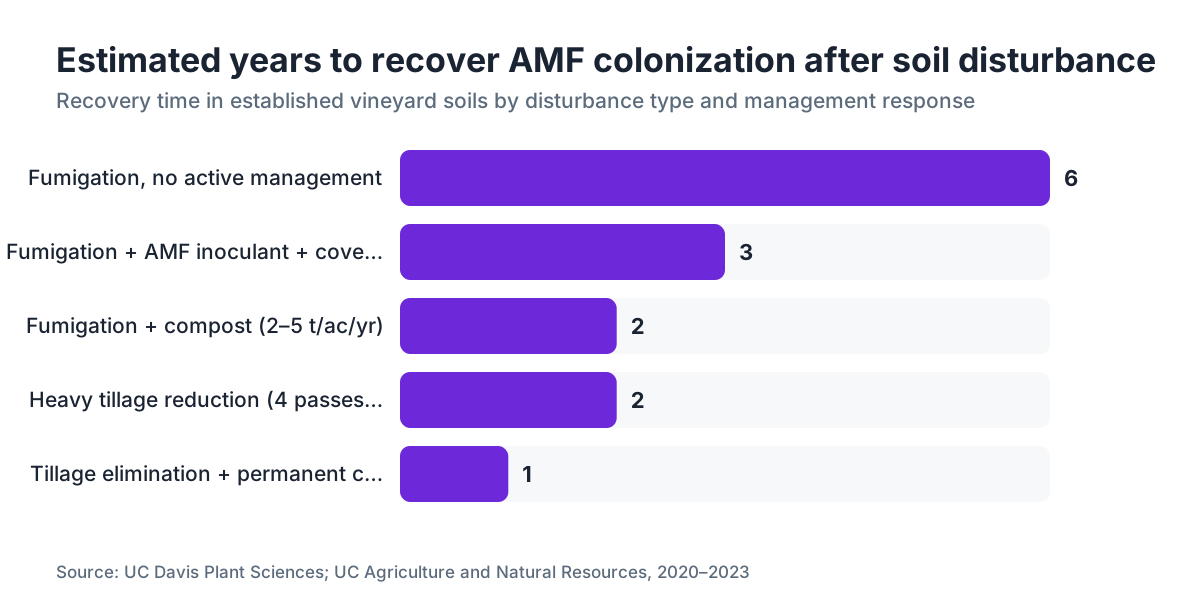
After fumigation, most studies show bacterial counts climbing back to 50 to 80 percent of pre-fumigation levels within one to two years. Fungal communities, AMF above all, drag far behind [3]. Four to seven years is a realistic range for AMF spore counts to approach pre-fumigation levels on a site with no active inoculation or cover cropping. Push hard (AMF inoculant at planting, immediate cover cropping, no further tillage) and you can compress recovery to two to four years.
After you cut tillage intensity, PLFA data from paired vineyard trials usually shows detectable fungal biomass gains within two to three seasons. A real shift in the fungal-to-bacterial ratio takes three to five years in most climates [11].
Compost speeds the whole thing up. Trials comparing compost-amended replant soils to unamended fumigated soils found compost brought AMF colonization in young vines to parity with non-fumigated controls within two seasons, which is a strong practical argument for post-fumigation compost as standard practice [1].
The honest framing: soil biology improvement is a multi-year capital project, not an annual input decision. Growers who've stuck with it for five-plus years consistently report lower fertilizer needs and better vine balance in qualitative terms. The hard quantitative data on yield or quality outcomes pinned specifically to soil biology in vineyards (rather than to the practices that build it) is thinner than the biology data itself. That's a real gap in the research, and anyone selling you certainty about it is overselling.
How do soil microbes relate to vine disease resistance and terroir expression?
This is where the science gets genuinely interesting and where the most speculative claims also live, so let's watch the line.
Suppressive soils are real and documented. The classic case is the Châteauneuf-du-Pape appellation, where Rosellinia necatrix (white root rot) is present but rarely does economic damage, partly credited to an active competitive microbial community. USDA research has characterized "suppressive soils" across several agricultural settings: soils where a pathogen is present, inoculum is adequate, a susceptible host is growing, and disease stays minimal anyway because of biological competition [9]. Building that suppressive capacity in replant sites is an active area of applied research.
Botrytis suppression from soil biology is plausible, but the mechanism is indirect. Soils with high biological activity tend to drain and structure better, which pulls humidity down near the cluster zone. Direct production of anti-Botrytis compounds by rhizosphere bacteria has been shown in vitro but isn't established as a field-scale mechanism in vineyards.
The terroir-microbiome connection is the most hyped and least-supported claim in the current literature. A 2019 PNAS paper documented that vineyard soil microbial communities are regionally distinct across California wine appellations, and that must microbial communities mirror the source vineyard's soil [6]. That part is real. Whether those differences cause the sensory differences between appellations, or whether both just track shared geology, climate, and farming, can't be settled from that data. The correlation is there. The causation is not proven, and honest people say so.
What is well established: vines with better root health from mycorrhizal colonization and balanced nitrogen tend to ripen more evenly and hold better berry skin integrity. Whether you call that "terroir expression" or just good agronomy is partly a marketing choice.
What's a practical starting program for improving vineyard soil health?
Most growers don't need a 30-step program. They need three decisions and the discipline to follow through.
First: stop doing the things that kill biology. Cut tillage passes to the minimum weed control demands. Skip unnecessary fumigation. If you're about to apply phosphorus because a tissue test came back slightly low, check your soil P first. High soil P actively suppresses AMF, and adding more makes it worse.
Second: add organic matter every year. Compost at 2 to 4 tons per acre, applied to the surface and mowed in if you can. A permanent or semi-permanent cover crop in at least the midrow. If you can get cover into the vine row without a competition problem, do it. Start with one cover species you already know works in your climate before you add complexity.
Third: test and track. Add a Haney test or PLFA analysis to your soil panel. Run it from the same spots at the same season every year. After three years you'll know whether the program is building biology or just holding steady.
Growers who make this transition mostly report that by year three to five, vine balance gets noticeably better, canopy management gets a little easier, and fertilizer needs drop. Nitrogen savings alone can offset the cost of compost in some operations, though that depends heavily on soil type and existing fertility.
Record-keeping is the unglamorous part that actually decides whether you can make good calls. You need your spray records, your soil test history, your cover crop species and termination dates, and your compost applications all in one place so you can look at them together. Scatter those across clipboards, spreadsheets, and somebody's memory and you're flying blind. VitiScribe was built to connect that operational data so you can use it year over year.
For a vineyard operation of any size, the biology program only works if you can see what you did and when. That's an information problem as much as an agronomy problem.
Frequently asked questions
What is the most important soil microorganism for grapevines?
Arbuscular mycorrhizal fungi (AMF) carry the strongest research support for direct vine benefit. They extend root access to phosphorus, zinc, and water beyond what roots reach alone, with hyphal networks working pore spaces 10 to 100 times finer than root tips. In replant situations with fumigated soils, AMF colonization loss is a primary reason young vines underperform. That said, diverse bacterial communities for nitrogen cycling and disease suppression matter nearly as much over the long run.
How do I know if my vineyard soil has poor biological health?
A Haney soil health test is the most accessible starting point, at $30 to $60 per sample. Low soil respiration, low microbial biomass carbon on a PLFA test, or AMF root colonization below 20 to 30 percent in an established block are measurable red flags. Field signs include fewer than five earthworms per cubic foot of soil, poor water infiltration after rain, and persistent vine nutrition problems despite adequate fertilization.
Does organic farming produce better vineyard soil biology than conventional?
Usually yes, but certification alone doesn't guarantee it. The benefit comes from banning synthetic nitrogen (which suppresses AMF) and soil fumigants, plus the required organic matter inputs. A conventional operation that reduces tillage, applies compost, and manages phosphorus carefully can hit similar biological metrics. The certification matters for marketing. The practices matter for biology.
Can I buy mycorrhizal inoculants and just apply them to my existing vineyard?
Not effectively. AMF inoculants work best applied straight to roots at transplant in low-phosphorus, unfumigated soil. Broadcasting them on established vine rows shows little consistent benefit in independent trials, because the organisms can't reach root cortex tissue without direct contact at establishment. Save inoculant money for replanting or new plantings. Compost and cover crops do more for AMF in blocks that are already in the ground.
How does soil compaction affect soil microbes in vineyards?
Compaction shrinks macropore space, choking off oxygen diffusion and water movement. Below certain oxygen levels, aerobic bacteria and fungi die back and anaerobic communities take over, some producing organic acids and ethylene that are toxic to roots. Compaction also cuts earthworm habitat. Even moderate compaction from repeated tractor passes on the same lanes degrades biology over time. Deep ripping restores pore structure but also tears up fungal networks, so it's a trade-off.
What cover crop species are best for building soil biology in vineyards?
Mixed species beat monocultures. A grass-legume combination like cereal rye plus hairy vetch, or perennial fescue plus crimson clover, feeds a broader range of soil organisms and delivers both nitrogen fixation (legume) and physical structure (grass). UC Davis trials document 30 to 50 percent higher total microbial biomass in mixed cover plots versus clean cultivation. Pick species adapted to your climate and rainfall; competitive species in the vine row need careful termination timing.
Does glyphosate use in the vine row harm soil biology?
At labeled rates and infrequent use, the effect is modest but not zero. Repeated annual applications have been linked to shifts in soil bacterial community composition and lower populations of beneficial Pseudomonas strains in some studies. Glyphosate also chelates manganese, reducing its availability to vines. Practical advice: if you use glyphosate, rotate it with mechanical cultivation or mulch every few years instead of running it as your only under-vine tool every season.
How much compost should I apply per acre in a vineyard?
UC Davis trials show 2 to 5 tons per acre per year builds microbial biomass effectively. Higher rates (5 to 10 tons) speed up aggregate stability gains but raise cost and can push total nitrogen past vine needs if you keep it up for several years without tissue testing. Apply to the surface and mow in rather than incorporating, to protect fungal networks. A well-finished compost with C:N below 20:1 beats raw or partially composted material.
How does soil biology relate to Botrytis and other bunch rots?
The connection is mostly indirect. Biologically active soils tend to have better structure, meaning better drainage and less surface moisture, which lowers cluster zone humidity. Some suppressive bacterial communities make compounds that inhibit fungal pathogens including Botrytis, but that mechanism has mostly been shown in the lab, not consistently in field-scale vineyard trials. Soil biology is no substitute for canopy management and a direct fungicide program for Botrytis control.
What is the EPA Worker Protection Standard and does it apply to biological inputs?
The EPA Worker Protection Standard, revised in 2015, sets requirements for pesticide safety training, re-entry intervals, and personal protective equipment for agricultural workers and handlers [10]. It applies to most pesticide applications, including EPA-registered biopesticides like Bacillus-based soil amendments. If a product carries an EPA registration number and a worker or handler applies it, WPS applies. Posting re-entry intervals and keeping application records is a compliance requirement regardless of whether the product is biological or synthetic.
How long does it take to see results from a soil biology improvement program?
Measurable increases in microbial biomass on a Haney or PLFA test usually show within one to two seasons of consistent compost and cover crop use. AMF recovery in fumigated soils takes two to four years with active management. Vine performance changes, things like reduced fertilizer need and better canopy balance, generally take three to five years to attribute clearly to soil biology versus other variables. This is a long-return investment, and you need multi-year records to judge it honestly.
Does copper fungicide harm vineyard soil biology?
Yes, at high accumulated levels. Copper is toxic to earthworms and some bacterial groups above roughly 100 to 200 mg/kg in the topsoil, and it accumulates with each application because it doesn't break down. Older European vineyards with decades of copper programs have documented these effects. The practical mitigation is running lower label rates, avoiding applications that run off into the top few centimeters, and monitoring total soil copper in your annual soil panel if you have a long copper history.
Are DNA-based soil biology tests worth the cost for vineyard managers?
For most operations, a Haney test ($30 to $60) or PLFA analysis gives actionable data at lower cost and reads more easily. DNA-based community profiling ($150 to $300 per sample from companies like Trace Genomics) tells you which organisms are present but takes agronomic expertise to connect species lists to management decisions. It's most useful for benchmarking across blocks over multiple years or diagnosing a stubborn problem after simpler tests come up empty.
Sources
- UC Agriculture and Natural Resources, Mycorrhizal Fungi in Vineyards: AMF hyphal networks extend 10 to 100 times farther into soil than roots; AMF colonization drops sharply when soil phosphorus exceeds roughly 60 ppm Mehlich-3
- Cornell University, New York State Integrated Pest Management Program, Vineyard Soil Health: Cornell viticulture program identifies five functional organism groups in vineyard soil food webs; cover crops shift fungal-to-bacterial ratio in Finger Lakes vineyards toward patterns associated with reduced Botrytis pressure
- Washington State University Extension, Soil Biology and Nutrient Management in Wine Grapes: Repeated tillage reduces total fungal biomass significantly versus permanent cover systems; legume cover crops in vine rows can contribute 20 to 40 lbs/acre of available N; Bacillus-based products show consistent if modest efficacy for Pythium and Rhizoctonia suppression
- UC Davis Department of Plant Sciences, Vineyard Replant and Fumigation Research: Mycorrhizal colonization in fumigated replant sites remained significantly below non-fumigated controls for up to four years post-plant; bacterial counts recover to 50 to 80 percent within one to two years while AMF recovery takes four to seven years without active management
- UC Davis Department of Plant Sciences, Cover Crop and Compost Soil Biology Trials: Cover-cropped plots showed 30 to 50 percent higher total microbial biomass than clean cultivation; compost at 2 to 5 tons per acre raises microbial biomass carbon within one to two seasons; bacterial activity drops sharply below 40 percent of field capacity
- Proceedings of the National Academy of Sciences, Diversity and Specificity of the Grapevine Microbiome (2019): Vineyard soil microbial communities are regionally distinct in California appellations and must microbial communities reflect source vineyard soil
- European Food Safety Authority, Re-evaluation of Copper Compounds in Soil: Some older European vineyard soils show copper levels above 200 mg/kg; the EU capped copper application at 4 kg/ha/year averaged over seven years due to documented effects on earthworms and bacterial communities
- USDA Sustainable Agriculture Research and Education, Cover Crop Nitrogen Fixation Estimates: Legume cover crops including hairy vetch, crimson clover, and field peas fix 40 to 150 pounds of nitrogen per acre per year depending on stand density and inoculation
- USDA Agricultural Research Service, Soil Health and Suppressive Soils: Suppressive soils are documented agricultural soils where a pathogen is present, inoculum is adequate, a susceptible host grows, yet disease is minimal due to biological competition; the Haney test combines respiration with water-extractable nutrients; humic acid from leonardite sources has research support at modest rates
- U.S. Environmental Protection Agency, Worker Protection Standard: The EPA Worker Protection Standard, revised in 2015, sets re-entry intervals, PPE requirements, and posting obligations for pesticide applications including EPA-registered biopesticides
- Applied Soil Ecology, Synthetic Nitrogen and Soil Fungal Communities in California Vineyards (2019): Cumulative synthetic nitrogen inputs were negatively correlated with fungal-to-bacterial biomass ratios in California wine grape soils; high ammonium-N rates shift bacterial communities toward fast-cycling species; repeated glyphosate applications associated with bacterial community shifts
Last updated 2026-07-10