Grapevine diseases in Tennessee: what growers actually face
TL;DR
- Tennessee's humid summers give it some of the highest grapevine disease pressure in the eastern U.S.
- Powdery mildew, downy mildew, black rot, and Pierce's disease are the four biggest threats.
- Muscadines and interspecific hybrids shrug off much of this.
- Vitis vinifera often fails in Middle and West Tennessee without a 12-to-15-spray program.
Why is Tennessee so hard on grapevines?
Tennessee sits in a disease pressure zone that would alarm most West Coast growers. Average summer humidity across the state runs 70-80%, and rain during the May-through-August window can top 20 inches in a single season in many counties. [1] That's enough moisture to keep nearly every foliar fungal disease cycling from budbreak to harvest.
The state has three growing regions: the Cumberland Plateau, the Tennessee Valley, and the western lowlands near the Mississippi. Different soils, same problem. Warm nights, frequent rain, and long dew periods are exactly what fungal pathogens want.
Vitis vinifera varieties like Chardonnay and Cabernet Sauvignon are genuinely hard to grow here without 10 to 15 fungicide sprays a season. That's not a knock on Tennessee growers. It's physics. The disease organisms evolved alongside eastern American vine species, and they have a 10,000-year head start on European grapes. Most experienced Tennessee viticulturists lean hard on interspecific hybrids (Chambourcin, Norton, Traminette, Vidal Blanc) and muscadines, which carry real native resistance. [2]
What are the most damaging grapevine diseases in Tennessee?
Eight diseases show up often enough to hurt yield or vine life across Tennessee. Four of them can wipe out an entire crop or kill mature vines if you ignore them.
Black rot (Guignardia bidwellii) is probably the single biggest economic threat to Tennessee vineyards on susceptible varieties. The fungus overwinters in mummified berries and infected canes. Spores release during rain once temperatures climb above 50°F, and infection can destroy 80-100% of the fruit in a bad year on unprotected vines. [3] Brown circular leaf lesions with a dark border are the first sign. But by the time you see fruit symptoms (a hard, wrinkled, black mummy), the infection is already 10 to 14 days old.
Downy mildew (Plasmopara viticola) loves Tennessee weather at its worst: humid nights, daytime highs of 65-85°F, and frequent light rain. The old "rule of 10" is still a decent field guide. Primary infection happens when temperatures top 10°C (50°F), 10mm of rain falls, and 10 days have passed since budbreak. White cottony sporulation on the leaf underside is the diagnostic sign. Heavy August defoliation sets vines up for winter injury by blocking proper lignification.
Powdery mildew (Erysiphe necator, also called Uncinula necator) is the odd one out. It doesn't need free water to germinate. It actually prefers dry conditions with relative humidity around 40-60%, which makes it dangerous in years when growers back off sprays during dry spells. The fungus overwinters in cleistothecia on bark and as mycelium in dormant buds. Infected clusters turn brown, crack, and go useless.
Pierce's disease (PD), caused by the bacterium Xylella fastidiosa, is the most geographically variable threat. It's worst in West Tennessee and along river corridors where sharpshooter leafhopper vectors are established. PD-infected vines show marginal leaf scorch starting mid-summer, poor shoot lignification (the "green island" or matchstick cane symptom), and death within 1 to 5 years. There's no cure. [4] Muscadines are largely immune. Most bunch grapes are not.
| Disease | Pathogen type | Peak risk period | Muscadine resistance | Vinifera risk |
|---|---|---|---|---|
| Black rot | Fungal | April-July | Moderate | Very high |
| Downy mildew | Oomycete | May-August | High | Very high |
| Powdery mildew | Fungal | May-September | Moderate | Very high |
| Pierce's disease | Bacterial (Xylella) | June-October | Very high | Very high |
| Botrytis bunch rot | Fungal | Veraison-harvest | Low | High |
| Anthracnose | Fungal | Early season | Moderate | High |
| Phomopsis cane/leaf spot | Fungal | April-June | Low-moderate | High |
| Crown gall | Bacterial (Agrobacterium) | After freeze damage | Low | Moderate |
How does black rot spread and when should you spray?
Black rot timing is where most growers win or lose the season. The fungus is predictable if you track temperature and wetness hours. Cornell University's disease forecasting tools, including the NEWA (Network for Environment and Weather Applications) system, calculate infection periods from real weather data and flag black rot risk specifically. [5] If you're not running a weather-based model, you're guessing.
The window that matters most runs from budbreak through three weeks after bloom. Fruit is most susceptible from fruitset until berries reach about 4mm diameter, then resistance climbs. The practical point: your spray program has to be locked in and running before symptoms appear. Protectants like myclobutanil (Rally), mancozeb, or captan need to be on the vine before the infection event, not after.
Sanitation matters more than most growers admit. Pulling mummified berries during dormant pruning cuts inoculum hard. One Cornell study found that removing mummies before budbreak reduced black rot infection by 70-80% compared to leaving them on the vine. [5] Pull them, bag them, get them out of the block.
Compress spray intervals to 7 days during wet weather in May and June. You can stretch to 10-14 days in drier stretches, but read the forecast first. Copper-based products are cheap and work well in a rotation, though repeated use builds up in soil over years. Every application has to follow the label under FIFRA. [11]
What does downy mildew look like, and how is it different from powdery mildew?
Growers confuse these two constantly, and it costs them. Wrong ID means wrong fungicide chemistry, which burns money and leaves the real pathogen untouched.
Downy mildew shows yellow, oily-looking spots on the upper leaf surface. Flip the leaf over on a humid morning and you'll see dense white cottony sporulation on the underside. It looks like someone dusted flour under there. That growth is the sporangiophores and sporangia of Plasmopara viticola, an oomycete (water mold), not a true fungus. That distinction matters because oomycetes don't respond to most standard DMI fungicides. You need protectants like mancozeb, or oomycete-specific systemics like metalaxyl (Ridomil), fosetyl-Al (Aliette), or the newer mandipropamid (Revus). [7]
Powdery mildew looks nothing like it. It's a powdery white-gray coating on the upper leaf surface, on shoot tips, and on the cluster surface. It grows epiphytically, mostly on the surface of the tissue. No sporulation on the leaf underside. Powdery mildew responds to DMI fungicides (myclobutanil, tebuconazole), sulfur, potassium bicarbonate, and strobilurins. Do not use sulfur above 90°F or you'll cause phytotoxicity.
A single rainy week in late May can trigger both diseases at once, which is why most full-season programs include products that cover both. Mancozeb plus a DMI is a common tank mix, though resistance management means rotating FRAC codes. [7]
Is Pierce's disease a real risk in my Tennessee county?
Yes, and it's not uniform across the state. West Tennessee, west of the Tennessee River, has established populations of the glassy-winged sharpshooter and the native blue-green sharpshooter. Both vector Xylella fastidiosa, the bacterium that causes Pierce's disease. [4] Middle Tennessee has lower but real vector pressure. East Tennessee, especially higher elevations, has the least risk because sharpshooters don't overwinter well at altitude.
The bacterium colonizes the vine's xylem vessels and blocks water and nutrient transport. Xylella fastidiosa, according to the USDA Agricultural Research Service, "causes Pierce's disease of grapevine and is spread by xylem-feeding insects known as sharpshooters." [4] Once a vine is infected, there's nothing to do but remove it. Antibiotics and other inputs are largely useless in field conditions.
The practical response for growers in at-risk counties has three parts. Plant PD-tolerant or PD-resistant varieties (muscadines, some hybrids like Blanc du Bois in heat-tolerant plantings). Site vineyards away from riparian corridors where vectors concentrate. Scout for early symptoms starting in July. University of Tennessee Extension has county-level guidance on PD risk zones. [2]
Breeding programs working on PD-resistant Vitis vinifera crosses (through USDA ARS) have released some promising selections, but nothing commercially available yet gives full resistance in a conventional vinifera wine grape.
What fungicide spray schedule works for Tennessee vineyards?
No universal schedule fits every variety, site, and year. But there's a framework experienced Tennessee growers use, and it's anchored to growth stage, not the calendar.
The critical periods, loosely:
- Budbreak through 1-inch shoot growth: Apply copper or lime sulfur for Phomopsis and early season pathogens. This is also when a dormant spray for crown gall suppression makes sense.
- 6-inch shoot through bloom: Powdery mildew programs start here. Add mancozeb or captan for black rot and downy mildew coverage. Spray every 7-10 days; compress to 7 days if you get more than an inch of rain in a week.
- Bloom through 3-4 weeks post-bloom: The highest-risk window for black rot. Do not let coverage lapse. Miss one spray during a wet bloom and you may have already lost fruit.
- Berry development through veraison: Hold mildew coverage. Start Botrytis management with Switch (fludioxonil + cyprodinil) or iprodione on tight-clustered varieties.
- Veraison through harvest: Botrytis and sour rot take over as the main worry. Most DMIs and strobilurins carry pre-harvest intervals of 7-14 days; check the label for every product before the final pass.
Anthracnose (Elsinoe ampelina) deserves a mention in Tennessee. It causes circular, sunken lesions with gray centers on shoots and berries early in the season. It's worst in cool, wet springs and can be severe on some American and hybrid varieties. Captan and mancozeb protect well; apply from budbreak through early shoot development.
Record every application: product name, EPA registration number, rate, gallons per acre, date, target pest, growth stage, and applicator name. Tennessee law requires pesticide application records for commercial operations, and EPA's Worker Protection Standard requires that workers be notified of applications. [6] A system that ties sprays to blocks and growth stages isn't optional if you're selling grapes or juice commercially.
If you're tracking spray records across blocks or managing restricted-entry intervals for crew scheduling, a digital record-keeping system saves real time. VitiScribe was built for vineyard spray logs and compliance documentation, and it lets you attach label information and REI data to each spray event.
WSU Extension's grape spray guides are written for the Pacific Northwest, but their FRAC code rotation tables carry over directly to any Tennessee program. [7]
Which grape varieties are most disease-resistant in Tennessee?
Variety selection is the cheapest disease management tool you have. It's a one-time call at planting that shapes every season for the next 25 to 30 years.
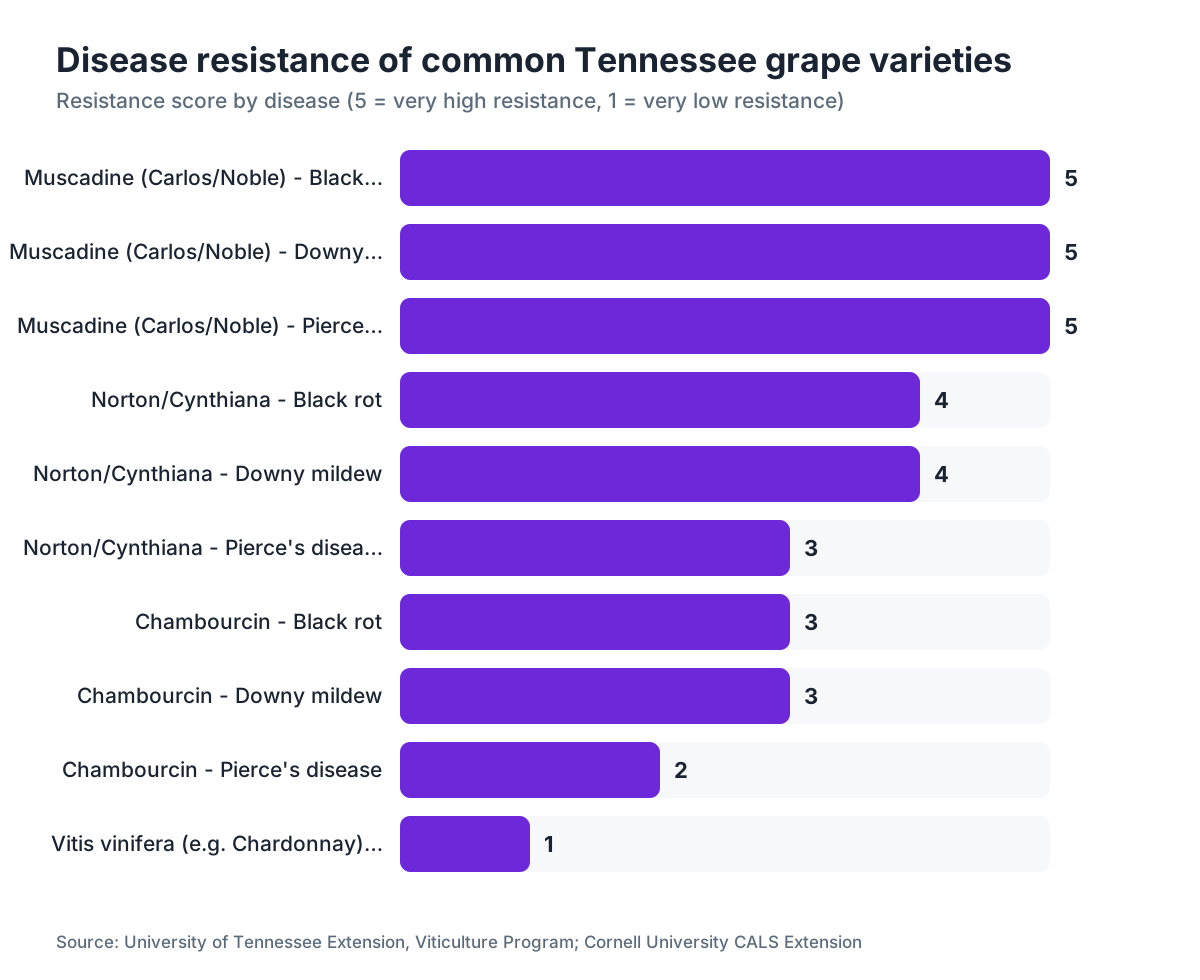
Muscadines (Vitis rotundifolia) are native to the Southeast and carry the best overall disease resistance of any commercial grape type in Tennessee. Carlos, Noble, Magnolia, and Ison all perform well across the state without heavy fungicide programs. They're immune or highly resistant to Pierce's disease, downy mildew, and black rot. [2] They still need some powdery mildew management. The catch is market: muscadine wine sits in a specific niche, and not everyone plants for it.
Among wine grape hybrids, these hold up in Tennessee's disease environment:
- Norton (Cynthiana): Very high black rot and downy mildew resistance. Makes a legitimate red wine. Widely grown in Tennessee.
- Chambourcin: Moderate resistance, manageable with a standard program. Popular for red wine.
- Traminette: Cornell-bred, reasonable resistance, makes excellent aromatic white wine. [5]
- Vidal Blanc: High yields, good disease tolerance, used for dry whites and late-harvest wines.
- Chardonel: Cornell hybrid, better disease resistance than Chardonnay, similar flavor profile. [5]
- Catawba and Niagara: Native American varieties with good resistance but a labrusca flavor that isn't for everyone.
Vitis vinifera can work in Tennessee, mostly in the east at higher elevations with good air drainage. Cabernet Franc, Petit Manseng, and Viognier have the best track records at commercial scale. But expect 12 to 15 sprays a season at minimum, and accept that some years PD or a bad black rot outbreak costs you fruit no matter what you do.
How do you identify and manage Botrytis bunch rot at harvest?
Botrytis cinerea, the gray mold, turns up every year in Tennessee. Some years it's a minor nuisance. Some years it takes 30-40% of the crop in tight-clustered varieties during a wet September.
The symptoms are simple to read: a brown, water-soaked spot on individual berries that spreads fast across the cluster, then a gray-brown sporulating mass. Infected berries collapse, juice leaks, and secondary organisms including acetic acid bacteria move in and cause sour rot. By the time a cluster is fully gray, the infection has been running for 5 to 10 days.
Botrytis management comes down to three levers: canopy, spray timing, and variety. Open canopies with good air movement dry out faster after rain, which shortens the infection window. Shoot thinning, leaf pulling in the fruit zone, and the right trellis system cut Botrytis pressure more than sprays alone do.
Fungicides for Botrytis target four windows: early bloom, late bloom, early bunch closure, and veraison. Hitting all four is expensive but justifiable on susceptible varieties in a wet year. Fenhexamid (Elevate), fludioxonil plus cyprodinil (Switch), iprodione (Rovral), and pyrimethanil (Scala) are the main options. Rotate FRAC codes 17, 12+9, 2, and 9 to slow resistance. [7]
One honest note: nobody has great data on how much of Tennessee's commercial crop is lost to Botrytis each year. The closest published figures come from eastern U.S. extension surveys estimating 10-25% losses in susceptible varieties during wet harvests, but that range is wide and site-specific. [3]
What causes crown gall in Tennessee grapevines, and can you fix it?
Crown gall is caused by Agrobacterium vitis, a soil-borne bacterium that gets into vines through wounds. In Tennessee, the most common wound is winter freeze damage. When temperatures drop below about -15°C (5°F) at the trunk or cordon, the cracks that open are a door for the bacterium. [8]
The galls are tumor-like growths at the base of the vine or at graft unions. They look like pale, cauliflower-textured masses, sometimes several inches across. They disrupt vascular tissue and drop vine vigor. In bad cases they girdle and kill the vine.
There's no cure once a vine is infected. The bacterium slots its Ti plasmid into the plant's genome at the infection site. Management is all prevention: use certified disease-free planting material, pick cold-hardy varieties and rootstocks that fit your site, mound soil or mulch around the trunk base before winter, and avoid mechanical injury to trunks.
If you have crown gall in a block, replanting the same varieties into the same soil is risky because the bacterium persists for years. Some growers replant with more tolerant rootstocks. Cornell's viticulture program has detailed guidance on crown gall management for eastern vineyards. [5]
What do EPA Worker Protection Standard rules mean for your spray program?
The EPA's Worker Protection Standard (WPS) applies to any agricultural establishment that uses pesticides and employs agricultural workers. If anyone enters the vineyard within 30 days of a pesticide application, WPS applies to you. This is not a gray area. [6]
The WPS, as stated by the EPA, requires that employers "provide workers and handlers with information about, and protection from, pesticide exposures." [6] That means posting application information at a central location, providing personal protective equipment, keeping restricted-entry intervals (REIs) before workers re-enter treated areas, and providing pesticide safety training.
For Tennessee vineyards, the practical implications:
- Every spray event needs a written record with product, rate, date, block treated, and REI.
- Workers must be notified (oral or posted) of applications to areas they'll enter.
- Application information must stay accessible for 30 days after the REI expires.
- New workers must get WPS safety training within their first days of work.
REIs for common vineyard fungicides run from 4 hours (many EBDC products) to 24-48 hours (some systemics). Copper hydroxide labels often carry 48-hour REIs. Check the label every time. The label is the law under FIFRA.
The Tennessee Department of Agriculture enforces WPS alongside EPA. Commercial applicators in Tennessee need a pesticide applicator license, and private applicator certification is required to buy restricted-use pesticides. [9]
How should you document disease scouting and spray records for compliance?
Good records protect you legally, help you diagnose problems in later seasons, and are required for commercial pesticide use. The minimum record for each spray event under Tennessee law and EPA WPS includes: date, crop and site, pest targeted, product name and EPA registration number, formulation, amount applied per acre, total area treated, and the name of the certified applicator. [9]
Beyond the legal minimum, experienced managers also track disease severity ratings before and after sprays, weather on spray day (rain, temperature, RH), equipment calibration dates, and growth stage at application. That data lets you tie fungicide performance to weather, which is genuinely useful when you're deciding whether to tighten intervals next season.
Scouting records should stay separate from spray records but linked to them. Walk each block once a week during the season and note the severity of each disease by variety and location. A simple 0-5 scale is enough. Spot black rot at 1 in a block and you're two missed sprays from 4. Document it and act.
Digital tools beat clipboards and spreadsheets here. Capturing GPS-tagged observations with photos, tying them to spray events, and generating WPS-compliant spray logs automatically saves hours every season. VitiScribe handles this for vineyard operations, linking scouting observations to spray records and REI tracking in one place.
If you're a small operation running a few acres and selling to a winery, keep your own records anyway. Most winery contracts now require pesticide application records as part of fruit quality agreements, and you'll need them if there's ever a food safety audit.
What university extension resources exist for Tennessee grape disease management?
University of Tennessee Extension is the primary starting point. Their viticulture program covers variety selection, IPM spray guides, and disease identification for Tennessee's conditions. Their publication W294, "Grape Pest Management Guide for Tennessee," is updated periodically and is free through UT Extension. [2]
Cornell University's viticulture program in Geneva, New York is the most useful out-of-state resource, because New York's humid continental climate is closer to Tennessee's than any western state's. Cornell has done the most complete research on black rot, Botrytis, and crown gall for eastern U.S. conditions. Their Viticulture and Enology extension site at Cornell CALS is worth bookmarking. [5]
Washington State University Extension's grape disease materials are written for the Pacific Northwest, but their FRAC code rotation tables and fungicide efficacy ratings translate directly to any eastern program. [7]
UC Davis is less directly useful here, because California's Mediterranean climate produces very different disease pressure. Still, UC Davis has excellent foundational viticulture resources, particularly for rootstock selection and vine nutrition, which affect disease susceptibility indirectly. [10]
The National Sustainable Agriculture Information Service (ATTRA) publishes an organic grape production guide covering non-chemical disease management, which helps growers pursuing organic certification.
You should also know NEWA (Network for Environment and Weather Applications), a Cornell-developed platform that gives real-time disease risk modeling for black rot, powdery mildew, and Botrytis at eastern U.S. sites. [5] Feed it your weather station data and it returns infection period outputs. It's free and it works.
Frequently asked questions
Can you grow Vitis vinifera successfully in Tennessee?
Yes, but it takes a committed program of 12-15 sprays a season and careful site selection. Higher elevations in East Tennessee with good cold air drainage give vinifera the best odds. Cabernet Franc, Viognier, and Petit Manseng have the best track records at commercial scale in the state. West Tennessee's Pierce's disease pressure makes vinifera very risky without PD-resistant varieties.
How do I tell black rot from Botrytis on my grape clusters?
Black rot makes hard, shriveled, blue-black mummies that stay attached to the cluster. The berry desiccates. Botrytis causes a soft, watery collapse with visible gray-brown sporulation on the berry surface. Black rot mummies are hard; Botrytis berries are mushy. Both can show up together in wet seasons. Getting the ID right before you spray matters because the effective fungicide groups differ.
What is the best fungicide for black rot in Tennessee?
Myclobutanil (Rally 40WSP) has the best curative and protectant activity against black rot and is widely used in Tennessee. Mancozeb is an effective, cheap protectant. Captan works well too. Rotate all three to slow resistance. The key is timing: fungicides must be on the vine before infection events, not after. A weather-based model like NEWA helps flag high-risk periods.
Does powdery mildew need rain to spread?
No. Powdery mildew (Erysiphe necator) is one of the few grape diseases that doesn't need free water to germinate. It spreads by airborne conidia and actually prefers relatively dry conditions with humidity around 40-60%. Dry spells are not safe times to skip powdery mildew sprays. Many growers make that mistake and pay for it with infected clusters by August.
What are the signs of Pierce's disease in a Tennessee vineyard?
Look for marginal leaf scorch starting mid-summer, where the leaf edge browns while the center stays green. Affected vines also show poor cane lignification, where canes stay green in patches while surrounding tissue browns (the 'green island' symptom). Fruit shrivels unevenly. Symptoms worsen over 1 to 5 years until the vine dies. There's no cure; infected vines must be removed.
How often should I spray fungicides during a wet Tennessee spring?
During wet periods from bloom through 4 weeks post-bloom, compress spray intervals to 7 days. If rainfall tops 2 inches in a week and temperatures sit in the 60-80°F range, you may need to spray more often if a protectant washes off. In drier stretches you can extend to 10-14 days, but check the forecast before you make that call. The bloom window is no place to cut corners.
Are muscadines immune to all grapevine diseases?
Not to all, but highly resistant to the big ones. Muscadines (Vitis rotundifolia) have very high resistance to Pierce's disease, downy mildew, and black rot. They still have moderate susceptibility to powdery mildew and can develop angular leaf scorch under stress. In Tennessee's climate, muscadines need far fewer pesticide applications than hybrid or vinifera varieties. They're a serious commercial option, more than a backyard vine.
What is crown gall and how does it enter my vineyard?
Crown gall is caused by the bacterium Agrobacterium vitis. It enters vines through freeze wounds, pruning cuts, or mechanical damage. Temperatures below 5°F at the trunk can create entry points. The bacteria form tumor-like galls at wound sites that disrupt vascular tissue. There's no cure. Prevention means certified disease-free nursery stock, cold-hardy varieties, and protecting trunks from freeze damage with soil mounding before winter.
Do I need to keep pesticide application records in Tennessee?
Yes. Tennessee commercial pesticide applicators must keep application records under state law administered by the Tennessee Department of Agriculture. Records must include product name, EPA registration number, application date, site, pest targeted, rate, and applicator name. EPA's Worker Protection Standard adds record-keeping and posting requirements if you employ workers who enter treated areas. Keep records at least two years; some contracts and audits require three.
What is the restricted-entry interval (REI) and why does it matter for my crew?
The REI is the minimum time that must pass after a pesticide application before workers can re-enter the treated area without full PPE. REIs for common vineyard fungicides run from 4 hours to 48 hours depending on the product. Sending workers into a block before the REI expires is a WPS violation and a real safety risk. Always check the current label; REIs can vary by formulation even for the same active ingredient.
Can I use organic fungicides to control grape diseases in Tennessee?
Some organic options have real efficacy. Copper products (copper hydroxide, copper sulfate) give good protectant activity against downy mildew, black rot, and bacterial diseases. Sulfur controls powdery mildew well but can't go on above 90°F without phytotoxicity risk. Potassium bicarbonate (Milstop, Armicarb) is an effective powdery mildew option. Organic programs generally need shorter spray intervals than conventional ones because these products have limited residual activity.
How does Phomopsis cane and leaf spot damage grapevines in Tennessee?
Phomopsis viticola causes small dark spots with yellow halos on leaves and bleached, cracked lesions on canes early in the season. It overwinters in infected canes and releases spores during spring rains. Severe infections weaken canes and can cause basal berry rot at harvest. It's worst in cool, wet springs. Copper or mancozeb applications at budbreak through early shoot development protect effectively.
What is the NEWA disease forecasting tool and how do Tennessee growers use it?
NEWA (Network for Environment and Weather Applications) is a Cornell University platform that uses real-time weather station data to calculate disease risk for grape pathogens including black rot, powdery mildew, and Botrytis. Growers enter their weather station ID and get infection period outputs, which cuts guesswork on spray timing. It's free. Tennessee growers can connect to the nearest active station or install their own and link it.
Sources
- NOAA National Centers for Environmental Information, Tennessee Climate Summary: Tennessee average summer humidity and annual precipitation figures used to characterize disease pressure environment
- University of Tennessee Extension, Viticulture and Small Fruit Program (Grape Pest Management Guide W294): Variety resistance ratings, muscadine disease tolerance, and county-level Pierce's disease risk guidance for Tennessee growers
- American Phytopathological Society (APS), Compendium of Grape Diseases: Black rot can destroy 80-100% of unprotected fruit; eastern U.S. Botrytis loss estimates of 10-25% in susceptible varieties during wet harvests
- USDA Agricultural Research Service, Pierce's Disease Research: Xylella fastidiosa causes Pierce's disease of grapevine and is spread by xylem-feeding insects known as sharpshooters; muscadines are largely immune
- Cornell University CALS, Viticulture and Enology Extension, NEWA Network: NEWA platform provides real-time black rot infection period modeling; Cornell black rot sanitation study found mummy removal reduced infection by 70-80%; Traminette and Chardonel variety development; crown gall management guidance
- U.S. Environmental Protection Agency, Agricultural Worker Protection Standard: EPA WPS requires employers to provide workers and handlers with information about and protection from pesticide exposures, including REI observance and application record posting
- Washington State University Extension, Grape Disease Management: FRAC code rotation tables for vineyard fungicide programs; oomycete-specific chemistry requirements for downy mildew; Botrytis FRAC code rotation guidance
- American Phytopathological Society (APS), Crown Gall of Grapevine: Agrobacterium vitis enters vines through freeze wounds and integrates its Ti plasmid into the plant genome; no cure once infected
- UC Davis Division of Agriculture and Natural Resources, Viticulture and Enology: Foundational viticulture resources on rootstock selection and vine nutrition affecting disease susceptibility
- U.S. Environmental Protection Agency, Pesticide Registration (FIFRA): Pesticide labels are legally binding under FIFRA; all copper-based and other fungicide applications must comply with label requirements
Last updated 2026-07-09