Types of grapevine diseases: the complete field guide

TL;DR
- Grapevines face fungal diseases (powdery mildew, downy mildew, Botrytis), bacterial diseases (Pierce's disease, crown gall), viral diseases (leafroll, fanleaf, red blotch), and trunk diseases (Eutypa, Botryosphaeria, Esca).
- Fungi cause the most widespread annual losses.
- Early identification and a disciplined spray record are the foundation of control.
- No single program covers all of them.
Why do grapevines get so many diseases?
Grapevines are perennial woody crops grown in the same spot for decades. Any pathogen that establishes in your soil, wood, or canopy has time to build populations your annual-crop neighbors never deal with. Add the warm days and cool nights that most wine regions get during key growth windows, and you have near-perfect conditions for a long roster of fungal, bacterial, and viral problems.
The diversity of Vitis vinifera cultivars makes it worse. A Chardonnay block and a Cabernet Sauvignon block twenty rows apart can carry completely different disease pressure because canopy architecture, berry skin thickness, and phenological timing differ. Hybrid American varieties like Concord have more natural resistance, but most of the wine world runs on vinifera, so management is the only real lever a grower has.
Fungal pathogens account for the majority of pesticide applications in most wine regions. According to UC Davis Cooperative Extension, powdery mildew alone drives more spray decisions in California than any other single pest or disease [1]. That gives you a useful place to start. Build your program around fungi first, then work outward to bacteria, viruses, and trunk diseases.
What are the main fungal diseases of grapevines?
Fungal diseases are the biggest day-to-day management challenge for most operators. Here are the ones that show up everywhere.
Powdery mildew (Erysiphe necator)
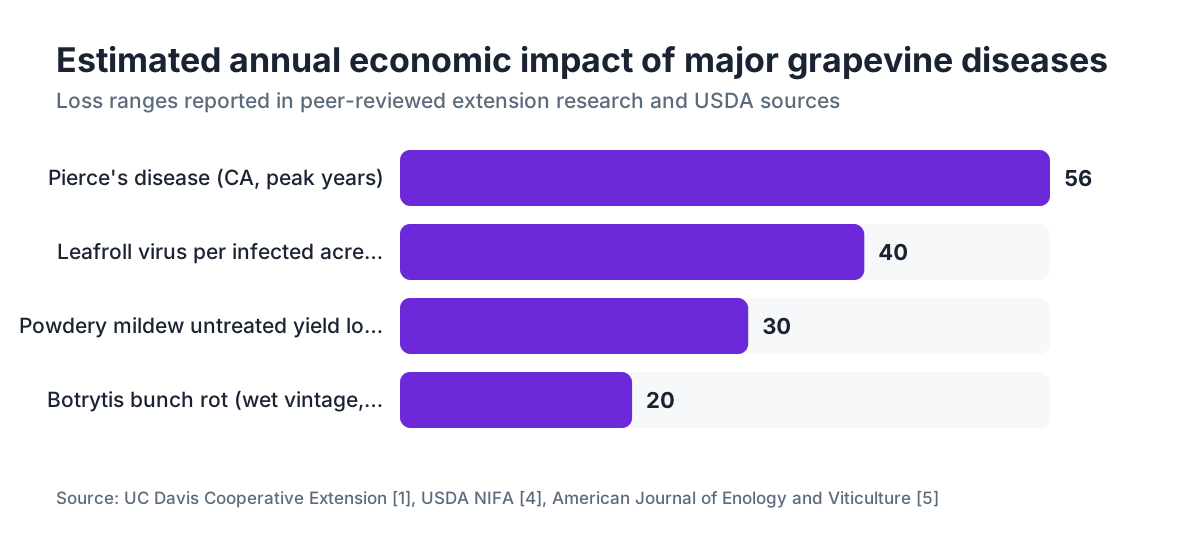
This is the one. Powdery mildew is an obligate biotroph, meaning it only grows on living tissue. It overwinters as cleistothecia in bark or as mycelium inside dormant buds. The telltale sign is a white-to-gray powdery coating on shoot tips, leaves, and berries. Infected berries crack at veraison and become magnets for secondary Botrytis infection. UC Davis extension work puts economic losses from severe powdery mildew at 10 to 30 percent of yield in unprotected blocks, with quality losses that are much harder to quantify [1].
Control comes from sulfur-based fungicides, sterol inhibitors (DMI fungicides like myclobutanil), and SDHI chemistries. Sulfur is cheap and effective but phytotoxic above about 90°F, so timing matters. Resistance to DMI fungicides is documented in California and Pacific Northwest populations [2].
Downy mildew (Plasmopara viticola)
Downy mildew needs free water to spread, which is why it's more of a problem east of the Rockies and in wet coastal regions than in arid California. Primary infection needs rain when shoots are at least 10 cm long and temperatures are above 50°F. The disease shows as yellow oil-spot lesions on the upper leaf surface with white sporulation underneath. Infected clusters turn brown and dry to a mummified state.
Copper-based fungicides are the backbone of organic downy mildew programs. Conventional programs add mancozeb and systemic options like mandipropamid. Cornell's New York State IPM program publishes decision models based on temperature and wetness hours that are genuinely useful for timing [3].
Botrytis bunch rot (Botrytis cinerea)
Botrytis is the fungus that makes noble rot (Sauternes) a thing and also destroys Pinot Noir crops in cool, wet vintages. It enters berries through wounds, natural openings, and berry-to-berry contact in tight clusters. Varieties with compact clusters and thin skins, especially Pinot Noir and Gewurztraminer, are most vulnerable. Leaf removal around clusters, shoot thinning for airflow, and cluster-zone sprays of Botrytis-specific fungicides (fenhexamid, cyprodinil, iprodione) are the main tools. Rotating chemistry is non-negotiable here. Resistance to older botryticides is widespread [2].
Black rot (Guignardia bidwellii)
Black rot is primarily an eastern problem, though it shows up wherever warm, wet conditions coincide with susceptible growth stages. Berries infected at or before pea size shrivel into hard black mummies. Infected leaves show circular lesions with dark borders. Removing mummies from the vine and soil cuts inoculum sharply. Myclobutanil and mancozeb work when applied preventively during the susceptible window, which runs from budbreak through berry touch.
Phomopsis cane and leaf spot (Diaporthe ampelina)
Phomopsis causes dark lesions at the base of shoots and on rachises, and it overwinters in infected wood. People confuse it with Esca in early stages. Infected canes produce fewer and weaker spurs the following year. Early-season copper applications help, but removing affected wood is the more reliable long-term fix.
What are the most damaging bacterial diseases of grapevines?
Bacterial diseases are fewer in number but often more devastating when they hit, because most have no chemical cure.
Pierce's disease (Xylella fastidiosa)
Pierce's disease is the most economically damaging grapevine disease in the United States by most accounts. The bacterium plugs the xylem and starves the vine of water. Symptoms include leaf scorch (the classic matchstick-margin browning), green islands around dead tissue, and what growers call 'green stem,' where the cane fails to lignify while the petiole dries and drops, leaving the dead leaf attached. Vines usually die within one to five years after infection.
Xylella fastidiosa moves by sharpshooter leafhoppers. The glassy-winged sharpshooter (Homalodisca vitripennis), an invasive species detected in California in the 1990s, expanded the range and severity of Pierce's disease sharply. There is no cure for infected vines. Removal and replanting on resistant material is the only path. The USDA has funded research into Pierce's disease-resistant Vitis vinifera varieties through the National Institute of Food and Agriculture [4].
Crown gall (Agrobacterium vitis)
Crown gall produces large tumor-like growths at the base of the trunk, cordons, or canes, usually after freeze injury opens wound sites for the soil-resident bacterium. The galls girdle the vascular tissue and weaken or kill canes above the infection point. No registered bactericide clears an established infection. Management is preventing freeze damage, choosing resistant rootstocks where data supports it, and pruning galls off when they appear above the graft union.
What viral diseases affect grapevines and how do they spread?
Grapevine viruses are a slow-moving crisis. They rarely kill vines outright, but they cut yield, delay ripening, drop fruit quality, and shorten vineyard life. There's no chemical treatment for any of them.
Grapevine leafroll disease
Leafroll comes from a complex of related closteroviruses (Grapevine leafroll-associated viruses 1 through 9, with GLRaV-3 the most economically damaging). Infected red-variety vines show red or purple leaf rolling from the margins in late summer, while green varieties show yellowing. Brix at harvest is typically 2 to 4 points lower in infected vines, and color and anthocyanin content drop hard. Mealybugs and soft scale insects are the primary vectors. A study published in the American Journal of Enology and Viticulture estimated leafroll disease costs Napa Valley growers $25,000 to $40,000 per infected acre over a vineyard's life [5].
Grapevine fanleaf disease (Nepovirus)
Fanleaf is the oldest-documented grapevine virus and the most severe. Leaves become asymmetric and fanlike, shoots grow in a zigzag pattern, and clusters are small and poorly set. The vector is the dagger nematode (Xiphinema index), which persists in soil for decades after infected vines are pulled. That makes replanting hard. You fumigate, fallow for years, or plant tolerant rootstocks, and the nematode still often rebounds. UC Davis Cooperative Extension recommends a minimum of three years of soil treatment and monitoring before replanting into known fanleaf ground [1].
Red blotch disease (Grapevine red blotch virus)
Red blotch is a more recently characterized virus, first confirmed in 2012. It causes red blotching on leaves of red varieties (yellowing in whites) and dramatically slows sugar accumulation in berries. UC Davis research found infected Cabernet Sauvignon vines lagging 5 to 12 Brix behind healthy vines at harvest [6]. The vector is still being studied, though the three-cornered alfalfa treehopper has been implicated. Certified clean planting material is the primary prevention.
What are trunk diseases and why are they hard to manage?
Trunk diseases deserve their own conversation. They're largely irreversible once established, and you manage them mostly at pruning time, not during the growing season.
Eutypa dieback (Eutypa lata)
Eutypa is the most widespread trunk disease in the world's wine regions. The fungus infects pruning wounds during wet weather and grows slowly through the wood for years before symptoms appear. By the time you see stunted shoots, small chlorotic leaves, and dead spurs on one side of a cordon, the fungus may have colonized trunk wood three to five feet below the symptomatic tissue. The standard fix is cutting infected wood back to clean white wood with no gray-brown discoloration. Wound protectants (Topsin-M, Rally, or paste formulations) applied right after pruning help block new infections [7].
Botryosphaeria dieback (Botryosphaeriaceae family)
Several species in this family produce a picture close to Eutypa: dark wood discoloration, cankers, and shoot stunting. The wedge-canker pattern in a wood cross-section is a useful diagnostic. These pathogens run more aggressive in warm, dry regions than Eutypa, and they're increasingly tied to vine decline in California's San Joaquin Valley and in Australian wine regions. Washington State University's extension viticulture program has published identification guides for telling Botryosphaeria from Eutypa off wood sections [7].
Esca (Phaeoacremonium species and Phaeomoniella chlamydospora)
Esca is a complex of fungi that together produce one of the most dramatic vineyard symptoms. In the 'apoplexy' form, an apparently healthy vine collapses and dies within days during summer heat. More often, vines show chronic Esca with a tiger-stripe leaf pattern (alternating yellow and green bands between veins) and internal wood with a soft brown rot. No chemical treatment is registered for Esca in the US. Prevention is all you have. Avoid large pruning wounds, keep water stress down, and use double pruning (pre-pruning in fall, final cuts in late dormancy) to shorten wound exposure time.
How do you identify which disease you're dealing with?
Misidentification is expensive. Spraying Botrytis fungicide on a vine with fanleaf virus wastes money and does nothing. A fast, correct diagnosis is the skill that separates experienced managers from people who spray everything and hope.
Start with where the symptoms are. Leaf symptoms only, no fruit or wood involvement, point toward viruses, nutrient disorders, or certain bacterial diseases. Fruit symptoms without leaf involvement narrow it to Botrytis, black rot, or sour rot. Trunk and cane discoloration with little leaf symptom points toward trunk diseases.
Then look at timing. Powdery mildew shows earliest, often on shoot tips before bloom. Downy mildew needs a rain event to start primary infection. Leafroll symptoms turn up in late summer as fruit is ripening.
For trunk diseases, cross-section the cane or trunk with clean shears. Eutypa shows a sector-shaped gray-brown discoloration. Botryosphaeria shows a dark wedge-shaped canker. Esca shows soft brown wood with a distinct smell.
For any viral suspicion or ambiguous wood discoloration, send samples to a diagnostic lab. UC Davis Plant Pathology and WSU both run grapevine diagnostic services, and most UC Cooperative Extension farm advisors can point you toward the right sample type and shipping protocol [1][7]. PCR testing for leafroll, fanleaf, and red blotch runs roughly $20 to $50 per sample at most university labs. That's nothing next to the cost of replanting on a misdiagnosis.
What does an integrated disease management program look like in practice?
No single program works for every region, variety, and disease pressure. A practical integrated approach has a few non-negotiable pieces.
First, know your regional disease calendar. In Napa and Sonoma, powdery mildew is the primary target from budbreak through veraison. In the Finger Lakes or Willamette Valley, downy mildew and Botrytis demand equal or greater attention. In Texas Hill Country and Florida, Pierce's disease is the background threat that shapes every planting decision.
Second, use plant-based timing cues, not calendar dates. Powdery mildew risk peaks when shoot growth is fastest, typically from 2-inch shoot to bloom. Downy mildew primary infection needs the 10/10/10 rule (10 cm shoots, 10°C overnight low, 10 mm of rain in 24 hours) as a rough trigger, though Cornell's refined model is more accurate [3].
Third, rotate fungicide modes of action. The Fungicide Resistance Action Committee (FRAC) system assigns every registered fungicide a group number. Using the same group more than twice in a row is a fast path to resistance. This is where spray records stop being a compliance chore and become a management tool. A detailed record of which products hit which blocks, and when, lets you spot rotation gaps before resistance does.
On that note: if your current spray record is a spiral notebook in a pickup door pocket, you'll lose track of rotation at some point. Tools like VitiScribe exist to log block-level spray records, track FRAC groups, and generate the documentation required under the EPA Worker Protection Standard [8] without piling paperwork onto your day.
Fourth, manage the physical environment. Trunk disease infection happens at pruning wounds. Wound protectant applied right after cuts, plus delayed pruning in wet winters, cuts Eutypa infection more than most chemical programs alone. Canopy management (shoot thinning, leaf removal, hedging) drops humidity in the cluster zone and lowers Botrytis risk sharply in susceptible varieties.
How does disease severity differ by region and climate?
Climate shapes the disease roster more than any other single factor. Here's a practical summary.
| Region | Primary fungal pressure | Bacterial/viral risk | Trunk disease risk |
|---|---|---|---|
| North Coast California | Powdery mildew (high) | Pierce's disease (mod-high), leafroll | Eutypa (high) |
| Pacific Northwest | Powdery mildew (mod), Botrytis (high) | Leafroll, red blotch | Eutypa, Botryosphaeria |
| Finger Lakes / New York | Downy mildew (high), Black rot (high), Botrytis (high) | Fanleaf (low), leafroll | Eutypa |
| Texas / Southeast | Downy mildew (mod), Botrytis (low) | Pierce's disease (very high) | Botryosphaeria |
| Great Lakes | Downy mildew (high), Black rot (high) | Crown gall (high, freeze risk) | Eutypa |
The Pacific Northwest sits in a middle zone: dry enough in summer that downy mildew matters less than in New York, but cool and wet enough at harvest that Botrytis in Pinot Noir is a recurring crisis. WSU Extension's viticulture resources cover Washington-specific disease thresholds in detail [7].
In Texas, Pierce's disease isn't a risk you manage around. It decides which varieties you can even plant. USDA sources put Pierce's disease losses at more than $56 million per year to the California wine industry alone during the peak sharpshooter invasion period in the early 2000s [4].
What are the regulatory and record-keeping requirements for grapevine disease management?
Spray records aren't optional. Under the EPA Worker Protection Standard (WPS), agricultural employers must keep records of pesticide applications, including restricted-use pesticide (RUP) application records, for a minimum of two years [8]. Most state departments of agriculture extend that to three years for restricted-use materials, and some states require records of all applications, not only RUPs.
The WPS also requires that treated areas carry hazard information when a restricted-entry interval (REI) is in effect. In a commercial vineyard with multiple blocks on overlapping spray schedules, tracking active REIs block by block is genuinely hard without a system.
California adds another layer. The California Department of Pesticide Regulation requires all agricultural pesticide applications, not only RUPs, to be reported to the county agricultural commissioner within a set window, typically monthly [9]. Growers selling to certified organic programs, or under Napa Green, Fish Friendly Farming, or similar certifications, carry more documentation on top of state law.
For growers using sulfur fungicides, which are often exempt from the strictest WPS requirements because sulfur qualifies as a minimum-risk pesticide in many formulations, read the actual product label rather than assuming. Finely micronized sulfurs carry re-entry restrictions that older dust sulfurs don't, and the label is the law.
Keeping records organized by block, with product name, EPA registration number, application rate, target pest, and re-entry interval, is the baseline. VitiScribe is built around exactly this structure, so records for a farm advisor or county agricultural commissioner can be pulled in minutes rather than reconstructed from memory.
What does proper grapevine disease scouting look like week to week?
Scouting makes everything else in disease management more efficient. Without it, you're either spraying on a calendar (which wastes money in low-pressure years) or reacting after disease is already at economic levels (which usually means the damage is done).
A minimal protocol for a 20-acre mixed-variety vineyard might look like this: walk each block on a 10-day rotation from budbreak through veraison, check shoot tips and cluster zones on 10 vines per acre, note incidence (percent of vines with symptoms) and severity (percent of shoot or cluster surface affected), and log what you find. A common UC Davis extension threshold is to treat for powdery mildew when you find it on 10 percent of shoots at any single location [1].
For trunk diseases, scouting happens during dormant pruning, when you're already handling every cane. Cross-section suspicious canes, note discoloration patterns, and mark infected vines for removal or surgery in the off-season.
For viral diseases, scouting is whole-vine observation during summer. Look for vines with lagging maturity, odd leaf color, or poor set, flag them, and confirm with lab testing before the following dormant season. A vine you confirm with leafroll virus in August can have a replant order placed for bareroot delivery in January.
Good scouting records compound in value year over year. A block with two years of incidence data tells you whether a disease is building, stable, or declining. A single inspection can never give you that.
What resources and extension programs cover grapevine diseases in detail?
The best practical resources for grapevine disease management are free and produced by people who work in actual vineyards.
UC Davis Cooperative Extension maintains the UC IPM guidelines for grapes, probably the single most detailed freely available document on California disease management [1]. It covers identification, life cycles, treatment thresholds, and registered fungicides with FRAC codes.
Cornell's New York State IPM Program publishes the Pest Management Guidelines for Grapes, updated annually, the eastern equivalent, covering downy mildew, black rot, and Botrytis in depth [3].
Washington State University's Extension viticulture team has published specific guides on trunk diseases, Botrytis management in Riesling and Pinot Gris, and Pierce's disease risk in warmer eastern Washington sites [7].
The American Phytopathological Society's Compendium of Grape Diseases, Disorders, and Pests is the definitive reference for anyone who wants the science behind what they're seeing in the field [11]. It runs about $100 in the current edition and earns it.
For virus identification, the National Clean Plant Network Grapes program coordinates foundation vine sources and testing protocols across the US [10]. If you're buying dormant wood or budwood from a nursery, that nursery's connection to the NCPN clean plant program is the certification worth asking about.
Your county farm advisor or extension viticulture specialist is the most context-specific resource you have. The UC, Cornell, and WSU systems all keep farm advisors who make vineyard visits and can put eyes on your specific problem. Use them.
Frequently asked questions
What is the most common grapevine disease in California?
Powdery mildew (Erysiphe necator) is the most common grapevine disease in California by number of spray applications driven by a single pathogen. UC Davis Cooperative Extension identifies it as the primary fungal pest of wine grapes statewide. In wet coastal regions, Botrytis bunch rot and leafroll virus also cause major losses, but powdery mildew triggers more management decisions than any other single disease.
Can you cure a grapevine infected with Pierce's disease?
No. No registered bactericide or treatment clears a Xylella fastidiosa infection once a vine is systemically infected. The standard approach is early detection, removal of infected vines, and replanting with resistant or tolerant rootstocks or varieties. Research into Pierce's disease-resistant V. vinifera selections is ongoing through USDA-funded programs, but nothing is commercially approved for California growers as of 2025.
How do I tell powdery mildew from downy mildew on grapevine leaves?
Powdery mildew shows as white-to-gray powdery coating on upper and lower leaf surfaces, often on shoot tips first. Downy mildew shows as yellow oil-spot lesions on the upper surface with white cottony sporulation only on the underside. Downy mildew needs rain to spread; powdery mildew does not. If there's been no rain for two weeks, downy mildew is unlikely. Check the underside with a hand lens to confirm.
What causes grapevine trunk disease and how do I prevent it?
Trunk diseases like Eutypa dieback and Botryosphaeria enter vines through pruning wounds, especially during wet or cold weather after cuts. Prevention comes down to three things: prune during dry weather when you can, apply wound protectant paste (registered products include Topsin-M gel and Rally 40WSP paste) right after cuts, and use double pruning to leave temporary canes that get removed after the main pruning date.
How does grapevine leafroll virus spread in a vineyard?
Leafroll viruses spread two ways: infected planting material brought into the vineyard, and insect vectors in established vineyards. Mealybugs (Planococcus ficus and Pseudococcus longispinus mainly) and soft scale insects move virus between vines. Mealybug populations build slowly, so vine-to-vine spread in a well-managed vineyard usually takes years. Buying certified virus-tested planting material is the most effective prevention.
Is Botrytis always bad, or can it be beneficial?
In certain conditions on white wine varieties, Botrytis cinerea produces noble rot, concentrating sugars, acids, and flavor compounds in partially desiccated berries used for botrytized wines like Sauternes and Trockenbeerenauslese. That needs very specific dry-after-wet conditions. In most red varieties and most regions, Botrytis is pure loss: it destroys color, cuts yield, and produces off-flavors. Same fungus, very different outcomes depending on timing and variety.
How long do I have to keep spray records in my vineyard?
Under the EPA Worker Protection Standard, restricted-use pesticide application records must be kept for a minimum of two years from the date of application. Many states require three years, and California requires reporting all pesticide applications, not only RUPs, to the county agricultural commissioner, typically monthly. Organic and sustainability certifications often require record retention beyond the legal minimum.
What is red blotch disease and how is it different from leafroll?
Grapevine red blotch virus (GRBV), first confirmed in 2012, causes red blotching on leaves of red varieties and slows sugar accumulation in fruit. People confuse it with leafroll because both cause fall reddening. The key difference: leafroll causes downward rolling of leaf margins with interveinal reddening; red blotch shows irregular red blotches without rolling. UC Davis research found infected Cabernet Sauvignon vines lagging 5 to 12 Brix behind healthy vines at harvest.
Can grapevine diseases spread from infected soil when replanting?
Yes, in some cases. Grapevine fanleaf virus persists in soil through its vector, the dagger nematode (Xiphinema index), which can survive more than a decade after vines are removed. Crown gall (Agrobacterium vitis) is also soil-resident. Botryosphaeria and Eutypa persist in old wood debris. For fanleaf ground, UC Davis recommends at minimum three years of soil treatment, monitoring, and fallowing before replanting susceptible vinifera varieties.
What fungicide resistance issues exist in grapevine disease management?
Resistance is documented in powdery mildew populations to DMI fungicides (FRAC Group 3) in California and the Pacific Northwest, and Botrytis populations have developed resistance to multiple botryticide classes including dicarboximides and benzimidazoles. The Fungicide Resistance Action Committee assigns FRAC codes to all registered fungicides. Rotating between FRAC groups, rather than leaning on any single chemistry repeatedly, is the standard way to slow resistance.
What rootstocks are resistant to grapevine diseases?
No rootstock resists every grapevine disease, but some offer specific protection. Rootstocks from Vitis rupestris and V. berlandieri crosses (like 1103 Paulsen and 110 Richter) tolerate Xiphinema index nematodes, reducing fanleaf spread. Some rootstocks show reduced crown gall susceptibility. Pierce's disease resistance sits in V. arizonica and V. shuttleworthii, and USDA breeding programs are working to move it into wine-quality varieties.
How do I scout for trunk diseases in a dormant vineyard?
During dormant pruning, cut suspicious canes crosswise with clean shears and examine the section. Eutypa shows a sector-shaped gray-brown discoloration in the wood. Botryosphaeria shows a darker wedge-shaped canker, often with a distinct boundary. Esca shows soft brown wood, sometimes with a characteristic smell. Mark infected vines, cut back to clean white wood, and apply wound protectant right away. Log findings by block and vine number for trend tracking.
What is the 10/10/10 rule for downy mildew in grapevines?
The 10/10/10 rule is a simple threshold for first-infection risk from Plasmopara viticola: shoots at least 10 cm long, overnight low above 10°C (50°F), and at least 10 mm of rain in a 24-hour period. Hit all three in the same window and primary infection is possible, so a protective fungicide is warranted. Cornell's detailed model refines this with cumulative wetness hours, but the rule of thumb is useful for quick field calls.
Sources
- UC Davis Cooperative Extension, UC IPM Pest Management Guidelines: Grape: Powdery mildew is the most common grapevine disease in California; unprotected blocks can suffer 10 to 30 percent yield loss; fanleaf management requires minimum three years of soil treatment before replanting
- USDA Agricultural Research Service, fungicide resistance in grapevine pathogens: Resistance to DMI fungicides is documented in powdery mildew populations in California and the Pacific Northwest; resistance to botryticides including dicarboximides is documented in Botrytis cinerea
- Cornell University New York State IPM Program, Pest Management Guidelines for Grapes: Downy mildew management in eastern US vineyards uses temperature and wetness-hour models; Cornell's decision models provide timing guidance for fungicide applications
- Ricketts et al., American Journal of Enology and Viticulture, leafroll economic impact study: Leafroll disease costs Napa Valley growers an estimated $25,000 to $40,000 per infected acre over the life of the vineyard
- UC Davis Department of Plant Pathology, Grapevine red blotch virus research: UC Davis research found Cabernet Sauvignon vines infected with red blotch virus lagged 5 to 12 Brix behind healthy vines at harvest
- Washington State University Extension, viticulture and grapevine trunk disease resources: WSU Extension publishes identification guides for distinguishing Botryosphaeria from Eutypa off wood sections and covers Washington-specific disease thresholds and trunk disease management
- US EPA, Worker Protection Standard for Agricultural Pesticides: The EPA Worker Protection Standard requires restricted-use pesticide application records be kept for a minimum of two years
- California Department of Pesticide Regulation, Pesticide Use Reporting: California requires all agricultural pesticide applications, not just restricted-use materials, to be reported to the county agricultural commissioner, typically monthly
- National Clean Plant Network, Grapes Program: The NCPN Grapes program coordinates foundation vine sources and virus testing protocols across the US; NCPN certification is the primary assurance of virus-tested planting material
- American Phytopathological Society, Compendium of Grape Diseases, Disorders, and Pests: Reference on grapevine pathology including Esca, Eutypa, trunk diseases, and viral pathogens; approximately $100 per edition
Last updated 2026-07-09