Buying a used vineyard sprayer: what to inspect, what to pay, and what to skip

TL;DR
- Used vineyard sprayers run from about $2,000 for a basic pull-behind boom to $45,000 or more for a late-model tower air-blast unit.
- The real cost hides in deferred maintenance: worn diaphragms, corroded manifolds, uncalibrated nozzles.
- Inspect the pump, tank, and chemical residue before you pay.
- Then verify the pesticide records and recalibrate before the first application.
What does a used vineyard sprayer actually cost?
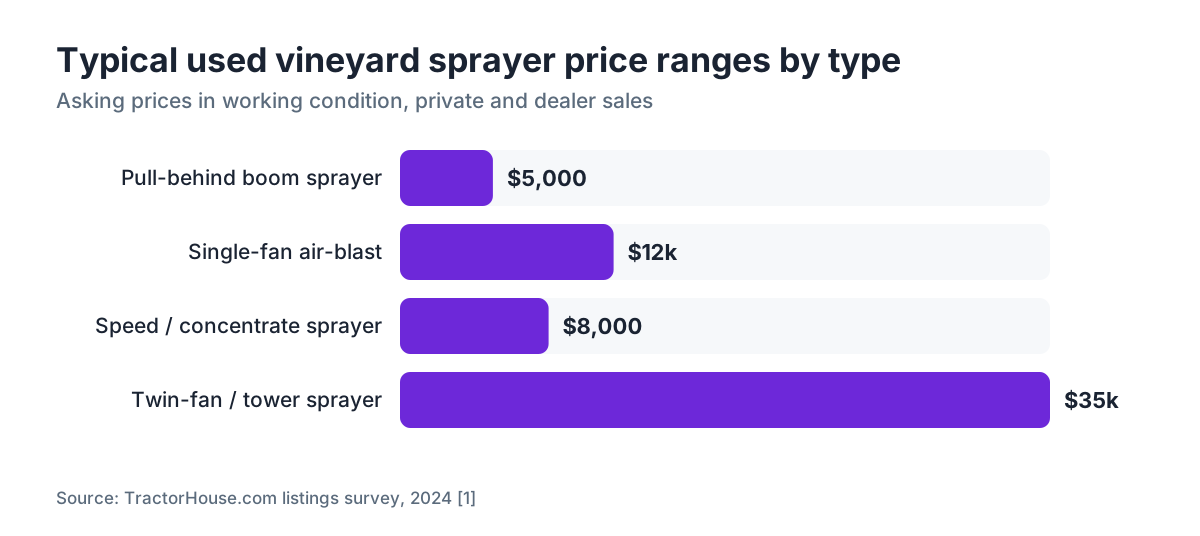
The sticker price is only part of the story. A used pull-behind boom sprayer for under-vine herbicide work sells for $2,000 to $8,000 depending on tank size and age [1]. A used single-fan air-blast sprayer in decent shape runs $5,000 to $18,000. Twin-fan tower sprayers from brands like Gregoire or Nobili, even five or six years old, still fetch $25,000 to $45,000 because the replacement cost new is $80,000 or higher.
That range is wide because condition varies enormously. A 10-year-old Rears or FMC unit that got flushed after every use, lived indoors, and had its diaphragms replaced on schedule will outrun a three-year-old machine that sat full of sulfur slurry through two winters. Price without inspection tells you almost nothing.
Dealer lots and auction houses like Ritchie Bros. and Purple Wave post listings regularly. Classified sites (TractorHouse, MachineFinder) carry regional inventory, and word of mouth among neighboring vineyards is still surprisingly productive. If you spot a used sprayer for sale locally, call your county farm advisor first. They sometimes know the machine and the person who owned it.
What types of vineyard sprayers are on the used market?
There are four basic categories, and they are not interchangeable.
Air-blast sprayers are the workhorse for canopy fungicide applications. A turbine or centrifugal fan generates an air stream that carries droplets into the vine canopy. Older axial-fan units are cheap, but deposit coverage is uneven next to tower designs. Tower sprayers aim jets at specific canopy zones and use far less water, which matters in states with water use restrictions.
Boom sprayers handle under-vine work: herbicide strips, soil-applied materials, cover-crop termination. A vineyard herbicide sprayer for sale is usually a boom with a shielded or hooded nozzle set that protects the vine trunk. These are simple machines with fewer things to go wrong, which makes them the best candidates for buying used.
Speed sprayers (also called concentrate sprayers) are compact and maneuverable. You see them in older plantings with narrow rows. Parts availability is a real problem on machines from defunct brands.
Tunnel sprayers recirculate spray, cutting drift and product use by 40 to 70 percent compared to open air-blast [2]. They cost a lot new, so late-model used units move fast when they come up.
For a small operation, a used boom for herbicide plus a used air-blast for fungicide covers most programs. Buy both used and you can put a working two-sprayer fleet on the road for under $20,000 if you are patient.
What should you inspect before buying a used vineyard sprayer?
Walk away from any seller who won't let you run the machine with water before you pay. That is the single most useful rule in this article.
Start with the pump. Diaphragm pumps are standard on most vineyard sprayers, and a diaphragm set on a 90-gallon-per-minute pump costs $200 to $600 to replace. Watch the pressure gauge at operating speed. Excessive pulsation means worn or torn diaphragms. Ask when the diaphragms were last replaced and whether the seller kept receipts. Centrifugal pumps are simpler, but check for shaft seal leaks and bearing noise.
Next, the tank. Poly tanks crack, especially at fittings and where the base rests on the frame. Fill it with water and look underneath while someone watches the gauge. Check the agitator, because it matters for wettable powder formulations and sulfur. Tanks caked with old wettable sulfur residue often hide corroded fittings and plugged agitator jets.
Nozzle bodies and tips are cheap to swap. The manifold and individual nozzle valves are not. Exercise every section valve by hand. Inspect the strainer screens, because clogged inlet screens turn calibration into a guessing game. Washington State University Extension recommends checking nozzle output against the manufacturer's rated GPM every year. On a used machine, do it before the first application [3].
For air-blast units, spin the fan by hand with the machine off. Any roughness or wobble points to bent blades or worn bearings. Inspect the fan housing for sulfur buildup, which throws the fan out of balance. Check the PTO shaft for worn splines and missing guards. A missing PTO guard is both a safety hazard and a Worker Protection Standard problem.
Last, look at the frame welds and ask about storage. A machine parked near a heater, or in a metal building that bakes all summer, ages faster. If the seller can show you spray records from the past three seasons, that tells you they ran an organized operation.
How do chemical residues in a used sprayer affect your operation?
This is the part buyers skip and then regret. A used sprayer can hold residues of herbicides, fungicides, insecticides, or growth regulators from earlier applications. That matters for two reasons: pesticide label compliance and crop safety.
Under FIFRA, applying a pesticide in a manner inconsistent with its labeling is a federal violation [4]. Use a sprayer contaminated with glyphosate residue to apply a fungicide in a certified organic vineyard, and you have created a legal and certification problem even if the contamination was an accident. The pesticide label is a legally binding document, and "the equipment was contaminated" is not a recognized defense.
The practical risk is herbicide carryover. Growth regulator herbicides like clopyralid and picloram bind to equipment surfaces and are nearly impossible to fully remove. UC Cooperative Extension has documented grape injury from sprayers previously used for clopyralid even after thorough triple-rinsing [5]. If the used herbicide sprayer you are eyeing came from a grain or row-crop operation, ask exactly what herbicides ran through it in the last two seasons. If the answer includes any growth regulator chemistry, plan a dedicated decontamination protocol or walk away.
An ammonium hydroxide or bleach rinse neutralizes some residues. For growth regulators, the only dependable approach is to run the machine on non-sensitive crops for a season to confirm no carryover. Cornell Cooperative Extension recommends a thorough triple-rinse with clean water plus a detergent wash, followed by a bioassay: spray water on a tray of tomato or bean seedlings and watch for injury over 10 days before you put the machine to work in grapes [6].
What are the Worker Protection Standard requirements for used sprayer equipment?
The EPA's Worker Protection Standard (WPS) applies to pesticide application equipment regardless of age, and regardless of whether you bought it new or used [7]. You own the condition of every machine in your operation the moment you take title.
Here are the WPS equipment points that bear directly on a used purchase.
The PTO guard must be intact. A missing or damaged guard becomes your liability the instant you take ownership. Replacement guards for common PTO shafts cost $50 to $200, so there is no excuse to run without one.
Applications must minimize drift onto workers in adjacent areas. An uncalibrated used sprayer with worn nozzles throwing off-spec droplets fails that requirement in practice, even if no inspector cites it. Calibrate before every season and write it down.
The WPS requires that application records identify the equipment used [7]. If you log spray records (and you must, under state pesticide law in every major wine grape state), make your records reference the sprayer by name or number. Software that ties applications, equipment, and operator certifications together, like VitiScribe, keeps that documentation audit-ready without a shoebox of paper.
Handler PPE requirements apply to whoever operates the sprayer, not only to whoever mixed the tank. If the used sprayer has a cab, confirm the windows close, the fan runs (for positive pressure), and any in-cab air filtration meets label requirements for the materials you plan to apply.
How do you calibrate a used vineyard sprayer before the first application?
Calibration is non-negotiable on any used machine. Nozzle wear, pump wear, and pressure gauge drift stack up, so the actual output of a used sprayer is almost certainly different from what the previous owner believed.
For air-blast sprayers, collect output from each nozzle in a graduated cylinder for 30 seconds at operating pressure and operating PTO speed, then compare against the manufacturer's rated output. A nozzle running more than 10 percent above or below rated flow should be replaced [3]. WSU Extension's calibration guide covers both air-blast and boom setups with worked examples [3].
For boom sprayers, use the catch-and-calculate method. Drive a measured distance at field speed, catch output from each nozzle for the time it takes to cover that distance, measure the collected volume, and scale to gallons per acre. UC Davis Cooperative Extension publishes a field calibration worksheet that walks through the math [13].
Document the results. Write down the date, nozzle type, pressure setting, PTO RPM, ground speed, and calculated output per acre. If a pesticide application ever gets questioned, calibration records from the day before or day of are the strongest evidence you have that your rate was on-label.
Recalibrate mid-season if you change nozzle types, replace a pump diaphragm, or notice the output drifting from your setpoint. Abrasive materials like sulfur and copper shift nozzle output measurably over 20 to 30 hours of use.
What are common failure points on used vineyard sprayers and what do repairs cost?
Here is a realistic cost table for the most common repairs on used air-blast and boom sprayers, based on typical parts and labor at an agricultural equipment dealer.
| Repair | DIY Parts Cost | Shop Parts + Labor |
|---|---|---|
| Diaphragm pump rebuild (5-piston) | $200 to $500 | $400 to $900 |
| PTO shaft replacement | $150 to $350 | $300 to $600 |
| Tank replacement (200 gal poly) | $400 to $800 | $600 to $1,100 |
| Pressure gauge + regulator | $80 to $200 | $150 to $350 |
| Nozzle body set (12-nozzle boom) | $120 to $280 | $250 to $450 |
| Fan bearing replacement | $80 to $200 | $200 to $500 |
| Hose set (spray lines, suction) | $100 to $300 | $200 to $500 |
| Electronic rate controller | $800 to $2,500 | $1,000 to $3,000 |
A machine that needs a pump rebuild, new hoses, a pressure gauge, and a fresh nozzle set runs $700 to $1,800 in parts if you do the work yourself. That can still be a fine deal on a structurally sound sprayer. A machine needing a new tank, a new PTO shaft, and a fan bearing job gets expensive fast, and you should price all three before you make an offer.
Parts availability is a legitimate worry on sprayers from manufacturers that left the market or got absorbed. Gregoire, Rears, Turbo Mist, FMC (now under AGCO), and John Bean are common brands in Western wine regions. Confirm the manufacturer still sells parts before you buy a machine that needs significant work.
Is buying a used vineyard sprayer actually worth it, or should you rent or hire out?
It depends on acreage and spray frequency. Run the numbers before you commit.
A vineyard under 10 acres doing four to six fungicide applications per season has a real case for custom application instead of owning. Custom spray contractors in California wine regions charge roughly $35 to $75 per acre per application depending on material and travel [8]. At 10 acres and six applications, that is $2,100 to $4,500 per year. A used air-blast sprayer in good shape, say $8,000 all-in with repairs, pays for itself by year three against those contractor bills.
For 20 acres or more, owning almost always pencils out. You also get timing control, which matters a lot in disease management. Waiting two days for a contractor during a high Botrytis pressure window can cost far more than the machine ever will.
Renting is worth a look for a first season if you are new to the operation and want to learn what sprayer configuration actually fits your row spacing, vine height, and typical materials before you buy. Rental of ag sprayers is not available everywhere, but some farm supply cooperatives and equipment dealers offer it.
If a vineyard expansion is on the table, build the sprayer into your per-acre capital budget from the start instead of bolting it on later.
What should you look for in used vineyard sprayer listings and where do you find them?
A listing worth your time states the machine's age, tank capacity, pump type and brand, fan diameter (for air-blast), row spacing compatibility, and whether a rate controller is included. A listing that just says "works great, selling due to retirement" with no specs is a phone call, not a purchase.
For regional inventory, TractorHouse.com and MachineFinder.com aggregate dealer stock. Craigslist Farm and Garden sections still turn up private sales, especially on California's Central Coast, in the Napa-Sonoma corridor, and around the Finger Lakes. State grape grower association listservs, like the California Association of Winegrape Growers and the Washington Winegrowers Association, carry member equipment postings [9].
Auctions are hit or miss. An estate auction after a vineyard closure can be excellent value because the estate is not attached to a price. The catch is that you usually cannot run the machine before bidding. Get there early, inspect as hard as you can, set your max bid before the auctioneer starts, and hold to it.
One pattern is worth knowing. Used sprayers from regions with recent drought-driven replanting or consolidation tend to hit the market in clusters. California lost significant winegrape acreage between 2020 and 2023, which pushed good used equipment onto the market at prices below what a tight supply year would show.
Ask for the serial number before any serious conversation. With it you can verify build year, original configuration, and parts compatibility straight from the manufacturer.
What state pesticide recordkeeping rules apply when you use a purchased sprayer?
Every major wine grape state requires pesticide application records, and buying the sprayer used creates no exemption. You log the application, not the machine's biography.
California is the strictest. Restricted-use pesticide (RUP) applications must be reported to the county agricultural commissioner, with the field location, acreage, product, EPA registration number, application method, and applicator license number [11]. General-use pesticide records must be kept for two years. Commercial applicators need a valid Qualified Applicator License or Certificate.
Washington requires pesticide application records for RUPs, held for at least seven years and available to WSDA inspectors on request [12]. Oregon and New York run similar frameworks. Check your state department of agriculture's pesticide division for current rules, because reporting windows and form requirements change.
Growers in certified programs (USDA Organic, Lodi Rules, LIVE Certification) get their spray records reviewed by the certifier too. Clean the used sprayer properly so the applications you document are actually what went in the tank, not a mix with phantom residue from the previous owner.
Tracking spray records, calibration logs, and re-entry interval (REI) documentation in one system cuts audit risk. VitiScribe is built for this field-to-record workflow, so your spray log never falls three harvest seasons behind on a paper clipboard.
What questions should you ask the seller before buying a used vineyard sprayer?
Here is the list I'd actually run through, in order.
- What is the make, model, serial number, and year of manufacture?
- What crops and materials has this machine sprayed? Specifically, any growth regulator herbicides (clopyralid, picloram, dicamba)?
- When were the pump diaphragms last replaced? Do you have a receipt?
- Has the machine been repaired after a crash, rollover, or major mechanical failure?
- Is the PTO guard intact and original?
- What is the tank material, and has it ever been patched or replaced?
- Can I run it with water for 15 minutes before I commit?
- Do you have calibration records or spray logs from the last two seasons?
- Is the pressure gauge original, and when was it last checked against a reference gauge?
- What is your asking price, and is there any flexibility?
Question 2 is the one sellers underestimate. Most give an honest answer if you ask directly instead of asking vaguely about "pesticide history." If they hesitate or say they're not sure, that hesitation is itself useful information.
Question 8 is worth pressing. A seller with organized spray records ran an organized operation, and that correlates with better maintenance even if it never guarantees it.
Frequently asked questions
What is a fair price for a used air-blast vineyard sprayer?
A fair price turns on age, brand, and condition. Used single-fan air-blast sprayers in working order sell for $5,000 to $18,000. Late-model tower sprayers from Gregoire or similar brands command $25,000 to $45,000 even used, because new replacement runs $80,000 or more. Factor in likely repair costs, particularly pump diaphragms, hoses, and nozzle sets, before you compare sticker prices.
Can I use a used boom sprayer for under-vine herbicides in a vineyard?
Yes, and a used boom sprayer is often a smart buy for under-vine herbicide work because the mechanics are simpler than air-blast units. Look for shielded or hooded nozzle setups that keep herbicide off the vine trunk. Check that the boom folds and locks correctly, that every section valve works, and that the tank shows no previous growth regulator herbicide use, which can persist and injure vines even after rinsing.
What herbicide residues should I worry about in a used sprayer?
Growth regulator herbicides are the main concern: clopyralid, picloram, aminopyralid, and dicamba bind to equipment surfaces and resist normal rinsing. UC Cooperative Extension has documented grape vine injury from sprayers previously used for clopyralid even after thorough cleaning. If the machine ran in grain or row crops, ask specifically about these chemistries. If you can't get a clear answer, run a tomato seedling bioassay before you apply anything in the vineyard.
Do I need to calibrate a used vineyard sprayer before my first application?
Yes, always. Nozzle wear, pump diaphragm wear, and pressure gauge drift mean a used sprayer's real output will differ from its rated specs. WSU Extension recommends checking each nozzle against rated GPM and replacing any nozzle running more than 10 percent off target. Record your calibration date, pressure, speed, and output per acre. That record protects you if a pesticide application is ever questioned.
What does the EPA Worker Protection Standard require for vineyard sprayer equipment?
The WPS requires application equipment be in safe working condition, PTO guards be intact, and applications minimize drift onto workers. These rules apply whether the sprayer is new or used, and you own equipment condition from the moment of purchase. Handler PPE requirements also apply to whoever operates the sprayer, not only whoever mixes the tank. See EPA's Worker Protection Standard page for current requirements.
Where can I find used vineyard sprayers for sale?
TractorHouse.com and MachineFinder.com list dealer inventory nationally. Craigslist Farm and Garden sections carry private sales in major wine regions. State grape grower association listservs, like CAWG in California or the Washington Winegrowers Association, post member equipment for sale. Estate auctions after vineyard closures can offer real value. Get the serial number before you travel to inspect, since it lets you verify build year and parts availability with the manufacturer.
What is the difference between a tower sprayer and a standard air-blast sprayer, and does it affect the used market price?
A tower sprayer aims spray jets at specific canopy zones using vertical booms, versus a traditional air-blast unit that pushes air broadly with a single large fan. Tower sprayers cut water use and drift significantly, and they cost more new and used. A used tower unit in good condition can sell for twice the price of a comparable-age single-fan air-blast. For small acreage, that premium may not pencil out.
How do I know if a used sprayer's pump needs replacement?
Run the machine with water at operating PTO speed and watch the pressure gauge. Pulsation over about 15 to 20 PSI swing points to worn or damaged diaphragms. Listen for changes in pump rhythm. Check for fluid leaking at the pump head. Ask when diaphragms were last replaced; most manufacturers recommend replacement every one to two seasons depending on materials sprayed. A diaphragm set for a mid-size pump costs $200 to $500 in parts.
Do pesticide recordkeeping requirements change when I buy a used sprayer?
No. State pesticide recordkeeping rules apply based on what you apply, where, and when. California requires RUP applications reported to the county agricultural commissioner. Washington requires records held for seven years. The sprayer's history is not part of your legal record, but herbicide residues from a previous owner can change what is actually being applied, so cleaning and documentation before first use matter in practice.
Is it better to buy a used vineyard sprayer or hire a custom applicator?
Custom applicators in California wine regions charge roughly $35 to $75 per acre per application. At 10 acres and six applications per season, that is $2,100 to $4,500 annually. A used sprayer at $8,000 all-in typically pays for itself by year three at that scale. For 20 acres or more, ownership almost always makes financial sense, and the timing control during disease pressure windows adds value that is hard to price but real.
What PTO speed should a used vineyard air-blast sprayer run at?
Most vineyard air-blast sprayers are rated for 540 RPM PTO. Some larger units run at 1,000 RPM. The rated speed is stamped on the machine and printed in the operator's manual. Running a 540 RPM pump faster damages pump components and throws off calibration. When inspecting a used machine, confirm PTO shaft compatibility with your tractor and that the correct guard for that RPM rating is in place.
What certifications does an operator need to run a vineyard sprayer on restricted-use pesticides?
In California, the applicator must hold a current Qualified Applicator License (for commercial growers) or work directly under the supervision of a licensed QAL holder. Washington requires the appropriate commercial or private applicator license for RUP use. Requirements vary by state, but private applicator certification is required in every state for restricted-use pesticides. Certifications must be in hand before you buy RUPs, more than before you apply them.
How long do vineyard sprayer pumps typically last?
A well-maintained diaphragm pump on a vineyard sprayer typically lasts 5 to 10 seasons before a full rebuild, assuming diaphragms get replaced every one to two seasons. Pumps run hard with abrasive materials like wettable sulfur or copper hydroxide wear faster. A pump that is 5 years old and has never had its diaphragms replaced is likely overdue. Budget for a rebuild when buying used unless the seller shows recent service records.
Can I use a used vineyard sprayer in a certified organic operation?
Yes, but you must show the sprayer is free of prohibited-substance residues before use. The USDA National Organic Program requires that equipment used to apply prohibited materials not be used in organic production without adequate cleaning and documentation that the equipment is free of contamination. A bioassay plus a written cleaning record supports your case with your certifier. Check with your certifying agent before first use, since requirements can vary.
Sources
- TractorHouse.com, Vineyard Sprayer Listings: Used pull-behind boom sprayers list for $2,000 to $8,000; air-blast units list for $5,000 to $18,000 depending on condition and age.
- UC Agriculture and Natural Resources, Tunnel Sprayer Technology: Tunnel sprayers reduce spray drift and product use by 40 to 70 percent compared to conventional open air-blast sprayers.
- Washington State University Extension, Sprayer Calibration for Pest Management: WSU Extension recommends replacing any nozzle outputting more than 10 percent above or below rated flow and calibrating annually.
- U.S. EPA, Federal Insecticide, Fungicide, and Rodenticide Act (FIFRA): Under FIFRA, applying a pesticide in a manner inconsistent with its labeling is a federal violation; the pesticide label is a legally binding document.
- UC Cooperative Extension, Clopyralid Contamination and Crop Injury in Vineyards: UC Cooperative Extension documented grape vine injury from sprayers previously used for clopyralid applications even after thorough triple-rinsing.
- Cornell Cooperative Extension, Pesticide Sprayer Decontamination Procedures: Cornell recommends a bioassay using tomato or bean seedlings to confirm sprayer decontamination before use in sensitive crops.
- U.S. EPA, Worker Protection Standard for Agricultural Pesticides: The EPA WPS requires that pesticide application equipment be in safe working condition and that PTO guards be intact; requirements apply regardless of equipment age.
- California Department of Food and Agriculture: Custom spray contractors in California wine regions charge approximately $35 to $75 per acre per application depending on material and travel distance.
- California Association of Winegrape Growers (CAWG): CAWG member listservs and communications include equipment-for-sale postings from growers across California wine regions.
- California Department of Pesticide Regulation, Pesticide Use Reporting: California requires restricted-use pesticide applications to be reported to the county agricultural commissioner, including field location, acreage, product, EPA registration number, and applicator license number.
- Washington State Department of Agriculture, Pesticide Recordkeeping: Washington requires pesticide application records for restricted-use pesticides to be kept for seven years and made available to WSDA inspectors on request.
- UC Davis Cooperative Extension, Boom Sprayer Field Calibration: UC Davis Cooperative Extension publishes field calibration worksheets for boom sprayers covering the catch-and-calculate method for determining gallons per acre output.
Last updated 2026-07-09