Viticulture science: what grape growers actually need to know

TL;DR
- Viticulture science is the study of grape vine biology, soil-plant-water relationships, canopy architecture, pest and disease cycles, and climate interactions as they apply to wine and table grape production.
- Growers who understand the underlying physiology, more than the calendar spray schedule, make better decisions on irrigation, pruning, and inputs, and they build the documentation trail that keeps them out of compliance trouble.
What is viticulture science and what does it actually cover?
Viticulture science is applied plant science narrowed to Vitis species, primarily Vitis vinifera for wine grapes and various hybrid and labrusca cultivars for table and juice production. It pulls from plant physiology, soil science, climatology, entomology, plant pathology, and agricultural engineering, then translates those fields into decisions a grower makes in the vineyard on a Tuesday morning.
The scope is wider than most new growers expect. Vine phenology, the sequence of bud break, flowering, fruit set, veraison, and harvest, runs on accumulated heat units called growing degree days [1]. Soil chemistry sets the baseline for nutrient availability and pH-dependent micronutrient lock-up. Canopy geometry determines how light intercepts the fruit zone, which ties directly to disease pressure and berry composition. Water relations govern berry size and sugar accumulation. None of these factors operate independently. Pull one thread and the others shift.
University programs that have shaped the field most heavily in North America are UC Davis, Cornell's viticulture and enology department, and Washington State University's wine science program [2][3][4]. Each has different regional emphases: UC Davis leans into Mediterranean-climate physiology and irrigation, Cornell into cold-hardy cultivar development and integrated pest management for humid climates, and WSU into the high-diurnal-range conditions of the Columbia Basin. If you're trying to learn the science formally, extension publications from those three institutions cover probably 80 percent of what you need.
How does vine physiology drive the decisions you make every season?
The grapevine is a perennial woody plant that stores reserves in permanent wood, roots, and trunk. Carbohydrate reserves banked in one season fund bud break in the next. That single fact explains why overcropping a vine in year four shows up as weak shoot growth in year five, and why reducing crop load on a struggling vine is more than aesthetics.
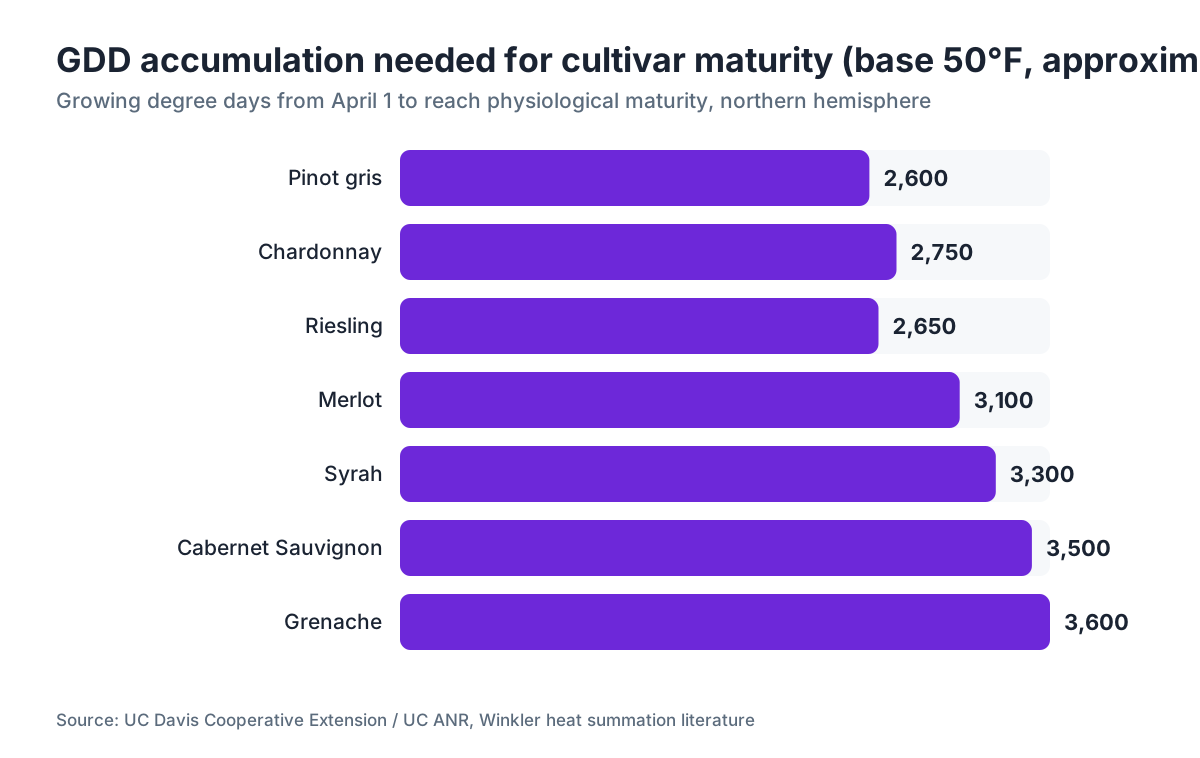
Vine growth follows a predictable phenological calendar tied to air temperature. The common base temperature used for growing degree day (GDD) calculation is 50°F (10°C) [1]. Chardonnay typically needs roughly 2,500 to 3,000 GDD (base 50°F) to reach full maturity in a cool-climate site, while Cabernet Sauvignon pushes closer to 3,500 GDD. Those thresholds set the upper boundary on what you can ripen where you are.
Photosynthesis rate peaks at moderate leaf temperatures, somewhere around 77 to 86°F (25 to 30°C) for most V. vinifera cultivars, and drops sharply above 95°F [5]. That's why extreme heat during berry development is more than uncomfortable for the crew. It genuinely suppresses sugar translocation. Knowing this, some growers in California's Central Valley now time irrigation to buffer canopy temperatures during forecast heat domes, which is a physiologically grounded decision rather than a gut call.
Root architecture matters more than most growers acknowledge. Grafted vines on Phylloxera-resistant rootstocks have root systems shaped partly by the rootstock's genetics and partly by soil texture and irrigation management. Deficit irrigation that encourages deep root exploration is a real strategy, not folklore, and WSU has documented yield and quality responses to regulated deficit irrigation (RDI) protocols in Washington Riesling and Cabernet blocks [4].
What soil science principles matter most in a working vineyard?
Soil is the single most site-specific variable in viticulture, and it's also the hardest to change. Texture (the ratio of sand, silt, and clay) controls water-holding capacity, drainage rate, and how roots physically move through the profile. A fine sandy loam drains fast and warms early in spring. A heavy clay retains moisture, which can extend vegetative growth into the fruit ripening period, something growers in Bordeaux have been managing forever by planting on well-drained gravel terraces.
Soil pH is the master variable for nutrient availability. At pH below 5.5, manganese and aluminum can reach phytotoxic levels, and phosphorus ties up. At pH above 7.5, iron and zinc become progressively unavailable, which shows up first as interveinal chlorosis on young leaves. UC Davis Cooperative Extension recommends target soil pH of 5.5 to 7.0 for most wine grape production, though rootstock choice can buffer the vine somewhat against pH extremes [2].
Organic matter content affects cation exchange capacity (CEC), which is the soil's ability to hold and release nutrients. Low-organic soils common in arid wine regions typically run below 1 percent organic matter. Adding compost raises CEC slowly over years, not seasons. Cover crop programs that terminate biomass in place are one of the more cost-effective ways to build organic matter without trucking in material.
Mycorrhizal associations between vine roots and soil fungi are real and functionally significant. Arbuscular mycorrhizal fungi extend the effective root surface area and improve phosphorus uptake, particularly in low-phosphorus soils. Heavy phosphorus fertilization suppresses mycorrhizal colonization. So the grower who dumps MAP on every block every year may be undermining the biology they're paying to maintain.
How does canopy management affect fruit quality and disease pressure?
Canopy management is where viticulture science becomes very practical very fast. The goals are simple: get sunlight into the fruit zone, move air through the canopy to drop humidity, and distribute leaf area so photosynthesis stays efficient without shading the clusters.
The clearest foundational work is Richard Smart and Mike Robinson's Sunlight into Wine (1991), which translated canopy physiology into a diagnostic tool growers could apply with a light meter and a tape measure [8]. The book is still worth reading. The core finding is that shaded fruit zones produce grapes with lower sugar, higher malic acid, elevated methoxypyrazines (the green pepper compound in Cabernet), and reduced anthocyanin accumulation. None of those outcomes help wine quality.
The practical interventions are shoot thinning, leaf removal in the fruit zone (usually one to three leaves on the morning sun side), hedging to limit canopy height, and wire positioning to spread the canopy. Which ones matter most depends on the training system. A sprawling pergola in a humid climate is a disease incubator. A single curtain VSP (vertical shoot positioning) system with proper shoot thinning moves air and light in ways that actually reduce Botrytis pressure by lowering the number of hours leaf surfaces stay wet [3].
Timing of leaf removal has measurable effects on berry set. Early leaf removal (pre-bloom to bloom) in V. vinifera often reduces cluster compactness through millerandage (uneven berry sizing), which counterintuitively improves disease resistance by loosening cluster architecture. Cornell research on Riesling and Pinot noir has documented this repeatedly [3]. Later leaf removal has less effect on cluster structure but still improves microclimate.
What does the science say about irrigation and water stress in vineyards?
Water relations in grapevines are one of the most research-dense areas in viticulture, and the practical takeaway is nuanced. Vines are moderately drought-tolerant perennials that actually benefit from controlled water stress at specific growth stages, but 'controlled' is doing a lot of work in that sentence.
Stem water potential, measured with a pressure bomb on a shaded, bagged leaf, is the most direct field measure of vine water status. Values more negative than roughly -1.2 MPa (midday stem) represent moderate stress, and below -1.6 MPa represents severe stress that will reduce photosynthesis and can cause irreversible damage in young vines [5]. The pressure bomb takes about 3 minutes per vine, costs less than $600 for a basic unit, and gives you real physiological data. Pressure chambers are available from irrigation supply companies and are referenced in UC Davis irrigation management guides [2].
Regulated deficit irrigation (RDI) deliberately applies mild to moderate stress after berry set to control shoot vigor and berry size without shutting down the vine entirely. The theory is that smaller berries have a higher skin-to-pulp ratio, concentrating color and tannin on a per-berry basis. The evidence that RDI improves wine quality is real but context-dependent. It works clearly in warm climates with consistent weather, and the results are more variable in cool climates with erratic summers.
Full deficit irrigation strategies used widely in Australian and California warm-climate production take stress further, sometimes running stem water potentials to -1.8 MPa or below to force early maturation. The tradeoff is reduced vine longevity and the risk of heat stress compounding during extreme events. Nobody has perfect data on cumulative vine health effects over 20-year timescales. The closest we have are long-term trial blocks at UC Davis and WSU, but those are still relatively young.
Drip irrigation is the dominant delivery method in irrigated vineyards, with emitter placement near the trunk or on both sides depending on soil texture. Subsurface drip (SDI) reduces evaporation losses but makes root distribution harder to monitor and can encourage shallow rooting if managed carelessly.
How do pest and disease cycles shape spray programs and record-keeping?
Understanding the biology of the pests and pathogens you're managing is the fastest way to stop spraying on a calendar and start spraying on a threshold. The difference matters economically and for compliance.
Powdery mildew (Erysiphe necator) is the dominant fungal disease in most wine grape regions. It's an obligate parasite, meaning it can only live on living plant tissue, and it overwinters as chasmothecia in bark. Primary infections start from ascospores released during spring rain events when temperatures are between 50°F and 86°F. The UC Davis powdery mildew risk model uses temperature accumulation above 50°F (separate from GDD for ripening) to predict infection periods [2][10]. Running a disease model means you spray when the biology says the pathogen is active, not every seven days regardless of conditions.
Botrytis cinerea (gray mold) is the other major fungal threat, and unlike powdery mildew, it has a broad host range and overwinters on dead plant material. It infects wounds, spent flower caps, and damaged berries. Spray timing focuses on bloom and the pre-harvest window when sugar-rich berries are most susceptible. Cornell's integrated pest management guidelines for New York vineyards cover Botrytis thresholds and application timing in practical detail [3].
Leafroll virus, spread primarily by mealybugs (Planococcus ficus and Pseudococcus longispinus), is a slow-moving economic problem in California that's easy to underestimate. Infected vines show delayed veraison, red leaf symptoms on red cultivars, and reduced sugar accumulation. There's no cure. Management is roguing infected vines and controlling the mealybug vectors. UC Davis Extension has published that leafroll can reduce yields 20 to 40 percent in heavily infected blocks [2].
Every spray application, including pesticide name, EPA registration number, application rate, target pest, and reentry interval, belongs in a spray record. EPA's Worker Protection Standard (WPS) requires that pesticide application and hazard information be available to workers and handlers, and that records be kept for two years [6]. State-level regulations (California, Washington, Oregon) often add requirements on top of federal WPS, including county agricultural commissioner reporting for restricted-use pesticides.
Managing that documentation is genuinely tedious if you're doing it in a spiral notebook. This is where tools like VitiScribe are worth a look. The platform is built specifically around vineyard spray record keeping and compliance tracking, so records come out in the format inspectors expect rather than reverse-engineered from a notebook after the fact.
What role does climate and weather data play in modern viticulture science?
Climate is not the same as weather, but growers have to manage both. Climate defines what you can grow. Weather defines how you grow it in a given season.
Growing degree days remain the most widely used climate integration metric in viticulture, and the Winkler heat summation scale (Regions I through V, covering roughly 2,500 to over 4,000 GDD base 50°F over the growing season) is still a reasonable first-pass tool for matching cultivar to site [1]. Region I climates like parts of the Mosel or Santa Barbara can ripen Riesling and Pinot gris. Region IV and V climates like the San Joaquin Valley ripen Thompson Seedless for table grapes. Using GDD data from nearby weather stations or on-site data loggers helps calibrate spray timing, irrigation scheduling, and harvest window predictions.
Frost risk at bud break is the single most catastrophic weather event in cool-climate viticulture. Radiation frost (clear, calm nights with radiative cooling) is the type most amenable to active management: wind machines, under-vine heating, or overhead irrigation for evaporative heat release. The thermal inversion layer wind machines exploit typically sits about 30 to 50 feet above the vineyard floor, and a machine's effective radius is roughly 3 to 5 acres. Frost insurance exists but carries high basis risk in mountainous terrain where temperatures vary sharply across short distances.
Hail is underappreciated as a disease vector. Hail wounds on berries are direct infection courts for Botrytis, and a fungicide application within 24 to 48 hours of a hail event is one of the best ROI applications you'll make all season. Documenting the weather event and the responsive spray application matters both for record completeness and for crop insurance claims.
Long-term climate trends are shifting growing season temperatures and harvest dates earlier in most major wine regions. UC Davis researchers have found that average harvest dates in California have moved roughly 7 to 10 days earlier since the 1960s, based on winery delivery records (the data set is imperfect but consistent in direction) [2]. That trend is real enough to factor into long-term site selection and rootstock and cultivar choices.
How does viticulture science connect to soil health and cover crop programs?
Cover crops are one of the areas where there's a real gap between what the science supports and what most growers do. The science says a living root in the soil most of the year feeds microbial communities, reduces compaction from equipment traffic, and can meaningfully suppress weeds in the vine row when managed as a mulch. The practice in many regions is still to disk everything in spring and summer-fallow the midrow.
The choice of cover crop species matters. Legumes fix nitrogen, which can be a liability in a vine row if you're already pushing vegetative growth. Grasses and forbs contribute organic matter and root channels without adding nitrogen. Mixes that include a sacrificial annual (cereal rye, oats) alongside a persistent perennial (hard fescue, orchardgrass) give you the biomass spike early and persistence later.
Cover crop termination timing is critical in water-limited environments. A living cover crop in a dry spring can consume 0.5 to 1.0 inches of soil water per week, which competes directly with vine water supply. The common approach is to terminate the cover crop by rolling, mowing, or herbicide application before the vine's peak water demand in June and July in northern hemisphere sites. Leaving the terminated biomass as a mulch mat slows evaporation and moderates soil temperature.
WSU extension has published specific guidance on cover crop selection for Columbia Basin conditions, and Cornell's viticulture extension covers humid-climate considerations where year-round cover may be preferable and where disease-reducing airflow in the vine row matters more than water competition [3][4].
What are the key metrics and thresholds growers track using viticulture science?
Viticulture science translates into a specific set of numbers that growers track through the season. The table below summarizes the most commonly monitored metrics, their typical measurement method, and the decision thresholds that are well-supported by research.
| Metric | How measured | Decision threshold | Research basis |
|---|---|---|---|
| Growing degree days (base 50°F) | Daily temp logger or CIMIS/AgWeatherNet | Cultivar-specific maturity GDD | UC Davis, WSU [1][2][4] |
| Stem water potential | Pressure chamber (shaded bagged leaf) | Moderate stress: -1.2 MPa; Severe: -1.6 MPa | UC Davis [2][5] |
| Soil pH | Lab analysis or field probe | Target 5.5-7.0 for most V. vinifera | UC Davis Extension [2] |
| Brix | Refractometer or lab | Harvest target varies 21-26°Brix by cultivar/style | Standard industry practice |
| pH (berry) | pH meter | Harvest target typically 3.1-3.6 | Standard industry practice |
| Titratable acidity | Lab titration | 5-9 g/L typical harvest target | Standard industry practice |
| Canopy density | Point quadrat analysis | Target <50% point contacts shaded | Smart & Robinson (1991) [8] |
| Powdery mildew infection periods | Disease model (temp accumulation) | Spray when model indicates risk | UC Davis PMR model [2] |
Tracking these numbers over multiple seasons is more valuable than any single season's data. Year-over-year patterns in stem water potential at the same phenological stage, or GDD accumulation by week, tell you whether your site is trending drier or warmer over time, which informs long-term vineyard planning decisions that are genuinely hard to reverse.
What does EPA's Worker Protection Standard require for vineyard pesticide records?
The EPA Worker Protection Standard (WPS), codified at 40 CFR Part 170, applies to any agricultural establishment where pesticides are used in the production of agricultural plants and where workers or handlers are employed [6]. In a vineyard context, that means virtually every operation that sprays anything, including OMRI-listed organics.
The WPS's core record-keeping requirement is that pesticide application information must be kept for two years. That includes the product name, EPA registration number, active ingredient, location and description of the treated area, date and time of application, and the reentry interval (REI) [6]. The standard also requires that this information be posted at a central location and be accessible to workers who may enter the treated area.
As EPA states in its WPS guidance, "agricultural employers must provide safety training to workers and handlers before they enter treated areas or handle pesticides," and that training must cover pesticide safety, how to recognize and report symptoms of pesticide exposure, and the location of emergency medical care [6]. That training needs documentation too.
State requirements layer on top of federal WPS. California's Department of Pesticide Regulation requires that licensed pesticide applicators keep records in a specific format and report applications of restricted-use pesticides to the county agricultural commissioner within 30 days [7]. Washington State's Department of Agriculture has parallel requirements for licensed applicators [11]. If you operate in multiple counties or states, the tracking burden multiplies.
The practical consequence is real. A vineyard with, say, 8 to 12 spray events per season across 4 to 8 blocks generates 32 to 96 individual application records per year, each needing the full set of fields. Paper systems work until they don't, typically around the moment an inspector asks for a specific application date three years ago.
How does viticulture science inform rootstock selection?
Rootstock selection is a 30-year decision. You make it once per vine and live with it for the life of the vineyard. Getting it wrong, or more accurately, not thinking it through, is one of the more expensive mistakes in vineyard establishment.
The primary reasons to graft are Phylloxera resistance and nematode resistance. Phylloxera (Daktulosphaira vitifoliae) is a root-feeding aphid native to North America that is lethal to ungrafted V. vinifera in most soils. Own-rooted vines exist only where Phylloxera is genuinely absent: parts of Chile, some sandy soils in Australia, and a few historic pockets in Europe. Everywhere else, grafting onto a resistant rootstock isn't optional. It's survival.
Beyond Phylloxera resistance, rootstocks are selected for soil adaptation. 110R handles drought and lime-rich soils (high active lime) well and is common in dry-farmed Mediterranean-climate sites. 3309C is highly productive on fertile, well-drained soils and is a Cornell-recommended rootstock for cool-climate sites [3]. SO4 is vigorous and widely planted, but it can produce excessive shoot growth on fertile sites, which then creates canopy management problems downstream.
Rootstocks also affect scion vine vigor, which feeds directly into canopy architecture decisions. A high-vigor rootstock like Ramsey on fertile soil under a short-pruned cane system will push so much growth that your entire canopy management strategy has to compensate. UC Davis publishes a rootstock comparison tool that lets you filter by soil type, Phylloxera resistance, nematode resistance, and vigor level [2].
There's genuine uncertainty about how rootstock-scion combinations interact with specific soils at a micro-scale. The advice 'test multiple rootstocks in a trial block before committing the whole vineyard' is sound but requires planting 5 to 10 years before you have useful comparative data. Most growers don't have that luxury.
How do you apply viticulture science to a small vineyard without a research budget?
Most of the science translates into small-vineyard practice at very low cost. The expensive part of running a vineyard isn't accessing the science. It's the inputs, labor, and equipment. The knowledge is largely free through extension publications.
Start with a soil test. A basic agronomic soil analysis from a lab like A&L Western or Waypoint Analytical runs $25 to $40 per sample (check your regional lab for current pricing). It tells you pH, CEC, major nutrients, and sometimes organic matter. That single test informs lime applications, which take 6 to 12 months to shift pH meaningfully, so getting the data before planting or early in a remediation program saves money.
Install at least one temperature data logger in the vineyard. The accumulated GDD data you build over years is irreplaceable for calibrating your specific site against published cultivar maturity models. A basic HOBO logger costs $80 to $150 and will run for a season on one battery set. Place it at vine canopy height, shaded from direct sun, and download it at every vineyard visit.
Learn to use a refractometer. Harvest timing decisions that rely entirely on Brix miss pH and TA, but Brix tracking starting at veraison gives you a sugar accumulation rate that helps predict harvest date two to three weeks out. A basic refractometer is under $40.
For spray records and compliance documentation, a structured digital system pays for itself the first time you face a county agricultural commissioner inspection or an insurance claim. VitiScribe offers a free trial specifically for vineyard spray records and field operations, and the record format is pre-structured around WPS requirements.
The vineyard management basics and the science behind them are deeply connected. If you're sourcing fruit from other growers, understanding how Paso Robles wineries manage their warm-climate canopy and irrigation programs offers useful contrast to cooler-site practices. The mountain winery context raises different elevation-related frost and GDD questions worth exploring.
What research areas in viticulture science are advancing fastest right now?
Several areas are moving quickly enough that extension publications more than five years old should be read with caution.
Precision viticulture and remote sensing are the most commercially active area. Multispectral drone and satellite imagery (primarily NDVI and related indices) can map within-block variability in vine vigor and water status at resolutions down to sub-meter. The science is solid. The question for a small grower is whether the variability in their blocks is large enough to justify management zones. For blocks under 10 acres with moderate soil variability, the answer is often no. For 100-acre blocks with significant topographic and soil variation, the ROI on zone-based management is real.
Climate adaptation genetics is accelerating with genomic tools. Breeding programs at Cornell, UC Davis, and internationally are developing V. vinifera cultivars with Downy mildew and Powdery mildew resistance through marker-assisted selection, which could sharply cut fungicide inputs in humid climates [3]. The current generation of PIWI cultivars (German acronym for Pilzwiderstandsfähige, meaning fungus-resistant) is already commercially available, and wine quality from cultivars like Regent, Solaris, and Cabernet Blanc has improved substantially since first-generation releases.
Soil microbiome research is an area where the science is genuinely ahead of practical recommendations. We know that vine root zones harbor complex bacterial and fungal communities that affect nutrient cycling and disease suppression, and that tillage and synthetic pesticide use alter those communities. What we don't yet have is reliable prescriptive guidance: which organisms to add, how to sustain them, and how to measure success. Watch this space, but be skeptical of commercial products promising transformation via soil inoculant. The evidence base for most of them is thin.
Vine water use efficiency under climate stress, including heat and drought interactions, is active research territory at UC Davis and Australian research institutions. The work is relevant to any irrigated region facing water allocation constraints.
Frequently asked questions
What is the difference between viticulture and enology?
Viticulture is the science of growing grapes, covering vine biology, soil, irrigation, pest management, and canopy work, everything up to the point the fruit leaves the vineyard. Enology is the science of winemaking, from crush through fermentation, aging, and bottling. The two are tightly connected because fruit composition at harvest sets the ceiling for wine quality, but they involve different training, equipment, and regulatory frameworks.
What degree or certification do you need to practice viticulture professionally?
There's no single required credential in the U.S. Many vineyard managers hold a B.S. in viticulture or plant science from programs at UC Davis, Cornell, or Washington State. The Society of Wine Educators offers a Certified Specialist of Wine credential. Some growers pursue WSET or Court of Master Sommeliers credentials, though those blend viticulture with sensory training. Practical experience in the vineyard typically matters more than credentials in hiring decisions for field roles.
How do growing degree days (GDD) affect harvest timing?
Growing degree days accumulate as daily average temperature minus the 50°F base temperature, summed from a defined start date (often April 1 or January 1 depending on the model). Each cultivar has a characteristic GDD range at which it reaches physiological maturity. Tracking GDD lets growers estimate harvest date weeks in advance and compare season progress against historical baselines. A season running 200 GDD behind a normal year by July signals potential maturity issues.
What are the most common nutrient deficiencies in wine grape vineyards?
Potassium deficiency shows up as marginal leaf scorch and is common on sandy, low-CEC soils. Magnesium deficiency causes interveinal chlorosis on older leaves, often on high-potassium soils where K antagonizes Mg uptake. Zinc deficiency produces 'little leaf' symptoms and poor fruit set. Boron deficiency causes uneven berry set (shot berries). Iron and manganese deficiencies are pH-related, appearing at high pH sites. Tissue testing alongside soil testing is the only reliable diagnostic tool.
How do you calculate water stress in a vineyard without expensive equipment?
The most accessible field indicator is visual: midday wilting on young shoot tips suggests stress, but it's a lagging and unreliable signal. A pressure chamber (pressure bomb) costing $500 to $800 gives direct stem water potential data in minutes. Canopy temperature using a hand-held infrared thermometer compared against air temperature is a proxy method used in research settings but less common in practice. Soil moisture sensors (capacitance or tensiometers) at rooting depth give daily soil-side data at $50 to $200 per sensor.
What records does EPA's Worker Protection Standard require vineyard operators to keep?
The WPS (40 CFR Part 170) requires two years of pesticide application records covering product name, EPA registration number, active ingredient, treated area description, application date and time, and reentry interval. Employers must also document worker and handler safety training. State regulations in California, Washington, and Oregon add restricted-use pesticide reporting to county agricultural commissioners. Missing or incomplete records are among the most common WPS violations cited during inspections.
What is the best rootstock for a Phylloxera-prone site?
There's no single best rootstock because soil type, vigor requirements, and nematode pressure all factor in. For most California dry-farmed sites with lime in the soil, 110R is a reliable choice with good drought tolerance. For fertile, irrigated sites, 1103P and 101-14 are common. For humid eastern U.S. sites, Cornell recommends 3309C and 101-14 for moderate vigor and Phylloxera resistance. UC Davis publishes a searchable rootstock selection guide that filters by soil conditions.
Does cover cropping hurt vine yields in dry climates?
It can, if cover crops are terminated too late. In water-limited environments, a living cover crop running into May or June competes directly with vine water supply. Research from WSU and UC Davis shows that early termination (before vine peak demand) combined with leaving the residue as a mulch minimizes water competition while preserving the soil health benefits. In humid climates with adequate rainfall, competition is less of a concern and year-round living covers are often beneficial.
What is powdery mildew and how does the disease cycle inform spray timing?
Powdery mildew (Erysiphe necator) overwinters as chasmothecia in vine bark. In spring, rain events trigger ascospore release when temperatures are between 50°F and 86°F. Primary infection occurs on young shoot tissue. UC Davis's powdery mildew risk model accumulates temperature above 50°F to predict infection periods, letting growers apply fungicides when the pathogen is active rather than on a fixed calendar. Sulfur remains the most widely used and cost-effective treatment on organic and conventional programs.
How does leaf removal improve wine quality?
Leaf removal in the fruit zone increases light exposure and airflow around clusters. Better light reduces methoxypyrazine accumulation in red cultivars, raises anthocyanins and sugars, and lowers Botrytis pressure by reducing hours of surface wetness. Pre-bloom leaf removal can also loosen cluster architecture through millerandage, reducing compactness and further cutting disease risk. The optimal timing and intensity vary by cultivar and climate; overly aggressive removal in hot climates causes sunburn on berries.
How is viticulture science different in cool climates versus warm climates?
Cool-climate viticulture focuses heavily on heat accumulation, frost avoidance, ripening cultivars before fall rains arrive, and managing high natural acidity. Warm-climate viticulture deals more with holding acidity, controlling berry size through water and crop load management, and avoiding excessive sugar accumulation that forces early harvest. Disease pressure patterns also differ: powdery mildew dominates in hot, dry climates; Botrytis and downy mildew are bigger threats in humid, cool climates. The underlying physiology is the same; the decision points differ.
Where can I find free viticulture science education resources?
UC Davis Cooperative Extension (ucanr.edu), Cornell Cooperative Extension's viticulture and enology program (cals.cornell.edu), and Washington State University Extension (extension.wsu.edu) publish free guides, pest management manuals, irrigation calculators, and rootstock selection tools. The UC IPM Online database covers wine grape pests with biology-based thresholds. USDA's National Agricultural Library also aggregates peer-reviewed viticulture publications. These resources cover most practical management questions for commercial vineyard operators.
What is regulated deficit irrigation (RDI) and does it actually improve wine quality?
RDI applies controlled water stress after berry set, holding stem water potential in the mild to moderate stress range (around -1.0 to -1.4 MPa midday) to limit berry size and shoot growth. The theory is that smaller berries concentrate phenolics and color on a per-berry basis. Evidence from California and Australian trials shows measurable effects on wine composition, particularly for red cultivars in warm climates. Results in cool, variable-weather climates are less consistent because stress intensity is harder to control.
How does soil organic matter affect vine performance?
Soil organic matter improves cation exchange capacity, which helps retain nutrients and buffer pH swings. It feeds microbial communities that cycle nitrogen and phosphorus into plant-available forms. In sandy, low-organic soils (under 1 percent OM, common in arid wine regions), water-holding capacity is severely limited and nutrients leach quickly. Building organic matter through cover crops and compost is a multi-year process; adding 1 percent organic matter to the top foot of soil across one acre requires roughly 20 to 30 tons of finished compost.
Sources
- UC ANR, Winkler Heat Summation and Growing Degree Days in Viticulture: Growing degree days calculated using base temperature of 50°F (10°C); Winkler regions I-V cover approximately 2,500 to over 4,000 GDD per growing season
- UC Davis Cooperative Extension, Viticulture and Enology: Target soil pH 5.5-7.0 for most V. vinifera; UC Davis irrigation guides reference pressure chamber thresholds; UC Davis PMR (powdery mildew risk) model; rootstock selection tools; leafroll virus reducing yields 20-40% in infected blocks; harvest dates in California advancing roughly 7-10 days since the 1960s
- Cornell University College of Agriculture and Life Sciences, Viticulture and Enology Program: Cornell research on early leaf removal effects on cluster architecture in Riesling and Pinot noir; 3309C rootstock recommendations for cool-climate sites; Botrytis integrated pest management guidelines; PIWI cultivar development
- Washington State University Extension, Wine Science Program: WSU documented yield and quality responses to regulated deficit irrigation in Washington Riesling and Cabernet; cover crop selection guidance for Columbia Basin conditions
- Schultz, H.R. (2003), Differences in hydraulic architecture account for near-isohydric and anisohydric behaviour, Plant, Cell & Environment: Photosynthesis rate peaks at 25-30°C and drops sharply above 35°C in V. vinifera; stem water potential thresholds for moderate (-1.2 MPa) and severe (-1.6 MPa) stress
- EPA, Worker Protection Standard for Agricultural Pesticides, 40 CFR Part 170: WPS requires two years of pesticide application records including product name, EPA registration number, active ingredient, treated area, application date/time, and reentry interval; employers must provide safety training to workers and handlers before they enter treated areas or handle pesticides
- California Department of Pesticide Regulation, Pesticide Use Reporting: California requires licensed pesticide applicators to report restricted-use pesticide applications to the county agricultural commissioner within 30 days
- Smart, R. and Robinson, M. (1991), Sunlight into Wine: A Handbook for Winegrape Canopy Management, Winetitles: Shaded fruit zones produce grapes with lower sugar, higher malic acid, elevated methoxypyrazines, and reduced anthocyanin accumulation; target less than 50% point contacts shaded in point quadrat canopy analysis
- USDA National Agricultural Library, Viticulture Resources: Aggregated peer-reviewed viticulture publications available through federal library
- UC IPM Online, Wine Grape Pest Management Guidelines: Biology-based thresholds for wine grape pests including powdery mildew, Botrytis, leafroll virus vectors, and mealybugs
- Washington State Department of Agriculture, Pesticide Management: Washington State parallel requirements to WPS for licensed applicators, including restricted-use pesticide record keeping
- Keller, M. (2015), The Science of Grapevines: Anatomy and Physiology, 2nd ed., Academic Press: Reference for vine anatomy, physiology, water relations, and canopy-fruit interactions used as a standard graduate-level viticulture text
Last updated 2026-07-09