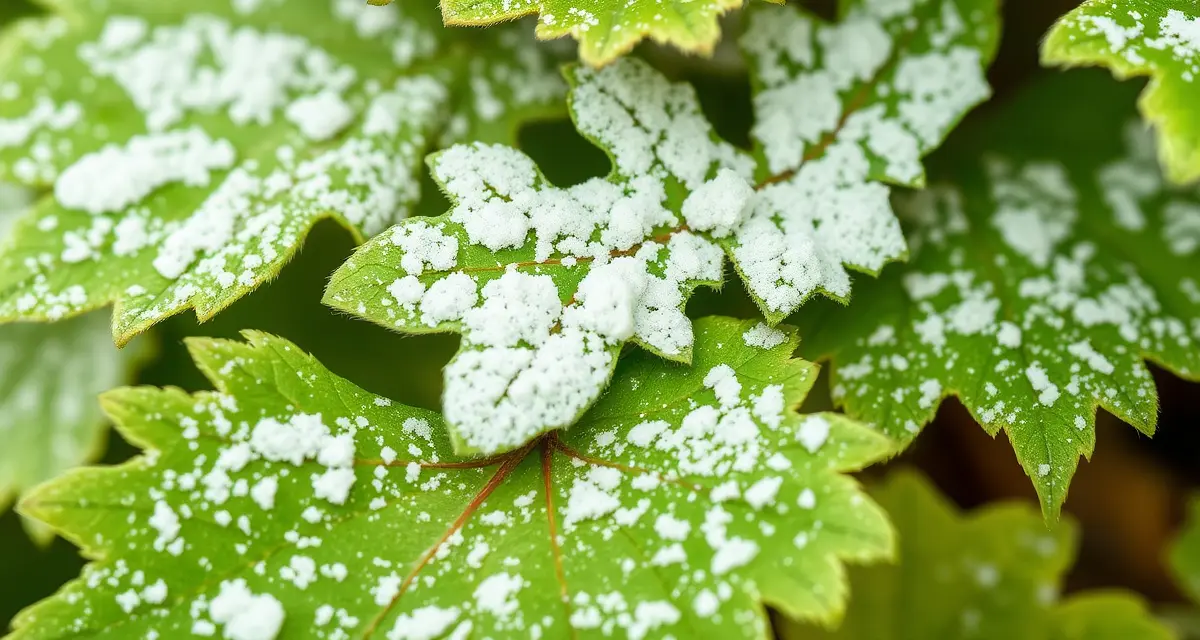
Identifying Powdery Mildew in Vineyards: Field Guide
Powdery mildew is in your vineyard right now if you haven't been spraying. The question isn't whether it's there -- it's at what level and whether your program is ahead of it.
The problem with powdery mildew identification is that the visible symptoms you're looking for are a lagging indicator. By the time you see the white powdery coating on leaves or the characteristic russeting on clusters, the infection happened 7-14 days ago. Effective scouting means learning to see the early signs, not just the obvious late-stage symptoms.
TL;DR
- Visible white powdery colonies on leaves or cluster russeting indicate infection that occurred 7-14 days earlier -- effective scouting means identifying pale greenish-yellow leaf spots and early rachis symptoms before the classic floury coating appears
- Any visible mildew on clusters during or after bloom warrants an immediate spray response regardless of spray interval timing -- 5-10% leaf incidence is the trigger for most IPM protocols on leaf tissue
- Rachis browning or webbing on cluster stems is often a more reliable early cluster infection indicator than berry symptoms, and should be the primary cluster inspection target in post-bloom scouting
- Scouting should run from budbreak through post-veraison, with 5-7 day frequency during bloom through fruit set -- the most damaging infection window for cluster quality
- Powdery mildew is reliably distinguished from downy mildew (which requires free moisture and produces cottony sporulation on leaf undersides, not floury coating) and from sulfur spray residue (which is uniform on exposed surfaces and washes off with water)
- Quantified scouting records -- shoot incidence percentage, leaf incidence percentage, cluster incidence percentage -- create the IPM documentation that certifiers and winery buyers look for when reviewing why applications were made on specific dates
Step 1: Know When to Start Looking
Don't wait for visible symptoms before you start scouting. Start at budbreak. Your scouting schedule should be:
- Budbreak through bloom: Weekly minimum. This is primary infection season.
- Bloom through fruit set: Every 5-7 days. Cluster infection during this window is the most damaging.
- Fruit set through veraison: Weekly. Late-season infections still matter for thin-skinned varieties.
- Post-veraison: Bi-weekly unless you had late-season pressure.
For the early-season flag shoot scouting protocol that detects powdery mildew before visible symptoms appear, see the early-season powdery mildew detection guide.
Step 2: Recognize the Symptoms by Tissue Type
Leaves
- Early: Pale greenish-yellow spots on upper leaf surface, often with a slight oily sheen
- Progressed: White powdery colonies on upper and lower leaf surface -- the classic "floury" appearance
- Severe: Leaves curl, distort, and drop prematurely
Check both leaf surfaces. Early mildew lesions are more visible on the upper surface initially, but the pathogen colonizes both sides as it develops.
Shoots and Tendrils
- White powdery growth on new shoot tissue
- Shoot tips may be stunted or distorted in heavy infection years
- This is sometimes called "flagging" -- affected shoots stand out from healthy tissue
Flower Clusters (Pre-Bloom Through Bloom)
- Whitish coating on rachis and individual flowers
- Cluster infections at this stage are severe -- they can cause blossom drop and significantly reduce set
This is the most critical stage for identification because cluster infection here affects your entire crop.
Berries (Post-Fruit Set)
- Early: White powdery colonies on berry surface
- Mid-season: Berries stop expanding normally; skin splits as internal growth continues and infected epidermis can't stretch
- Late: Characteristic "netting" -- brownish weblike russeting on berry surface that's a classic sign of powdery mildew infection
- Very late: Powdery growth visible in cluster interior after veraison
The netting pattern on berries is sometimes not noticed until harvest. If you see it at harvest, your IPM program failed 6-8 weeks ago.
Rachis (Cluster Stems)
- Brownish-black netting or webbing pattern on cluster stems
- Often more visible than berry lesions as a reliable indicator of cluster infection
- Look for this actively during your post-bloom scouting
Step 3: Scouting Protocol
Sample Selection
Scout a representative sample of your vineyard, not just the easy-to-access rows. Include:
- Interior vine rows (often higher pressure than row ends)
- Areas with dense canopy or poor air circulation
- Low spots where humidity accumulates
- Areas adjacent to woodland or water features
What to Count
Record your scouting data with specific metrics:
- Shoot incidence: Percentage of shoots showing any mildew symptoms
- Leaf incidence: Percentage of leaves showing mildew on your sampled shoots
- Cluster incidence: Percentage of clusters showing any mildew
For example: "Block 7 Chardonnay, 5/28, bloom stage. Scouted 10 shoots from 5 vines across the block. 2 of 10 shoots showed leaf symptoms (20% shoot incidence). 1 of 20 clusters showed early rachis symptoms (5% cluster incidence)."
This kind of quantified scouting creates a baseline you can compare across weeks and years. It also demonstrates due diligence in your IPM documentation.
For the block-level IPM documentation framework that connects scouting observations to spray decisions, see the powdery mildew vineyard IPM hub.
Photography
Photograph what you find. VitisScribe's photo capture links images directly to scout records for that block and date. At the end of a season you have a visual record of disease progression.
Photographs matter for:
- Documenting the basis for spray decisions (why you applied on a specific date)
- Certifier and winery buyer documentation
- Learning -- reviewing photos from past years helps you identify pressure patterns in your specific blocks
Step 4: Distinguishing Powdery Mildew From Other Problems
Powdery Mildew vs. Downy Mildew
Downy mildew (Plasmopara viticola) causes "oil spots" on upper leaf surface with white, cottony sporulation on the underside. It requires moisture (rain, dew) for infection and doesn't produce the classic floury coating. In California, downy mildew is rare in drier regions. In Oregon, New York, and Virginia, it can occur simultaneously with powdery mildew.
Powdery Mildew vs. Spray Residue
Sulfur spray residue looks similar to powdery mildew at a glance -- white dusty coating on leaf surfaces. The difference: spray residue appears uniformly on exposed surfaces and washes off with water. Powdery mildew grows, producing distinct colonies with irregular edges, and doesn't wash off cleanly.
Powdery Mildew vs. Berry Splitting
Berry splitting from water stress or rapid sugar accumulation can be confused with late-season powdery mildew damage. The key difference: mildew-related splitting occurs on a network of infected berries with visible netting on the skin; water stress splitting tends to be random and lacks the russeting pattern.
Step 5: Documenting What You Find in VitisScribe
Your scout records should capture:
- Date and time of scouting
- Block scouted
- Vine growth stage (BBCH scale or descriptive: bloom, fruit set, etc.)
- Symptoms observed and severity rating
- Incidence percentages
- Photos
- Action taken or planned
VitisScribe's scout report template prompts all these fields. Scout records link directly to spray records so you can see the timeline from observation to treatment.
This documentation is what separates a defensible IPM program from just spraying on a calendar. If your certifier or a winery buyer asks why you applied on a specific date, you have the scouting data that shows the pest pressure you were responding to.
Related Articles
- Crown Gall in Vineyards: Identification and Management Guide
- Black Rot Management in Vineyards: Complete IPM Guide
FAQ
What does early-stage powdery mildew look like in a vineyard?
Early powdery mildew is easy to miss. Look for pale greenish-yellow spots on the upper leaf surface with a slightly oily appearance, or subtle whitish growth at the tips of new shoots. On clusters at or just after bloom, look for a chalky white coating on the rachis. These early symptoms appear 7-14 days after infection, meaning the actual infection event occurred before symptoms are visible.
How do I know if powdery mildew is severe enough to spray?
In wine grape vineyards, the threshold is lower than many growers realize. Any visible mildew on clusters during or after bloom warrants an immediate spray response regardless of spray interval timing. For leaf infections, 5-10% incidence on your scouting sample is a trigger for most IPM protocols. For high-value or susceptible varieties like Chardonnay or Cabernet Sauvignon, many advisors recommend staying at preventive spray intervals regardless of scouting results during the bloom-to-fruit-set window.
Can I identify powdery mildew by smell?
Severe powdery mildew infections can produce a musty smell in clusters, but by the time you're smelling it, you have a severe problem. Don't rely on smell as a scouting method. Visual scouting with quantified incidence records is the appropriate monitoring tool.
How do post-veraison powdery mildew symptoms differ from pre-veraison symptoms, and does late-season infection require spray response?
Post-veraison powdery mildew symptoms are most visible as cluster interior colonization -- white powdery growth visible between berries in tight clusters, and netting or russeting on berry surfaces that has advanced from earlier infection events. Late-season active mycelium on clusters can still drive botrytis entry and affect harvest quality, particularly in tight-clustered varieties like Pinot Noir and Chardonnay. If you're seeing active powdery mildew mycelium at or after veraison, evaluate whether a late-season application with a 0-day PHI material is warranted based on cluster incidence level and variety susceptibility. Potassium bicarbonate and sulfur are both 0-day PHI and appropriate for late-season cluster applications when infection is present.
What makes rachis inspection a more reliable cluster infection indicator than berry inspection at post-bloom scouting?
At post-bloom through bunch closure, berry powdery mildew symptoms are often subtle -- early colonies on small berries are easy to miss at a quick scouting pass. Rachis symptoms (brownish-black netting or webbing pattern on cluster stems) tend to be more visually prominent at this stage and more reliably indicate cluster infection that will progress to berry damage if unaddressed. When scouting post-bloom, actively examine cluster stems before examining berry surfaces -- rachis symptoms will give you earlier warning of cluster infection that requires spray response. As berries develop and reach pea size, berry netting becomes increasingly visible and takes over as the primary cluster inspection target.
What is Identifying Powdery Mildew in Vineyards: Field Guide?
[FAQ_ANSWER_PLACEHOLDER: This answer needs to be generated by AI with specific data, examples, and actionable advice relevant to Identifying Powdery Mildew in Vineyards: Field Guide. Target 50-150 words.]
How much does Identifying Powdery Mildew in Vineyards: Field Guide cost?
[FAQ_ANSWER_PLACEHOLDER: This answer needs to be generated by AI with specific data, examples, and actionable advice relevant to Identifying Powdery Mildew in Vineyards: Field Guide. Target 50-150 words.]
How does Identifying Powdery Mildew in Vineyards: Field Guide work?
[FAQ_ANSWER_PLACEHOLDER: This answer needs to be generated by AI with specific data, examples, and actionable advice relevant to Identifying Powdery Mildew in Vineyards: Field Guide. Target 50-150 words.]
Sources
- UC Cooperative Extension Viticulture
- UC Davis Plant Pathology
- Oregon State University Extension
- Cornell Cooperative Extension
- American Vineyard Foundation
Get Started with VitiScribe
Powdery mildew scouting produces the documentation that justifies spray decisions -- but only when scout records capture quantified incidence data (shoot incidence, leaf incidence, cluster incidence) with phenological stage, linked directly to the spray events those observations drove. VitisScribe's scouting module captures all required fields, links photos to block and date records, and connects scouting observations to spray entries so your IPM program is documented as a decision-based system rather than a calendar schedule. Try VitiScribe free and log your first quantified powdery mildew scouting record today.