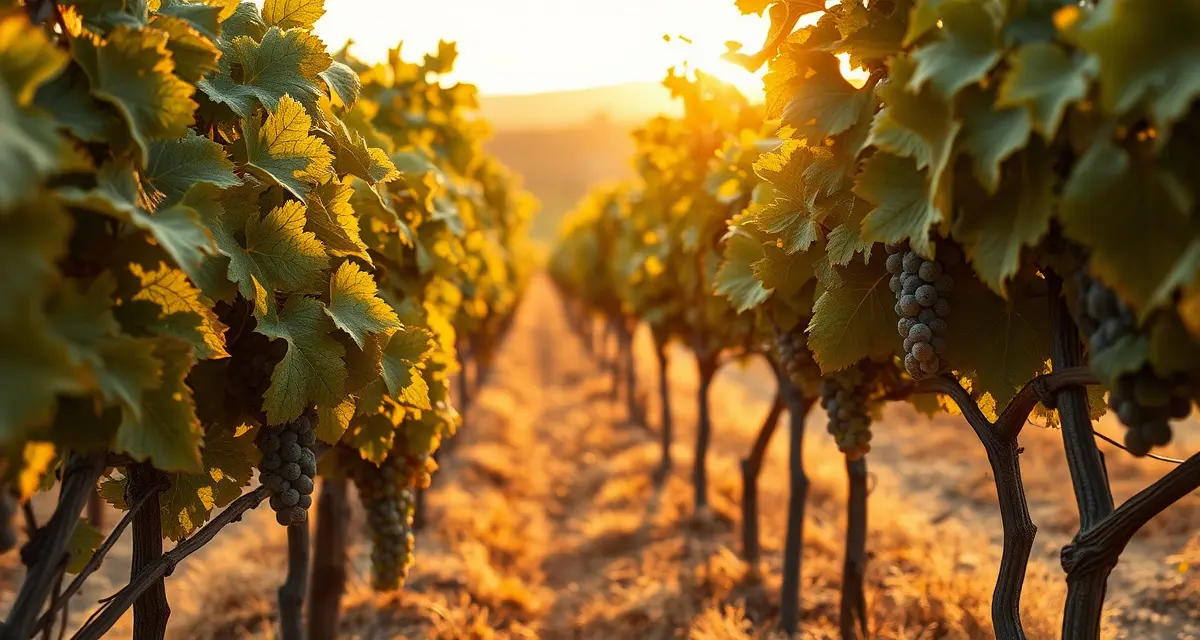
Grenache IPM Guide for Vineyard Managers
Grenache is drought-tolerant, heat-adapted, and productive under conditions that challenge other red varieties. What it isn't is powdery mildew-tolerant. Grenache is among the most powdery mildew susceptible varieties in commercial production, and managing that susceptibility in the warm, dry sites where Grenache excels requires a program calibrated to the variety's specific risk profile.
TL;DR
- Grenache is among the most powdery mildew susceptible varieties in commercial production -- the program starts at 6-inch shoot growth and runs through bunch closure with 7-day intervals at bloom, with no spray extension tolerance during the bloom window
- Grenache's loose cluster structure genuinely reduces botrytis risk -- direct botryticide applications are typically not needed in dry seasons on well-managed blocks, unlike compact-cluster varieties like Chardonnay
- QoI (Group 11) resistance in powdery mildew is confirmed in many California sites where Grenache is grown -- if resistance is documented in your block, avoid azoxystrobin and pyraclostrobin from the start of the season
- Sulfur phytotoxicity is a real risk in warm inland regions where Grenache excels (Paso Robles, inland Santa Barbara) when temperatures exceed 95°F -- monitor forecasts and avoid applications within 3-4 days of extreme heat
- A Grenache powdery mildew program typically requires 12-16 applications per season compared to 8-12 for a moderate-susceptibility variety like Syrah on the same site -- tracking spray cost by variety identifies where pest management budget is concentrated
- Spider mites and leafhoppers are the primary insect concerns in warm California inland sites; monitoring for mite predator-to-pest ratios from early summer is particularly important in dry years with low irrigation volume
The good news: Grenache's loose cluster structure genuinely reduces botrytis risk. The challenge: you may be trading a manageable botrytis situation for an intensive powdery mildew one.
Grenache's Specific Disease Profile
Powdery Mildew: High Susceptibility
Grenache's high powdery mildew susceptibility is well-documented and experienced by any grower who's tried running a light program on this variety. Erysiphe necator infects Grenache shoot tissue, leaves, and berries readily, and the dry warm conditions where Grenache is commonly grown (Paso Robles, Santa Barbara's inland areas, Texas Hill Country) are exactly the temperature and humidity profile that powdery mildew favors.
In Grenache, the powdery mildew program starts at 6-inch shoots and doesn't relax until after bunch closure. This isn't a variety where you can skip a spray event during the bloom window and make it up later.
Botrytis: Lower Risk Due to Cluster Structure
Grenache's characteristically loose cluster architecture is a genuine management advantage. Loose clusters don't trap humidity, don't create berry-to-berry mechanical contact, and allow air movement that dries berry surfaces after rain or irrigation.
In normal seasons on well-managed blocks, botrytis bunch rot in Grenache requires little direct management beyond maintaining open canopies and monitoring. In wet years or on sites with excessive shoot vigor that creates canopy congestion around otherwise-open clusters, botrytis can establish, but it remains a secondary concern in most Grenache production environments.
Leafhoppers and Spider Mites
In warm inland California sites where Grenache is commonly grown alongside Syrah and Zinfandel, spider mite and leafhopper populations can be notable. Grenache's heat tolerance means it's often on drier sites with higher mite pressure, particularly in dry years.
Monitoring leafhoppers from first-generation nymph emergence through second generation is standard practice. Spider mite scouting from early summer onward, especially in blocks with low irrigation volume, keeps you ahead of population buildup.
Season-Long Program
Dormant to Bud Break
Dormant season oil applications on blocks with prior mite pressure. Grenache is drought-tolerant but still susceptible to mite-related defoliation if populations are high enough and natural predators are suppressed.
Pruning wound protection where trunk diseases (Botryosphaeria, Eutypa) are present. Grenache can develop trunk disease in old-vine settings where annual pruning creates accumulated wound surface area.
Bud Break to 6-Inch Shoots
Initiate scouting for flag shoots. Grenache's high powdery mildew susceptibility means flag shoots in this variety represent a meaningful inoculum source that shouldn't be ignored.
Start mite scouting. Establish your predator-to-mite ratio baseline.
6-Inch Shoots Through Pre-Bloom
Start the powdery mildew program immediately at 6-inch shoot growth if flag shoots are present. For Grenache, the conservative choice is to start at 6-inch shoots regardless of flag shoot count, given the variety's high susceptibility. A 10-14 day sulfur application interval is appropriate.
If you're on a site with documented QoI resistance in the powdery mildew population, avoid azoxystrobin and pyraclostrobin in your rotation from the beginning of the season.
Bloom
Tighten intervals to 7-10 days during bloom. Switch from sulfur to DMI (FRAC group 3) or SDHI (FRAC group 7) fungicides. Grenache berry infection at bloom creates long-latent infections that can express as russeted or cracked berries at harvest.
Given Grenache's high susceptibility, don't extend your bloom spray interval under the assumption that the variety will tolerate it. In high-susceptibility varieties, the bloom window requires more precision in timing, not less.
A botryticide application at early bloom is generally not necessary in Grenache given the loose cluster structure, but inspect your blocks. If vigor is high and canopy density is creating clusters that look tighter than expected, add a botryticide at bloom as insurance.
Fruit Set Through Bunch Closure
Continue FRAC group rotation at 10-14 day intervals. This is still an active powdery mildew window in Grenache, even as it's winding down in lower-susceptibility varieties at the same growth stage.
Mite scouting intensifies from July onward in warm sites. The leafhopper second generation nymph counts should be evaluated against your economic threshold.
For Grenache specifically, watch the developing shoots for powdery mildew on leaf undersides. The variety tends to show shoot tip infections persistently through summer, and those infections drive chasmothecia production that determines next season's inoculum load. Controlling shoot infections through bunch closure is an investment in next season's disease management as much as it is in current season fruit quality.
Bunch Closure Through Harvest
Post-bunch closure, you can shift to 14-day intervals and return to sulfur in your rotation. Berry susceptibility is declining after bunch closure. Sulfur at this stage is controlling shoot infections more than berry infections.
Calculate PHI for any products used close to harvest. Grenache typically harvests in the mid-to-late range for red varieties at most sites, giving more PHI room than earlier-ripening varieties.
Botrytis monitoring should be ongoing but the expectation in most seasons is clean fruit given Grenache's cluster structure.
The Texas Hill Country vineyard management guide covers the specific environment where Texas Grenache is grown alongside Pierce's disease management, a disease that doesn't affect most California Grenache production but is critical in Texas.
The powdery mildew IPM hub has the full FRAC rotation guidance for powdery mildew management in high-susceptibility varieties like Grenache.
Program Intensity vs Lower-Susceptibility Varieties
The practical difference between a Grenache powdery mildew program and a Syrah program on the same site is notable:
| Window | Grenache (high susceptibility) | Syrah (moderate susceptibility) |
|---|---|---|
| Pre-bloom interval | 10-14 days | 10-14 days |
| Bloom interval | 7 days | 7-10 days |
| Post-fruit set interval | 10 days | 14 days |
| Product rotation | 3-4 FRAC groups | 2-3 FRAC groups |
| Season applications | 12-16 | 8-12 |
Those extra applications add up in labor, product cost, and equipment time. Tracking spray cost by variety across seasons is useful for understanding where your pest management budget is actually being spent.
Organic Grenache Programs
Organic Grenache production is achievable, primarily because the botrytis component of the program is minimal. The challenge is powdery mildew, where Grenache's high susceptibility demands tight interval compliance in any organic program.
Sulfur at 7-day intervals during bloom and fruit set, extended to 10-day intervals pre-bloom and post-bunch closure, is the backbone. Potassium bicarbonate rotation adds eradicant activity.
In dry inland regions where Grenache is typically grown, sulfur phytotoxicity risk is real when temperatures exceed 95°F. Monitor forecast temperatures and avoid applications within 3-4 days of expected extreme heat. Late evening applications can reduce phytotoxicity risk when daytime temperatures are marginal.
Frequently Asked Questions
What diseases most affect Grenache vineyards?
Powdery mildew is the dominant disease concern for Grenache, with one of the highest susceptibility ratings among commercial wine grape varieties. Full-season programs from 6-inch shoot growth through bunch closure are standard, with 7-day intervals at bloom. Botrytis bunch rot is a lower-level concern given Grenache's loose cluster structure, typically not requiring direct management in dry seasons. Spider mites and leafhoppers are the primary insect pests in warm inland California sites where Grenache is most commonly grown.
How does Grenache's loose cluster structure affect botrytis risk?
Grenache's loose clusters create better airflow through the cluster zone and reduce the berry-to-berry contact that damages skin and traps humidity. This structurally lowers botrytis risk compared to compact-cluster varieties, making direct botrytide applications unnecessary in most normal seasons. The cluster structure advantage is offset by canopy management failures: high-vigor blocks with congested canopies can develop tighter cluster presentation and lose the natural botrytis advantage.
What powdery mildew program is recommended for Grenache in warm regions?
A full-season program starting at 6-inch shoot growth, with 7-day spray intervals during bloom, 10-day intervals from fruit set through bunch closure, and 14-day intervals post-bunch closure. FRAC group rotation across DMI (group 3), SDHI (group 7), and QoI (group 11 where resistance is not confirmed) is important given the high number of applications. Sulfur is appropriate pre-bloom and post-bunch closure in conventional programs. Organic programs rely on sulfur plus potassium bicarbonate at tighter intervals throughout the season.
How do I document Grenache powdery mildew incidence year-over-year to justify program intensity to winery buyers?
Annual block-level powdery mildew incidence surveys -- recording percent of shoot tips affected, percent of clusters with any powdery mildew, and severity rating per block -- build the multi-year record that shows your Grenache program is responding to actual disease pressure rather than running on autopilot. For winery buyers who ask why Grenache receives 14 applications while another variety in the same block receives 9, your block incidence records across multiple seasons provide the documented answer: Grenache consistently shows higher incidence when program intervals are extended, and the spray count is proportional to the susceptibility risk. VitiScribe's block scouting records store this annual incidence data with timestamps, making it exportable for buyer review.
What is the correct way to document a delayed bloom spray on Grenache due to equipment breakdown?
If equipment failure or other operational constraint prevents you from reaching Grenache during the 7-day bloom spray window, the follow-up application and the gap should both be documented. Log the scheduled application date, the reason for the delay, the actual application date, and the cumulative days since last application at the time of the delayed spray. If the gap allowed a rainfall event or infection period to occur unprotected, note that in your records -- documenting what happened, not just what you planned, gives you and your PCA the information needed to decide whether a curative product should be added to the delayed application. Gaps in high-susceptibility variety programs that coincide with infection events should trigger scouting to assess whether breakthrough disease occurred.
What is Grenache IPM Guide for Vineyard Managers?
[FAQ_ANSWER_PLACEHOLDER: This answer needs to be generated by AI with specific data, examples, and actionable advice relevant to Grenache IPM Guide for Vineyard Managers. Target 50-150 words.]
How much does Grenache IPM Guide for Vineyard Managers cost?
[FAQ_ANSWER_PLACEHOLDER: This answer needs to be generated by AI with specific data, examples, and actionable advice relevant to Grenache IPM Guide for Vineyard Managers. Target 50-150 words.]
How does Grenache IPM Guide for Vineyard Managers work?
[FAQ_ANSWER_PLACEHOLDER: This answer needs to be generated by AI with specific data, examples, and actionable advice relevant to Grenache IPM Guide for Vineyard Managers. Target 50-150 words.]
What are the benefits of Grenache IPM Guide for Vineyard Managers?
[FAQ_ANSWER_PLACEHOLDER: This answer needs to be generated by AI with specific data, examples, and actionable advice relevant to Grenache IPM Guide for Vineyard Managers. Target 50-150 words.]
Who needs Grenache IPM Guide for Vineyard Managers?
[FAQ_ANSWER_PLACEHOLDER: This answer needs to be generated by AI with specific data, examples, and actionable advice relevant to Grenache IPM Guide for Vineyard Managers. Target 50-150 words.]
How long does Grenache IPM Guide for Vineyard Managers take?
[FAQ_ANSWER_PLACEHOLDER: This answer needs to be generated by AI with specific data, examples, and actionable advice relevant to Grenache IPM Guide for Vineyard Managers. Target 50-150 words.]
Related Articles
Sources
- UC Cooperative Extension Viticulture
- California Department of Pesticide Regulation (CDPR)
- American Vineyard Foundation
- American Society for Enology and Viticulture (ASEV)
- Wine Institute
Get Started with VitiScribe
Grenache's high powdery mildew susceptibility means your spray program runs at higher intensity -- more applications, tighter intervals at bloom, and FRAC rotation across 3-4 groups per season -- than most other red varieties on the same site. VitiScribe's block-level FRAC rotation tracking, spray interval monitoring, and incidence scouting records give Grenache programs the documentation depth to justify that intensity to buyers, certifiers, and your own season-end program review. Try VitiScribe free and log your first Grenache block spray record with FRAC group tracking today.