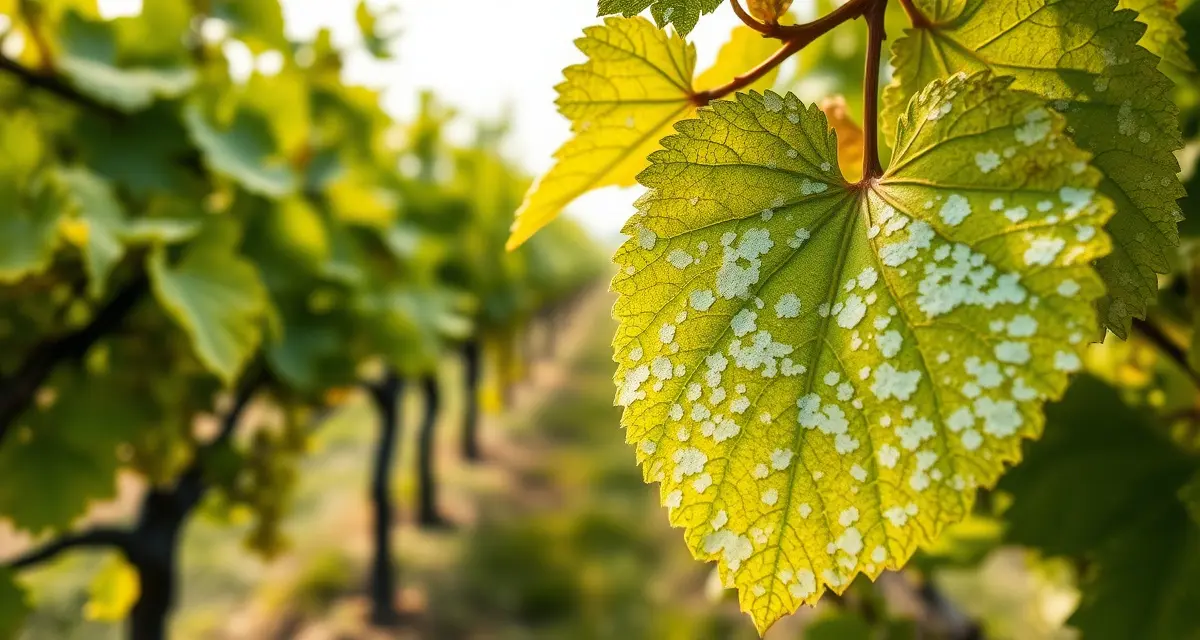
Downy Mildew Management for Chardonnay in Finger Lakes
Finger Lakes spring lake-effect moisture extends downy mildew infection risk through July -- well past when growers in drier wine regions stop worrying about this disease. The lakes that moderate winter temperatures and allow vinifera viticulture in upstate New York also create sustained spring and early-summer humidity that drives downy mildew infection conditions for a longer window than you'd encounter in Oregon's Willamette Valley or California's coastal regions.
TL;DR
- The Finger Lakes' lake-effect moisture creates localized wetting events that may not appear in regional weather data -- your vineyard-level weather station is more reliable than nearby airport or public station data for downy mildew decision timing
- Downy mildew infection requires the 10-10-24 criteria: at least 10mm of rainfall, minimum 10°C temperature, and 24 hours of incubation -- in the Finger Lakes, this model is met repeatedly from April through July in most years
- Phenylamide (FRAC Group 4) resistance in downy mildew is documented in some eastern US vineyards including the Finger Lakes region; limit Ridomil Gold to 2-3 applications per season, never as a standalone
- Mancozeb has a 66-day PHI and is restricted-use in New York; timing mancozeb applications in the Finger Lakes requires careful PHI tracking given the shorter growing season compared to western wine regions
- New York DEC requires pesticide application records retained for a minimum of 3 years; mancozeb applications require the applicator's DEC license number
- When you document the infection event (rainfall amount, temperature) that triggered each application, your records tell a defensible IPM story -- rather than a calendar-only spray program
Finger Lakes humidity from lakes creates persistent downy mildew pressure unlike drier wine regions, and Chardonnay -- though considered moderately susceptible rather than highly susceptible -- requires a disciplined program from budbreak through bunch closure to stay ahead of that pressure.
Understanding Downy Mildew in the Finger Lakes Context
Plasmopara viticola (grape downy mildew) operates on the "10-10-24" infection model: at least 10mm of rainfall, minimum 10°C (50°F) temperature, and 24 hours of incubation following the wetting event. In the Finger Lakes, this infection model is met repeatedly from April through July in most years.
What makes the Finger Lakes distinct from other downy mildew management regions:
Lake-effect moisture: The large water bodies of Seneca, Cayuga, Keuka, and the other Finger Lakes create localized humidity and precipitation patterns. Vineyards close to lake shores may experience wetting events that don't appear in regional weather summaries. Your vineyard-level weather station data matters more than regional averages for downy mildew decision-making.
Prolonged spring: Cool spring temperatures extend the period when wetting events occur before the vine canopy has fully developed. Infections early in the season when shoot growth is rapid can establish quickly in the soft, susceptible new tissue.
Variable early-summer conditions: Unlike Oregon's predictably wet spring, the Finger Lakes can experience extended dry periods interspersed with infection events. This variability rewards threshold-based management over calendar spraying -- you need to know which days were actual infection events to time your applications appropriately.
The Infection Model as a Management Tool
The 10-10-24 rule is useful for timing applications and for documenting IPM rationale. When you can point to weather records showing that a specific rain event met all three criteria and triggered a spray application, your records tell a defensible story about why you sprayed when you did.
VitiScribe's weather integration monitors temperature and precipitation data from local weather stations associated with your vineyard. When conditions approach or meet the 10-10-24 threshold, the system can flag the spray window so you can respond before the incubation period ends and infection is established. See Finger Lakes vineyard management software options.
For your spray records, document the infection event that triggered each application. A note like "applied Revus May 15 following 1.2 inch rain event May 12-13 with temperatures above 55°F throughout" connects your application to the agronomic rationale.
Spring Program Design for Finger Lakes Chardonnay
Budbreak through 6-inch shoot growth (April - early May):
Start your downy mildew program at 4-6 inch shoot growth or at the first rainfall event meeting 10-10-24 criteria, whichever comes first. In the Finger Lakes, the first notable spring infection event often occurs in late April to early May as temperatures warm into the 50-60°F range and spring rains arrive.
First application: copper-based material (copper hydroxide or copper octanoate). Copper provides contact protection against downy mildew, is available in OMRI-listed formulations for organic programs, and has a 0-day PHI. Apply at 3-5 days before the forecast rain event if possible, or immediately following the rain event if caught by surprise.
For conventional programs, you can also use phosphonate materials (Phostrol, ProPhyt, Rampart) at this stage, though check their organic status with your certifier if organic certification is relevant.
Shoot elongation through pre-bloom (May):
As shoot growth accelerates and canopy becomes more dense, downy mildew risk increases. Apply systemic materials at this stage for better coverage and residual protection into the developing canopy:
- Revus (mandipropamid, FRAC Group 40): excellent early-season efficacy, 7-day PHI, no cross-resistance with phenylamides
- Presidio (fluopicolide, FRAC Group 43): excellent efficacy, 7-day PHI
- Zampro (ametoctradin + dimethomorph, FRAC Groups 45 + 40): good efficacy combination
Alternate among different FRAC groups from the start of the program to build resistance management practices.
Bloom (early-mid June):
Bloom is critical for powdery mildew but also maintains downy mildew risk. Continue 7-day intervals through the entire bloom period. The combination of dense, rapidly growing tissue and the last period of high infection risk before bunch closure makes bloom protection against both diseases equally important.
Post-bloom through bunch closure:
After fruit set and bunch closure, berry susceptibility to downy mildew declines. Leaf disease on the canopy remains a concern for photosynthesis and vine ripening, but the cluster-protection urgency decreases. You can typically extend intervals to 10-14 days after bunch closure if early-season disease pressure has been well managed.
Continue to use the 10-10-24 model to time applications. If a wetting event meets infection criteria post-bunch closure, apply within 3-5 days to maintain leaf protection.
Resistance Management for Finger Lakes Downy Mildew
Phenylamide (FRAC Group 4 -- metalaxyl in Ridomil Gold) resistance in downy mildew is documented in some eastern US vineyards, including the Lake Erie and Finger Lakes regions where Group 4 products have been used intensively. If you've been relying on Ridomil Gold as a primary downy mildew material and are seeing breakthrough disease, resistance should be on your suspect list.
Guidelines for managing phenylamide resistance:
- Use Group 4 products only in premixtures with contact materials (copper or mancozeb), never as standalones
- Limit Group 4 applications to 2-3 per season maximum
- Alternate Group 4 applications with non-Group 4 systemic materials (Groups 40, 43, 45)
- Use Group 4 products in the early season when primary infection events occur, saving non-Group 4 materials for mid-season
VitiScribe tracks FRAC groups for downy mildew products and flags consecutive same-mode applications. If you're about to make your third Group 40 application without a Group 43 or Group 45 material in between, the system will surface that pattern. See the downy mildew IPM hub for detailed disease management guidance.
New York DEC Compliance for Downy Mildew Records
New York Department of Environmental Conservation requires pesticide application records for all commercial pesticide applications. For Finger Lakes Chardonnay operations, every downy mildew spray application needs a complete DEC-compliant record.
Required fields:
- Applicator name and New York DEC pesticide applicator license number
- Product name and EPA registration number
- Date of application
- Vineyard location (county, block, acreage)
- Application rate and total product used
- Application method
- Target pest (downy mildew -- Plasmopara viticola)
- Weather conditions at application
Record retention: 3 years minimum for New York pesticide application records.
Some downy mildew fungicides -- particularly mancozeb -- are restricted-use pesticides in New York. Mancozeb applications require the applicator's DEC license number and appropriate handling documentation.
Frequently Asked Questions
How does Finger Lakes' lake effect influence downy mildew risk for Chardonnay?
The Finger Lakes create localized humidity and precipitation patterns from evaporation off the lake surfaces, particularly pronounced in spring before the lakes fully warm. Vineyards within a few miles of lake shores can experience wetting events, morning fog, and extended leaf wetness duration that doesn't appear in regional weather station data located away from the lake. This means your vineyard-specific weather data matters much more than regional weather summaries for downy mildew management decisions. Install a weather station in or near your vineyard blocks and track local precipitation and temperature rather than relying on nearby airport or public station data.
How should I time downy mildew sprays for Chardonnay in the Finger Lakes?
Base your timing on the 10-10-24 infection model applied to your local weather data. Apply a protective copper or systemic fungicide material before or within 3-5 days of wetting events that meet the infection criteria (10mm rain, temperatures above 50°F, 24-hour incubation). Start the program at 4-6 inch shoot growth regardless of whether you've seen symptoms -- the first application is always preventive. Maintain 7-day intervals through bloom, extending to 10-14 days after bunch closure. The Finger Lakes' lake-effect moisture keeps infection conditions present through July in most years, so don't drop your program at bunch closure as you might in a drier region.
What fungicides are registered for downy mildew in New York and their PHI values?
Registered downy mildew fungicides in New York with PHI values: Revus (mandipropamid, FRAC 40) -- 7-day PHI; Presidio (fluopicolide, FRAC 43) -- 7-day PHI; Zampro (ametoctradin + dimethomorph, FRAC 45+40) -- 7-day PHI; Forum (dimethomorph, FRAC 40) -- 14-day PHI; Ridomil Gold (metalaxyl-M, FRAC 4) soil application -- 42-day PHI; Revus Top (mandipropamid + difenoconazole, FRAC 40+3) -- 7-day PHI; copper-based fungicides (various brands) -- 0-day PHI; mancozeb (Dithane, Penncozeb, restricted-use) -- 66-day PHI (which limits timing substantially). Always verify current New York registration status and PHI on the current product label.
Can I use the 10-10-24 infection model to justify skipping an application when conditions didn't meet the threshold?
Yes. The 10-10-24 model works in both directions -- it tells you when to spray, and it tells you when conditions didn't warrant spraying. If you extended a spray interval because your weather station showed that rainfall during that period didn't meet the 10mm threshold, documenting that observation in your spray record notes is exactly the kind of IPM evidence that distinguishes a threshold-based program from a calendar-only approach. For sustainable certification and winery buyer documentation, spray interval extensions supported by weather data are more defensible than unexplained gaps in the spray log. Note the weather station source, the observed precipitation, and the temperature range to complete the record.
How do I manage the 66-day PHI for mancozeb in a compressed Finger Lakes growing season?
The 66-day mancozeb PHI is a significant constraint in the Finger Lakes, where Chardonnay harvest typically runs from mid-September through early October. Working backward from a September 15 harvest date, the last permissible mancozeb application would be in mid-July -- before bunch closure in many years. This means mancozeb should be concentrated in the early-season protection window (April through early July) and replaced with shorter-PHI materials as harvest approaches. Map your expected harvest date for each block in VitiScribe and use the PHI tracking feature to confirm that any mancozeb applications are outside the restriction window before you log them. For restricted-use mancozeb applications in New York, the applicator's DEC license number is required on the record.
What is Downy Mildew Management for Chardonnay in Finger Lakes?
[FAQ_ANSWER_PLACEHOLDER: This answer needs to be generated by AI with specific data, examples, and actionable advice relevant to Downy Mildew Management for Chardonnay in Finger Lakes. Target 50-150 words.]
How much does Downy Mildew Management for Chardonnay in Finger Lakes cost?
[FAQ_ANSWER_PLACEHOLDER: This answer needs to be generated by AI with specific data, examples, and actionable advice relevant to Downy Mildew Management for Chardonnay in Finger Lakes. Target 50-150 words.]
How does Downy Mildew Management for Chardonnay in Finger Lakes work?
[FAQ_ANSWER_PLACEHOLDER: This answer needs to be generated by AI with specific data, examples, and actionable advice relevant to Downy Mildew Management for Chardonnay in Finger Lakes. Target 50-150 words.]
What are the benefits of Downy Mildew Management for Chardonnay in Finger Lakes?
[FAQ_ANSWER_PLACEHOLDER: This answer needs to be generated by AI with specific data, examples, and actionable advice relevant to Downy Mildew Management for Chardonnay in Finger Lakes. Target 50-150 words.]
Who needs Downy Mildew Management for Chardonnay in Finger Lakes?
[FAQ_ANSWER_PLACEHOLDER: This answer needs to be generated by AI with specific data, examples, and actionable advice relevant to Downy Mildew Management for Chardonnay in Finger Lakes. Target 50-150 words.]
How long does Downy Mildew Management for Chardonnay in Finger Lakes take?
[FAQ_ANSWER_PLACEHOLDER: This answer needs to be generated by AI with specific data, examples, and actionable advice relevant to Downy Mildew Management for Chardonnay in Finger Lakes. Target 50-150 words.]
Related Articles
Sources
- New York Department of Environmental Conservation (NY DEC)
- UC Cooperative Extension Viticulture
- American Vineyard Foundation
- American Society for Enology and Viticulture (ASEV)
- Wine Institute
Get Started with VitiScribe
Finger Lakes downy mildew management requires spray records that capture the infection event conditions that triggered each application -- rainfall amount, temperature, timing relative to the 10-10-24 model -- alongside standard NY DEC required fields. VitiScribe's weather-integrated spray records, FRAC rotation tracking, and PHI auto-calculation give Finger Lakes Chardonnay operations the documentation system that infection-event-based management requires. Try VitiScribe free and log your first weather-triggered downy mildew spray record today.