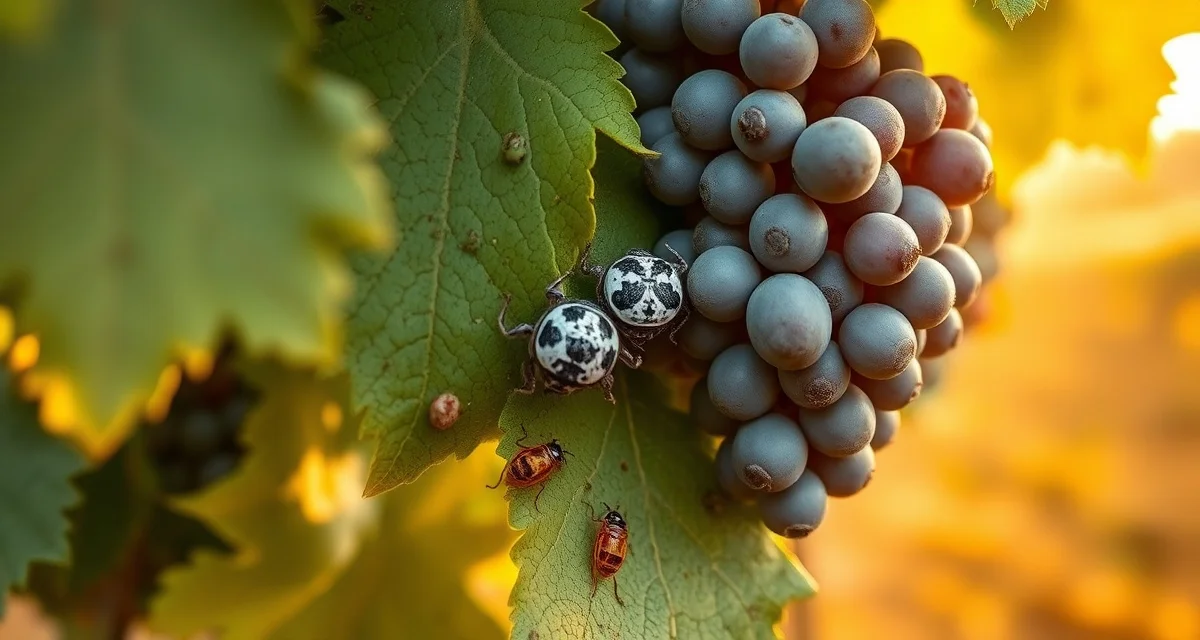
Mealybug Control in Vineyards: IPM Guide
Mealybugs are more than a cosmetic problem. They transmit grapevine leafroll virus, produce honeydew that promotes sooty mold growth, and can cause direct cluster damage that makes fruit unsalable. In Napa Valley, parts of Sonoma, and increasingly in other California wine regions, grapevine mealybug (Planococcus ficus) has become a serious economic pest that significantly increases management costs.
TL;DR
- Four species are present in US vineyards with different management windows: grape mealybug overwinters under bark, obscure mealybug overwinters on roots, and grapevine mealybug is the most damaging -- species identification changes your management approach
- Crawlers (first-instar nymphs) are the primary spray target because they're the only mobile stage vulnerable to contact insecticides -- once wax coating develops, contact materials lose effectiveness
- Movento (spirotetramat, IRAC Group 23) is the primary systemic for mealybug and requires a penetrant oil adjuvant at 1% mineral oil for effective uptake -- PHI 7 days, restricted use requiring a valid permit
- In leafroll-positive vineyards, mealybug management is virus management -- crawlers are the primary spread mechanism, and tight first-generation crawler control in blocks adjacent to infected vines is directly justified by virus spread risk
- California DPR requires Movento applications documented as restricted use pesticide records with all required fields including permit number -- missing these fields creates compliance citations
- Two Movento applications at 14-21 day intervals during the crawler window is the standard program; monitoring data from sticky tape traps linking crawler catch to application timing creates the IPM documentation certification auditors require
Understanding the biology -- particularly where mealybugs spend the winter and when the mobile crawler stage is present -- is the key to timing effective interventions.
Mealybug Species in US Vineyards
Several mealybug species attack grapevines in the US:
Grape mealybug (Pseudococcus maritimus): Most widespread in California. Overwinters primarily under bark, in crevices, and at the soil-trunk interface. Associated with leafroll virus transmission in California.
Grapevine mealybug (Planococcus ficus): More damaging species, particularly in warmer California regions. Can colonize grape clusters directly. Produces more honeydew.
Obscure mealybug (Pseudococcus viburni): Found in cooler regions. Overwinters on roots and in soil.
Longtailed mealybug (Pseudococcus longispinus): Less common in vineyards; more of a problem in other crops.
Species identification matters because management windows and tactics differ by species. Your local UC Farm Advisor or cooperative extension can help confirm which species you're dealing with.
Seasonal Biology and the Crawler Window
The crawler (first-instar nymph) is the most mobile stage and the most susceptible to contact insecticides. Crawlers disperse by moving on vine tissue or by wind and worker activity.
Spring activity: As temperatures warm, overwintering females under bark or in soil become active. Egg masses are laid. Crawlers hatch and move onto green tissue -- trunk, cordons, canes, and eventually shoots and clusters.
Crawler timing is temperature-dependent. Degree-day models (base 50°F) are used to predict first and subsequent generation crawler activity. First-generation crawlers typically appear in late April through June in California. The mealybug crawler timing guide covers degree day thresholds and monitoring methods in detail.
Second and third generations: 2-3 generations per season in most California regions. Later generations are the ones most often found in clusters.
Monitoring for Mealybugs
Sticky tape traps on trunks: Wrap a 2-inch band of double-sided sticky tape around the trunk at approximately waist height. Check weekly for crawler activity. When you see crawlers on tape, you're in the application window.
Visual inspection of trunk and cordon: Use a hand lens. Look for white waxy material in bark crevices, especially at pruning wounds, under loose bark, and at the soil line.
Cluster inspection: From fruit set forward, check 10+ clusters per block for mealybug presence. Document incidence and severity.
Degree-day tracking: UC IPM maintains a mealybug degree-day model for California. Track growing degree days from March 1 to time crawler emergence.
Management Tactics
Crawlers: The Primary Spray Window
Contact insecticides are most effective against first-instar crawlers before they settle and produce wax. Once mealybugs have developed wax coating, contact materials penetrate poorly.
Spirotetramat (Movento, IRAC Group 23): The go-to systemic for mealybug. Moves through the phloem to feeding sites. Effective against settled nymphs and adults. PHI: 7 days. Requires a penetrant oil adjuvant (1% mineral oil or equivalent) to improve uptake. Restricted use pesticide -- license required. Apply when crawlers are active.
Chlorpyrifos (Lorsban, IRAC Group 1B): Has historically been used for mealybug control but is increasingly restricted or prohibited. Check current California registration status before considering.
Neonicotinoids (Imidacloprid, Admire Pro): Used as soil applications in some systems. Concerns about bee toxicity and systemic persistence mean their use in vineyards is increasingly scrutinized.
Dormant Season Management
Narrow-range oil applications during dormancy can reduce overwintering mealybug populations on bark surfaces. Apply when vines are fully dormant (no green tissue). Full coverage of trunk and cordons is essential -- mealybugs in bark crevices survive if the oil doesn't reach them.
Biological Controls
Natural enemies of mealybugs include parasitic wasps (Acerophagus maculipennis, Anagyrus pseudococci) and predatory insects (green lacewings, Cryptolaemus montrouzieri -- the "mealybug destroyer").
Broad-spectrum insecticide applications disrupt biological control. Before applying pyrethroid or organophosphate materials for mealybug, consider whether you're eliminating natural enemies that are suppressing the population.
Leafroll Virus and Mealybug Management
If your vineyard has confirmed leafroll virus and mealybug pressure, mealybug management becomes part of your virus management strategy, not just a direct pest issue. Crawlers transmit the virus as they move from infected vines to clean vines.
Tight crawler control in blocks adjacent to infected vines or in blocks with mixed infection status is warranted. The leafroll virus vineyard management guide covers how GPS mapping of infected vine locations by year documents whether mealybug management is slowing or stopping virus spread within blocks.
Record Keeping for Mealybug IPM
California DPR requires Movento (spirotetramat) applications to be documented as restricted use pesticide applications with all required fields including permit number.
Track monitoring data in VitiScribe's scout records: date, block, monitoring method (sticky tape count or visual inspection), crawler presence or absence, incidence percentage.
Document spray decisions with the monitoring data that justified them. This is the IPM documentation that distinguishes a threshold-based program from calendar spraying.
Related Articles
FAQ
When should I spray for mealybug in California vineyards?
Apply insecticides targeting mealybug crawlers when sticky tape traps or visual inspection confirm crawler activity -- typically from April through June for first-generation crawlers in California. Movento (spirotetramat) can be applied during crawler stages with good systemic activity reaching settled nymphs. Degree-day models (base 50°F from March 1) help predict when crawler emergence will occur. Contact your UC Farm Advisor for current regional monitoring data.
Does Movento work on mealybugs after they've settled in clusters?
Movento (spirotetramat) has systemic activity and can reach feeding mealybugs in clusters via phloem movement. Its efficacy is best against crawler and early nymph stages but provides some control of settled populations when applied with a penetrant oil adjuvant. Apply at 9-10 fl oz/acre with 1% summer oil. Two applications at 14-21 day intervals during the crawler window is the standard program.
How do mealybugs spread within a vineyard?
Crawlers (first-instar nymphs) spread by direct movement on vine tissue from one part of a vine to adjacent vines, by catching on air currents, and by hitchhiking on workers, equipment, and contaminated plant material. Vineyard workers moving from infested blocks to clean blocks can spread crawlers. Equipment cleaned inadequately between blocks spreads populations. Spread follows a pattern: blocks near roads or entry points often show highest initial infestation.
What documentation does a California DPR restricted use permit require for Movento (spirotetramat) applications?
Movento applications in California require documentation as restricted use pesticide (RUP) applications, which means your record must include: pesticide product name and EPA registration number, active ingredient, date and time of application, location with geographic identifier (section/township/range or equivalent), rate per acre and total product used, acres treated, application method and equipment, applicator's licensed certificate number, and the permit number issued by your county agricultural commissioner. Missing the permit number or applicator license number is the most common citation for Movento records. California's 24-hour RUP filing requirement means this record must be submitted to the county agricultural commissioner within 24 hours of application, not compiled at end of month.
How do I document mealybug management in a block that also has confirmed leafroll virus incidence?
In leafroll-positive blocks, your scouting records should capture both mealybug population counts and any leafroll symptom observations from the same block visit -- this creates the documented connection between vector pressure and virus risk. Your spray decision rationale for mealybug treatments in these blocks should note the leafroll management basis explicitly, not just the direct mealybug damage justification. Scouting records in VitiScribe allow multiple observation types per visit, so mealybug counts and leafroll symptom notes appear in the same timestamped record. This documentation is important for Lodi Rules certification, CCOF organic certification, and any other program where auditors review the basis for pesticide application decisions -- the leafroll vector justification supports a more aggressive mealybug management threshold than direct damage alone would warrant.
What is Mealybug Control in Vineyards: IPM Guide?
[FAQ_ANSWER_PLACEHOLDER: This answer needs to be generated by AI with specific data, examples, and actionable advice relevant to Mealybug Control in Vineyards: IPM Guide. Target 50-150 words.]
How much does Mealybug Control in Vineyards: IPM Guide cost?
[FAQ_ANSWER_PLACEHOLDER: This answer needs to be generated by AI with specific data, examples, and actionable advice relevant to Mealybug Control in Vineyards: IPM Guide. Target 50-150 words.]
How does Mealybug Control in Vineyards: IPM Guide work?
[FAQ_ANSWER_PLACEHOLDER: This answer needs to be generated by AI with specific data, examples, and actionable advice relevant to Mealybug Control in Vineyards: IPM Guide. Target 50-150 words.]
Sources
- California Department of Pesticide Regulation (CDPR)
- UC Cooperative Extension Viticulture
- American Vineyard Foundation
- American Society for Enology and Viticulture (ASEV)
- Wine Institute
Get Started with VitiScribe
Mealybug IPM requires sticky tape monitoring records linked to spray decisions, restricted use pesticide documentation meeting California DPR requirements, and leafroll virus vector management records that connect mealybug pressure to virus spread risk in infected blocks. VitiScribe's scouting module captures crawler monitoring data with timestamp and block reference, links observations to the Movento application that follows, and generates the restricted use pesticide records that California DPR audits require. Try VitiScribe free and log your first mealybug scouting event with crawler counts and decision rationale today.