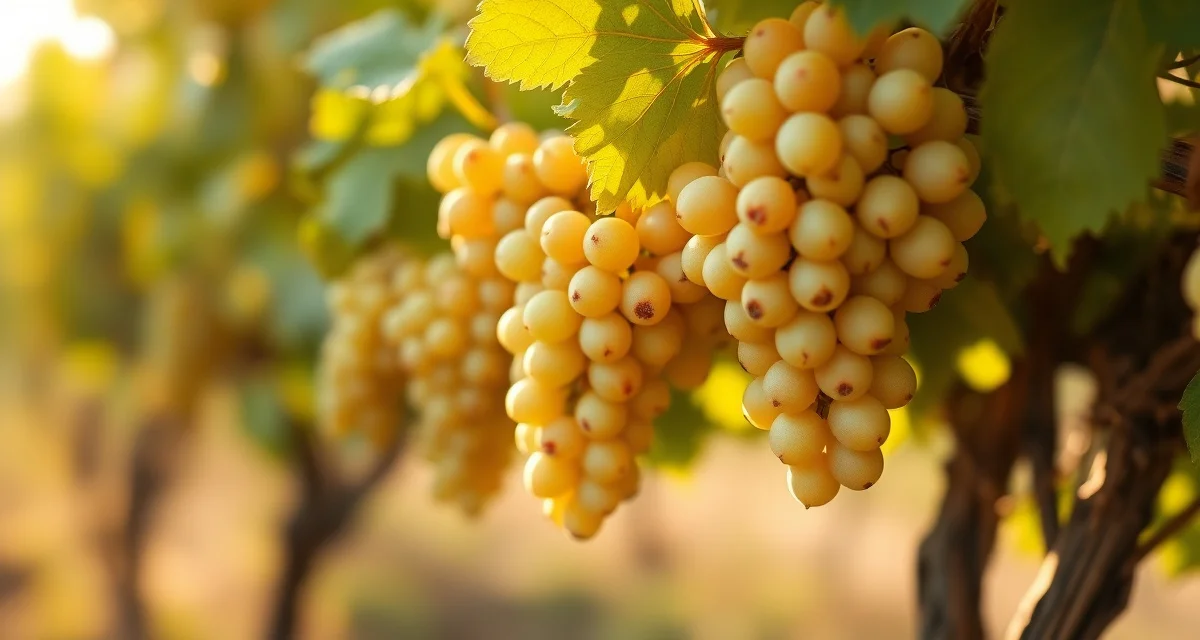
Viognier IPM Guide for Vineyard Managers
Viognier is a rewarding variety to grow but an unforgiving one to manage late in the season. Botrytis is the primary challenge, and Viognier's specific combination of characteristics, compact clusters, thin-skinned berries, and a harvest window that often coincides with fall conditions favorable for Botrytis cinerea, makes the last 4-6 weeks of the growing season your most consequential spray timing window.
Generic fungicide calendars don't account for this. A program designed for Chardonnay is close, but Viognier's aromatic sensitivity to fungicide residues at harvest adds a layer of consideration that Chardonnay programs usually don't address.
TL;DR
- Viognier is among the most botrytis-susceptible white varieties grown commercially in California and the Pacific Northwest -- compact clusters, thin berry skin, and an aromatics-driven harvest window that extends into fall conditions favorable for Botrytis cinerea create a concentrated late-season risk
- Bloom-timing botryticide applications aren't optional in Viognier: infected flower caps and dead stamens trapped inside compact clusters establish the early-season inoculum that becomes harvest-season pressure
- Veraison is the critical spray window -- PHI selection for veraison and pre-harvest applications determines how much flexibility you have for a second pre-harvest application; products with 7-day PHIs (e.g., Switch) allow a later final application than 14-day PHI products
- Sulfur residues affect Viognier's signature peach and apricot aromatics at harvest -- if your winery requires low-sulfur fruit, the final sulfur application should be no later than 3-4 weeks before harvest, not the standard 2-week window
- Fruit zone leaf removal by bunch closure is the most important canopy management practice for botrytis prevention in Viognier -- open cluster zones dry faster, receive better spray penetration, and reduce the humidity accumulation that enables infection
- Weather-triggered pre-harvest applications require PHI verification against your specific anticipated harvest date: a Switch application 7 days before harvest clears only if harvest doesn't move up; VitiScribe auto-calculates clearance against your entered harvest date
Viognier's Disease Profile
Botrytis: High Susceptibility
Viognier is among the most botrytis-susceptible white varieties grown commercially in California and the Pacific Northwest. Three factors drive this:
Compact clusters: Viognier produces moderately compact clusters that create the humidity trapping, limited airflow, and mechanical berry contact that favor botrytis establishment.
Thin berry skin: Thin skin is more susceptible to cracking under rain events or rapid berry growth after irrigation changes, and cracks create the wound entry points that Botrytis cinerea colonizes rapidly.
Aromatic ripeness timing: Viognier's harvest window is defined by aromatic development rather than simple Brix targets. Growers waiting for peak peach and apricot aromatics sometimes push Viognier past the point where botrytis pressure has already begun. The variety demands precise harvest timing, and delayed harvest in any season with late summer or fall moisture creates risk.
Powdery Mildew
Moderate to moderately high susceptibility. A full-season program is required. Viognier is comparable to Chardonnay in powdery mildew susceptibility, perhaps slightly lower, but not low enough to cut corners during the bloom window.
Aromatic Sensitivity
This is the consideration that distinguishes Viognier's spray program from most other white varieties. Viognier's signature aromatics, the peach, apricot, and floral notes that define the variety's character, are sensitive to sulfur and certain fungicide residues at harvest.
Late-season sulfur applications, particularly within two weeks of harvest, can create sulfur-related off-flavors in Viognier wine. Some winemakers are more tolerant of sulfur than others, and individual preferences vary. But if your winery buyer or your own production standards require low-sulfur fruit, your pre-harvest fungicide selection needs to reflect that constraint.
This means your pre-harvest spray program for Viognier should favor products with clean aromatic profiles and appropriate PHIs rather than defaulting to sulfur as a cost-effective choice.
Season-Long Program
Pre-Bloom
Standard powdery mildew program from 6-inch shoot growth. Sulfur at 10-14 day intervals. Scout for flag shoots and adjust start date accordingly.
Assess your Viognier block's canopy architecture early. If last season's vigor was high and you expect aggressive shoot growth, plan your shoot thinning and fruit zone leaf removal timing early. Canopy management is your most powerful botrytis prevention tool in Viognier.
Bloom
Shorten intervals to 7-10 days for powdery mildew. Switch from sulfur to DMI (FRAC group 3) or SDHI (FRAC group 7) fungicides.
Make a botryticide application at early bloom. In Viognier, unlike Syrah or Grenache where bloom botrytide applications are optional, this application is generally worth making as a precaution given the variety's high susceptibility. Infected flower caps and dead stamens that remain inside compact clusters establish the early-season botrytis inoculum that creates harvest-season problems.
Fruit Set Through Bunch Closure
Continue FRAC group rotation at 10-14 day intervals for powdery mildew.
Fruit zone leaf removal should be completed by this window if not done at pre-bloom. In Viognier, this is a critical practice for botrytis prevention. Open cluster zones dry faster, receive better spray penetration, and reduce the humidity accumulation that enables botrytis infection.
Complete your bunch closure botrytide timing carefully. This is likely your last opportunity to get fungicide inside the Viognier cluster with reasonable spray penetration. Post-bunch closure, the cluster is closed enough that spray coverage on inner berry surfaces is limited.
Veraison: The Critical Viognier Window
Veraison is where Viognier botrytis management requires the most precision. Berry softening begins, skin cracking risk increases, and the time to harvest is now 4-6 weeks, short enough that every fungicide you apply must be selected with PHI clearance in mind.
Make a botryticide application at early veraison. Product selection at this stage matters for Viognier:
- Products with 7-day PHIs (cyprodinil/fludioxonil, i.e., Switch) give you more flexibility for a second pre-harvest application
- Products with 14-day PHIs provide longer protection with less application flexibility
- Sulfur at this stage: acceptable for some programs, but start calculating your two-week aromatic impact window
If harvest is anticipated 5 weeks from veraison, you have time for one application at veraison and one application 2-3 weeks before harvest while clearing PHIs. Plan those two applications as your primary late-season botrytis management strategy.
Pre-Harvest: Precision Required
The final 2-3 weeks before Viognier harvest are where mistakes are most costly and most common. A few considerations:
PHI management: Your last application must clear PHI before your anticipated harvest date. If harvest is September 15th and you're considering applying Switch on September 8th (7-day PHI), that's September 15th clear. If you harvest September 14th instead, you have a PHI violation.
VitiScribe's botrytis IPM hub and powdery mildew IPM hub both track PHI automatically against your entered anticipated harvest date. When you select a product for the pre-harvest application, the system shows you whether it clears PHI given your harvest date.
Sulfur timing: If your winery requires low-sulfur fruit, your last sulfur application should be no later than 3-4 weeks before harvest, not the standard 2-week window. This gives an additional margin for aromatic protection.
Weather-triggered decisions: If rain is forecast within 10 days of anticipated harvest on a Viognier block, you're essentially deciding between a pre-harvest botryticide application that clears PHI and a rain event that may establish notable botrytis pressure. In most cases, the application is warranted if you have PHI clearance.
Vineyard spray program design covers how to build the FRAC rotation calendar for botrytis and powdery mildew concurrently across the full season for susceptible varieties like Viognier.
Program Adjustments by Region
California (Paso Robles, Sierra Foothills, North Coast)
Warm California sites face the standard California powdery mildew pressure plus Viognier's inherent botrytis susceptibility. Spider mite pressure in inland sites (Paso Robles) can be notable and deserves scouting attention from bunch closure through August.
Oregon and Washington
Cooler climates add downy mildew to the disease management equation alongside powdery mildew and botrytis. Program complexity increases accordingly. ODA and WSDA compliance requirements apply to spray records.
Virginia
Virginia's humid climate with summer thunderstorms creates botrytis and downy mildew pressure that can be intense. Viognier is one of Virginia's signature varieties, and Virginia growers have developed intensive programs for managing the variety's disease susceptibility in the state's challenging disease environment.
Frequently Asked Questions
What diseases most affect Viognier vineyards?
Botrytis bunch rot is the primary disease concern, driven by compact cluster architecture, thin berry skin, and a harvest timing that often extends into fall conditions favorable for Botrytis cinerea. Powdery mildew susceptibility is moderate to moderately high, requiring a full-season program from shoot growth through bunch closure. In wet regions like Oregon and Virginia, downy mildew adds a third concurrent disease management requirement.
How does Viognier's susceptibility to botrytis affect late-season spray timing?
Viognier's high botrytis susceptibility makes the veraison and pre-harvest spray windows the most critical timing points in the season. A botryticide application at early veraison followed by a second application 2-3 weeks before harvest, where PHI allows, is the standard approach. The variety's aromatic sensitivity to sulfur residues also constrains late-season product selection toward non-sulfur fungicides with appropriate PHIs.
What fungicides are most important for Viognier disease management?
For botrytis, cyprodinil/fludioxonil (Switch) at bloom and veraison is the most commonly used combination. At pre-harvest, the 7-day PHI of Switch allows a later final application than products with longer PHIs. For powdery mildew, DMI fungicides (myclobutanil, tebuconazole) at bloom and fruit set, rotated with SDHI fungicides through the season. Sulfur at pre-bloom and early post-bunch closure stages, but transitioned to non-sulfur materials in the final 3-4 weeks before harvest to protect aromatic profile.
How should Viognier botrytis spray records document aromatic-driven product selection decisions?
When product selection at pre-harvest is influenced by winery aromatic requirements -- choosing non-sulfur options in the final 3-4 weeks because of aromatic sensitivity constraints -- that rationale belongs in the application notes field of your spray record. "Applied Switch at veraison; transitioning from sulfur per winery aromatic protocol; 7-day PHI cleared against September 18 anticipated harvest" creates a documented record that the decision was deliberate and winery-requirement-driven. This documentation is particularly relevant for organic certification programs, where application rationale is required, and for winery buyers who review spray records as part of fruit sourcing due diligence.
What is Viognier IPM Guide for Vineyard Managers?
[FAQ_ANSWER_PLACEHOLDER: This answer needs to be generated by AI with specific data, examples, and actionable advice relevant to Viognier IPM Guide for Vineyard Managers. Target 50-150 words.]
How much does Viognier IPM Guide for Vineyard Managers cost?
[FAQ_ANSWER_PLACEHOLDER: This answer needs to be generated by AI with specific data, examples, and actionable advice relevant to Viognier IPM Guide for Vineyard Managers. Target 50-150 words.]
How does Viognier IPM Guide for Vineyard Managers work?
[FAQ_ANSWER_PLACEHOLDER: This answer needs to be generated by AI with specific data, examples, and actionable advice relevant to Viognier IPM Guide for Vineyard Managers. Target 50-150 words.]
What are the benefits of Viognier IPM Guide for Vineyard Managers?
[FAQ_ANSWER_PLACEHOLDER: This answer needs to be generated by AI with specific data, examples, and actionable advice relevant to Viognier IPM Guide for Vineyard Managers. Target 50-150 words.]
Who needs Viognier IPM Guide for Vineyard Managers?
[FAQ_ANSWER_PLACEHOLDER: This answer needs to be generated by AI with specific data, examples, and actionable advice relevant to Viognier IPM Guide for Vineyard Managers. Target 50-150 words.]
How long does Viognier IPM Guide for Vineyard Managers take?
[FAQ_ANSWER_PLACEHOLDER: This answer needs to be generated by AI with specific data, examples, and actionable advice relevant to Viognier IPM Guide for Vineyard Managers. Target 50-150 words.]
What should I look for when choosing Viognier IPM Guide for Vineyard Managers?
[FAQ_ANSWER_PLACEHOLDER: This answer needs to be generated by AI with specific data, examples, and actionable advice relevant to Viognier IPM Guide for Vineyard Managers. Target 50-150 words.]
Is Viognier IPM Guide for Vineyard Managers worth it?
[FAQ_ANSWER_PLACEHOLDER: This answer needs to be generated by AI with specific data, examples, and actionable advice relevant to Viognier IPM Guide for Vineyard Managers. Target 50-150 words.]
Related Articles
Sources
- UC Cooperative Extension Viticulture -- Disease Management
- UC IPM -- Botrytis and Powdery Mildew Guidelines
- USDA Agricultural Research Service
- Oregon State University Extension -- Viticulture
- Virginia Cooperative Extension -- Viticulture
Get Started with VitiScribe
Viognier's late-season botrytis management requires PHI-aware product selection at every veraison and pre-harvest application -- a calculation that shifts every time your anticipated harvest date moves. VitiScribe auto-calculates PHI clearance against your entered harvest date for every product you select, flags aromatic-sensitive product categories in late-season windows, and tracks your FRAC rotation to prevent resistance buildup through the compressed Viognier spray calendar. Try VitiScribe free and build your Viognier IPM program with auto-calculated PHI clearance today.