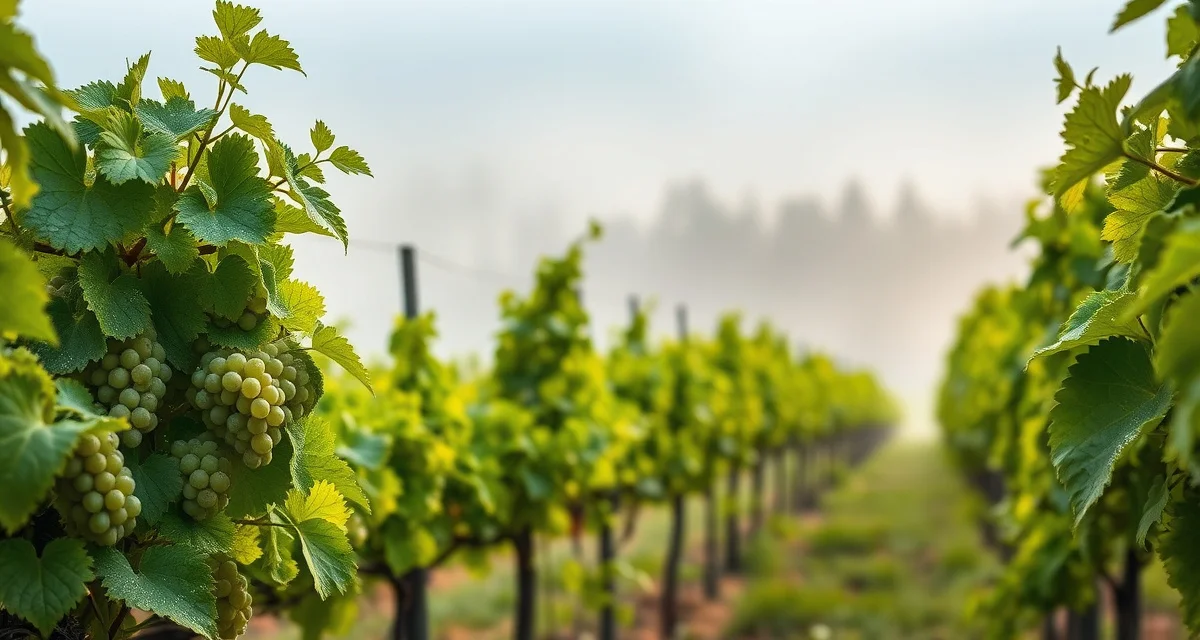
Riesling IPM Guide for Cold-Climate Vineyards
Riesling is grown in some of the most challenging disease environments in North American viticulture. The Finger Lakes, Washington's Columbia Valley cooler sites, and the emerging cold-climate wine regions of the Midwest all share certain characteristics: wet springs, humid summers, cool autumns, and the kind of weather that makes Botrytis cinerea feel at home.
Managing Riesling in these environments requires a disease program that's honest about the variety's vulnerabilities rather than one adapted from a California Chardonnay playbook.
TL;DR
- Botrytis is the primary economic concern for Riesling -- compact cluster architecture traps humidity, limits airflow, and creates mechanical berry-to-berry contact that establishes infection entry points before visible disease appears
- A botryticide application at early bloom is worth making on tight-clustered Riesling blocks because infected flower tissue trapped inside compact clusters establishes early infection sites that summer sprays cannot reach
- In wet Finger Lakes years, botryticide applications may be needed every 7-10 days through October -- PHI management for botrytis materials must be calculated from the actual harvest date for each block
- Late-harvest and ice wine Riesling blocks require PHI calculations from the anticipated late-harvest or ice harvest date, which may be January or February -- not from the standard harvest season date
- Downy mildew is a co-primary management challenge in eastern wine regions (Finger Lakes, Pennsylvania) requiring an independent FRAC group rotation alongside the powdery mildew and botrytis programs
- No OMRI-listed botryticide matches the efficacy of Switch or Vangard in wet, high-pressure eastern US conditions -- canopy management (fruit zone leaf removal, shoot thinning) is the primary organic botrytis management strategy, not a supplement to it
Riesling's Disease Profile in Cold-Climate Regions
Botrytis: The Primary Concern
Riesling is highly susceptible to botrytis bunch rot, and cold-climate conditions compound that susceptibility in several important ways.
Tight cluster architecture: Riesling produces compact clusters in most growing environments. Compact clusters trap humidity, limit airflow, and create the mechanical berry-to-berry contact that both damages skin and creates entry points for botrytis infection.
Late harvest ripening: Riesling's slow ripening profile, a defining characteristic for the variety's aromatic complexity and acid structure, means the berries spend a long time at partial ripeness during the period when fall rains are most likely. In the Finger Lakes, October rains hitting Riesling clusters at 85-90 Brix is a near-annual event rather than an exception.
Noble rot complexity: Riesling is the variety most associated with noble rot (desirable botrytis-infected berries for specialty wine styles). Managing against botrytis for conventional production while potentially managing toward it for botrytized styles on specific blocks requires careful program design and very clear communication between the vineyard team and winery.
Powdery Mildew
Moderate susceptibility. Riesling doesn't carry the extreme powdery mildew vulnerability of Grenache or Chardonnay, but it requires consistent program coverage from early season through bunch closure. In cooler climates, powdery mildew may not extend as deeply into the season as it does in warm California conditions, but the early-season and bloom windows are equally critical.
Downy Mildew
In the Finger Lakes, Pennsylvania, and other eastern wine regions, downy mildew (Plasmopara viticola) is co-equal with or greater than powdery mildew as a management challenge. Riesling shows moderate downy mildew susceptibility. The wet spring conditions in eastern wine country are ideal for downy mildew sporulation and infection, and your fungicide program needs to address both pathogens simultaneously.
For the Pinot Noir disease management framework that applies similar triple-disease-pressure thinking to a different variety, see the Pinot Noir disease pressure guide.
Regional Disease Differences
Finger Lakes, New York
The Finger Lakes region's proximity to large lake bodies moderates temperatures and extends the growing season, but that same lake effect creates humid conditions that favor both botrytis and downy mildew. Spring fog and moderate humidity through summer, followed by cool wet autumns, make disease management intensive.
Key timing differences from western wine regions:
- Bud break typically April-May, 4-6 weeks later than North Coast California
- Harvest typically late September through October, later than most California white varieties
- Fall botrytis pressure is high and often arrives with October rains during active harvest
Washington Columbia Valley
Washington Riesling, primarily grown in the Columbia Valley and Yakima Valley, faces a different environment. Dry summers limit botrytis pressure through July and August, but irrigation timing and late-season rain events create exposure windows.
Midwest Cold-Climate Regions
Emerging Riesling production in Ohio, Michigan, and Wisconsin faces cold winters that limit vine survival in some sites but also limit some pest species that are problems farther south. Disease pressure from botrytis and downy mildew remains notable in these humid continental climates.
Season-Long Program
Early Season Through Bloom
Start your powdery mildew and downy mildew program at 6-inch shoot growth. In the eastern US, this typically means May.
For downy mildew, copper-based materials are effective early in the season. Mancozeb or metiram provide both powdery and downy mildew coverage. As shoot growth advances toward bloom, begin DMI materials for powdery mildew.
A botrytide application at early bloom is worth making on tight-clustered Riesling blocks. Infected flower tissue trapped inside compact clusters establishes early infection sites that you won't be able to address with summer sprays.
Fruit Set Through Bunch Closure
This window is critical for both botrytis and powdery mildew in Riesling. Spray intervals should be 7-10 days for powdery mildew through bunch closure, with FRAC group rotation maintained.
Fruit zone leaf removal is especially important in Riesling. Opening the cluster zone before bunch closure maximizes spray penetration during the late fruit set window and improves airflow through the humid autumn harvest period. Early leaf removal (pre-bloom) is even better for reducing cluster compactness.
Veraison Through Harvest
This is the most critical window for Riesling botrytis management. The combination of increasing berry sugar, cooling temperatures, and fall rain events creates the conditions where botrytis establishes and spreads rapidly in compact clusters.
In wet years, you may need botryticide applications every 7-10 days through October in the Finger Lakes. The botrytis IPM hub covers PHI requirements for botryticides used at this stage, which matters when harvest is active.
FRAC rotation for botrytis is important across the season but especially critical in the multi-application harvest window:
- FRAC group 12 (cyprodinil) + FRAC group 7 (fludioxonil) combinations
- FRAC group 2 (iprodione) - note EU MRL concerns for export wines
- FRAC group 17 (fenhexamid)
- FRAC group 7 (boscalid) - alternate with non-group-7 materials between uses
PHI Management for Late-Harvest Riesling
If you're producing a late-harvest or ice wine style Riesling, your spray program design changes substantially. Applications made to late-harvest Riesling in November need PHI compliance for whatever harvest date that fruit will be picked, which may be well after standard harvest season.
Calculate PHI from your anticipated late-harvest or ice harvest date, not your standard harvest date. Products with longer PHIs may be appropriate through summer and early fall, with the constraint that late-harvest fruit picked in January must clear any product's PHI from that date backward.
VitiScribe's Finger Lakes vineyard management tools support multiple harvest date entries per block, so PHI tracking for both standard and late-harvest portions of a Riesling block can be managed separately.
Organic Riesling Programs
Organic Riesling production in cold-climate regions is genuinely challenging given the disease pressure. Sulfur plus copper programs for powdery and downy mildew are workable with tight intervals, but the botrytis component is where organic programs struggle most.
No OMRI-listed botryticide has the efficacy of Switch or Vangard in wet, high-pressure botrytis conditions. Biocontrol options like Bacillus subtilis products provide some suppression but are insufficient as a sole botrytis management tool in compact-cluster Riesling under eastern US disease pressure.
Canopy management becomes even more critical in organic programs because you're managing botrytis risk through cultural practices rather than chemistry. Tight fruit zone leaf removal, adequate shoot thinning, and careful irrigation management are not optional supplements to the fungicide program. They're the primary program.
New York DEC Compliance for Riesling Operations
New York vineyard spray records must meet DEC requirements, which include buffer zone documentation for freshwater proximity, particularly relevant for Finger Lakes vineyard operations given the proximity to the lakes themselves and their tributaries.
Required record fields in New York include applicator license information formatted to DEC standards, and buffer zone distance documentation for any blocks near Finger Lakes water bodies. DEC issued over 200 pesticide record violations to vineyard operations in 2024, and inspection activity is increasing.
Frequently Asked Questions
What diseases most affect Riesling in cool-climate regions?
Botrytis bunch rot is the primary economic concern, driven by compact cluster architecture, late harvest timing, and the wet autumn conditions common in cold-climate wine regions. Powdery mildew requires a full-season program with moderate susceptibility. Downy mildew is a notable co-managed concern in eastern wine regions including the Finger Lakes, requiring a program that addresses both pathogens simultaneously.
How does Riesling's cluster structure affect botrytis spray timing?
Riesling's tight, compact clusters create high humidity inside the cluster and limit spray penetration in later growth stages. This makes early-season botrytis timing, particularly a bloom-window application when the cluster is still open, substantially more effective than late-season applications that can't penetrate closed clusters. Early fruit zone leaf removal that reduces cluster compactness also has notable value in high-pressure botrytis environments.
What spray program adjustments are needed for Riesling in New York?
New York Riesling programs need to include downy mildew management alongside the standard powdery mildew and botrytis programs required in western states. Spray records must meet New York DEC formatting requirements, including buffer zone documentation for Finger Lakes proximity. Late-harvest Riesling programs require PHI calculations from the actual harvest date, which may be months after standard harvest season.
How should a Finger Lakes Riesling grower document the noble rot management decision that leads to different spray programs on adjacent blocks in the same season?
When adjacent blocks have different management objectives -- standard harvest Riesling receiving botryticide applications through October, and a late-harvest noble rot block receiving no botryticide after a specific date -- the records for each block need to reflect the divergent program rationale. The noble rot block record should document the date at which botryticide applications were stopped, the intended wine style, and confirmation from the winery buyer that noble rot conditions were the management objective. This record protects the grower if inspection asks why two adjacent blocks received different programs and shows it was a deliberate, agreed-upon strategy rather than a missed application. VitiScribe's block-level program notes allow you to record wine style objectives alongside spray records.
How does PHI management for a Finger Lakes Riesling ice wine block differ from standard Riesling PHI calculation?
Ice wine harvest in New York can occur in December, January, or later depending on freeze conditions -- often 2-4 months after standard Riesling harvest. Any product applied in August with a 14-day PHI would have cleared before a September standard harvest date but is irrelevant to ice wine PHI compliance. The ice wine block's PHI calculation must work backward from the anticipated freezing event harvest date. Products applied in October -- even those with short PHIs -- must clear before the ice harvest date. Because ice harvest date is weather-dependent and cannot always be predicted precisely, conservative PHI management (defaulting to 0-day PHI materials after a specific fall date) is the practical approach. VitiScribe's block-level PHI tracking supports separate harvest date entries for standard and late-harvest portions of a Riesling block.
What is Riesling IPM Guide for Cold-Climate Vineyards?
[FAQ_ANSWER_PLACEHOLDER: This answer needs to be generated by AI with specific data, examples, and actionable advice relevant to Riesling IPM Guide for Cold-Climate Vineyards. Target 50-150 words.]
How much does Riesling IPM Guide for Cold-Climate Vineyards cost?
[FAQ_ANSWER_PLACEHOLDER: This answer needs to be generated by AI with specific data, examples, and actionable advice relevant to Riesling IPM Guide for Cold-Climate Vineyards. Target 50-150 words.]
How does Riesling IPM Guide for Cold-Climate Vineyards work?
[FAQ_ANSWER_PLACEHOLDER: This answer needs to be generated by AI with specific data, examples, and actionable advice relevant to Riesling IPM Guide for Cold-Climate Vineyards. Target 50-150 words.]
What are the benefits of Riesling IPM Guide for Cold-Climate Vineyards?
[FAQ_ANSWER_PLACEHOLDER: This answer needs to be generated by AI with specific data, examples, and actionable advice relevant to Riesling IPM Guide for Cold-Climate Vineyards. Target 50-150 words.]
Who needs Riesling IPM Guide for Cold-Climate Vineyards?
[FAQ_ANSWER_PLACEHOLDER: This answer needs to be generated by AI with specific data, examples, and actionable advice relevant to Riesling IPM Guide for Cold-Climate Vineyards. Target 50-150 words.]
How long does Riesling IPM Guide for Cold-Climate Vineyards take?
[FAQ_ANSWER_PLACEHOLDER: This answer needs to be generated by AI with specific data, examples, and actionable advice relevant to Riesling IPM Guide for Cold-Climate Vineyards. Target 50-150 words.]
Related Articles
Sources
- Cornell Cooperative Extension
- New York State Department of Environmental Conservation (DEC)
- New York State IPM Program
- UC Cooperative Extension Viticulture
- American Vineyard Foundation
Get Started with VitiScribe
Riesling IPM requires independent FRAC rotation tracking for powdery mildew, downy mildew, and botrytis simultaneously, PHI management across standard and late-harvest Riesling blocks with different harvest dates in the same vineyard, and New York DEC buffer zone documentation for Finger Lakes proximity -- documentation complexity that single-state apps and generic spray logs handle poorly. VitiScribe tracks FRAC rotation independently for each disease program, supports multiple harvest date entries per block for PHI calculation, and generates DEC-compliant records with buffer zone notation. Try VitiScribe free and build your first Riesling season disease program documentation today.